Brix might not be best
A high Brix test may mean high sugar for the horticulture sector, but when it comes to measuring pasture quality, farmers are being told to look to traditional feed quality analysis. Words Anne Lee.
A Brix test, often used in the fruit and wine sectors to determine sugar levels, isn’t a reliable tool for assessing pasture quality, according to a study carried out at the Poukawa Research Farm in Hawke’s Bay.
Instead of high Brix readings corresponding with high feed quality in pasture, Dr Beverley Thomson’s study found the opposite could happen, and she warns farmers to be wary of using the test without fully understanding the other factors affecting the readings.
She presented findings from her research at the New Zealand Grassland Association Conference held in late 2025.
 Brix levels are typically an indication of soluble sugar concentration. Testing Brix levels is simple to do in the paddock and some farmers, particularly those with multi-species pastures, have turned to it as a quick assessment tool for pasture quality. For some, it’s being used as a proxy for metabolisable energy.
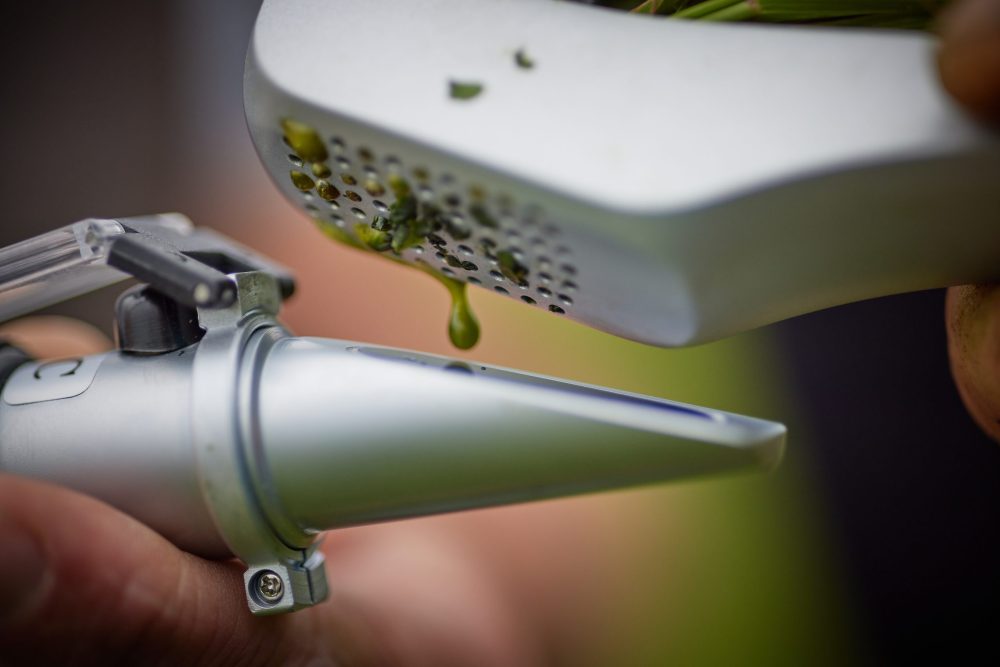
Brix levels can be taken in the field using a handheld refractometer. A sample of pasture is taken and crushed with the resulting ‘juice’ or ‘sap’ squeezed from the sample then placed in the refractometer.
A prism and calibrations on the eye piece of the device indicate the Brix level when the refractometer is held up to the light.
To find out how well Brix levels align with standard feed quality measures, Beverley used three different pasture types, taking samples from them at three different times during the growing season – October, November and January – so the shift from lush spring growth to more mature summer growth could be measured. She also cut them to two different heights (8 and 20 cm).
The three pasture types were:
- Ryegrass/ clover (four species)
- Plantain/clover (five species)
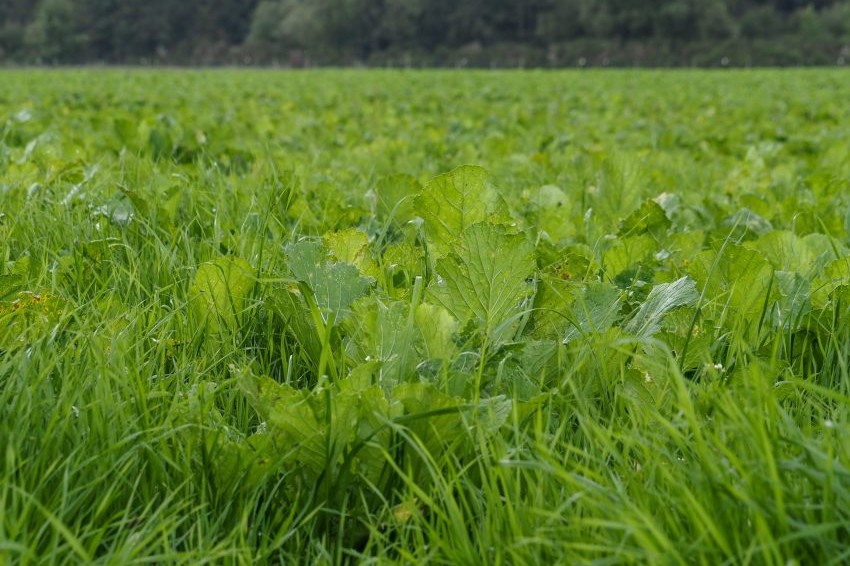
- Multi-species including Italian ryegrass, fescue, cocksfoot, prairie grass, millet, barley, pea, white clover, lucerne, red clover, turnip, sunflower, buckwheat, chicory, phacelia and others.
Subsets of each sample taken were analysed using the Brix method and conventional laboratory analysis. The laboratory analysis measured:
- Drymatter (DM)
- Neutral detergent fibre (NDF)
- Acid detergent fibre (ADF)
- Water soluble carbohydrate (WSC)
- Metabolisable energy (ME)
“As expected, pasture quality varied as the season progressed and between the three pasture types,” Beverley says.
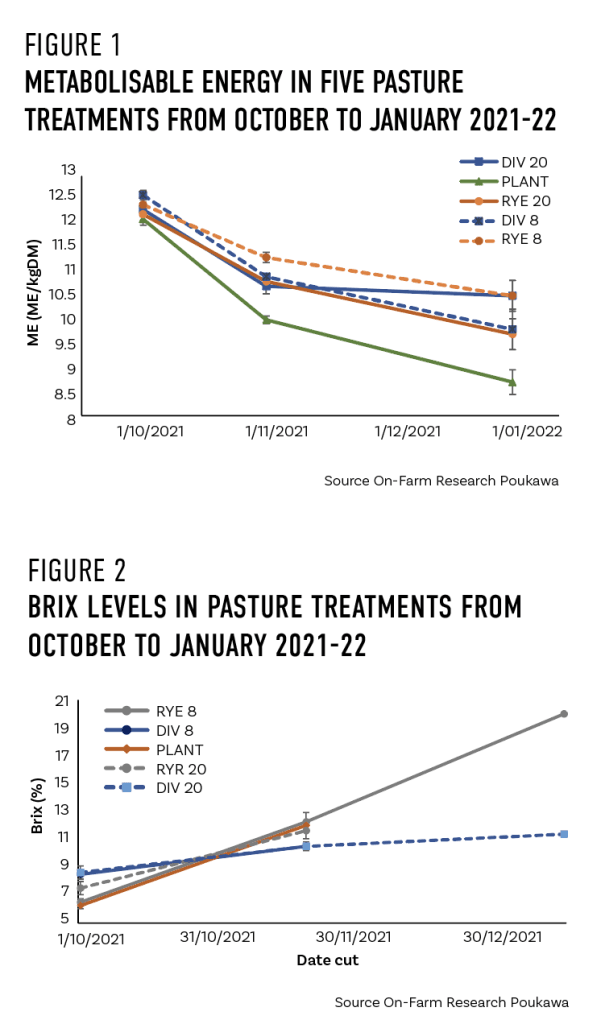
ME dropped across all pastures as plants became reproductive and then produced seed heads and DM increased as the plants became more fibrous. Both NDF and ADF levels also generally increased. All of that points to a drop in pasture quality.
But the Brix levels increased significantly across the season, which on the face of it would indicate pasture quality increasing. However, these increasing readings weren’t telling the right story.
In January, the sample cuts were so fibrous it was difficult to squeeze enough juice or sap out to put in the refractometer and it was only possible to obtain a reading on two treatments.
Statistical analysis showed a positive relationship between Brix levels and DM.
“One of the reasons for the higher Brix readings is likely to be that as the pasture matures and becomes more fibrous, the amount of sap drops and it is likely to become more concentrated,” Beverley says.
Brix measures all dissolved solids in the sap, not just sugars. Those dissolved solids include amino acids, minerals, proteins, organic acids, tannins and oils.
The Poukawa study found no consistent relationship between Brix and NDF or between Brix and ADF. There was also no relationship between Brix and WSC.
Various factors can affect feed quality in pasture, including time of day, moisture stress, temperature and grazing history, with inconsistent changes in Brix, making the measurement tool inaccurate as a means of testing pasture quality.
Based on the study, it’s more likely to be an indicator of DM than any other quality metric, which is the reverse of how it is typically promoted.