Crunching the Numbers on Plantain
As nutrient regulations tighten, farmers need solutions that are effective, practical and proven at scale. DairyNZ’s plantain programme is putting a dent in nitrate leaching. Words Dr Kate Fransen.
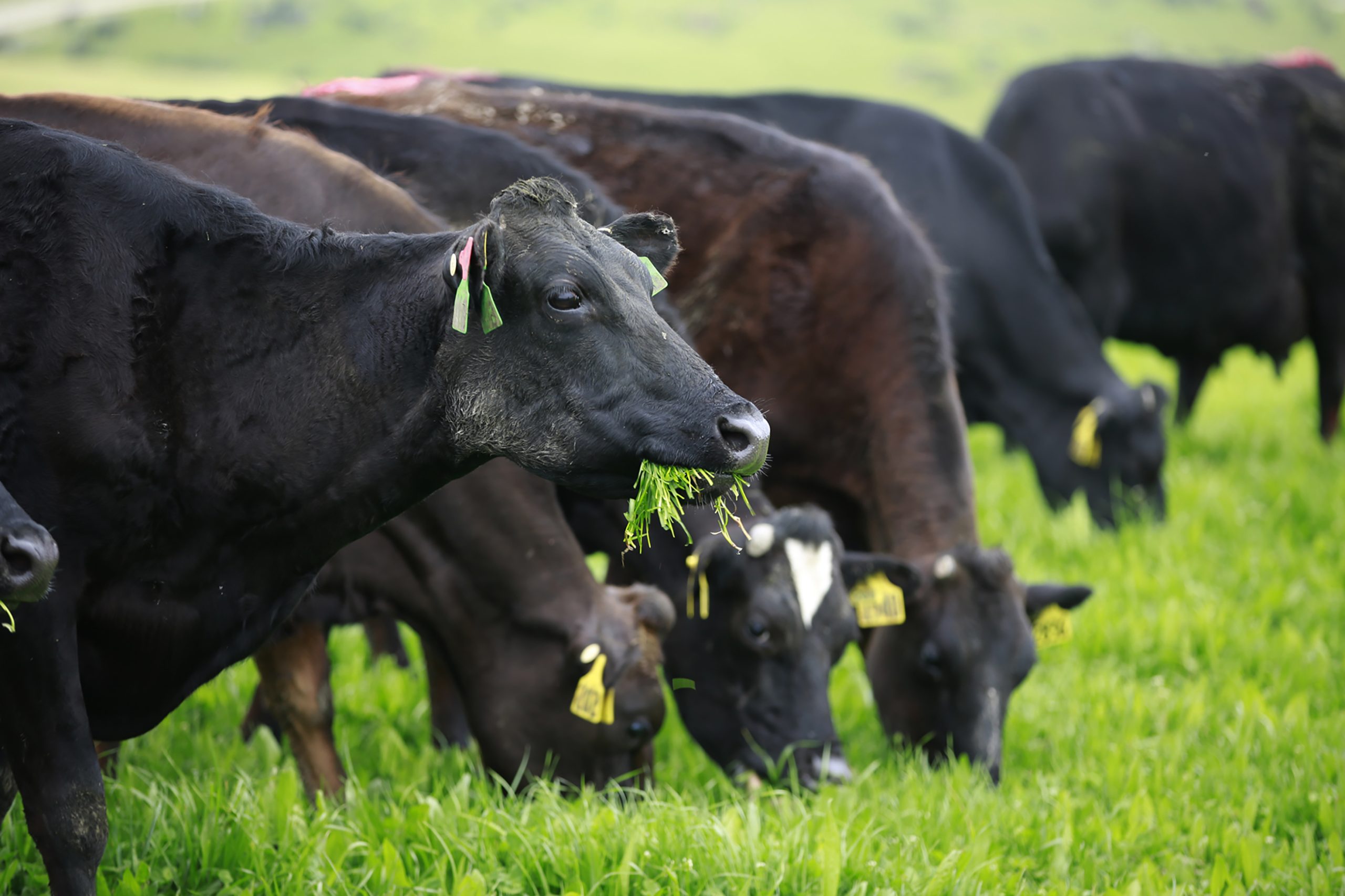
 Nitrate leaching remains one of the biggest environmental challenges for New Zealand dairy farmers. With growing pressure to reduce nutrient losses while maintaining productivity, practical on-farm solutions are essential. One promising answer to reducing nitrate leaching comes from a humble pasture herb: Plantain.
DairyNZs Plantain Potency and Practice programme has delivered robust evidence that moderate levels of Ecotain plantain can significantly cut nitrate loss, without disrupting existing farm systems.
The Science Behind the Solution
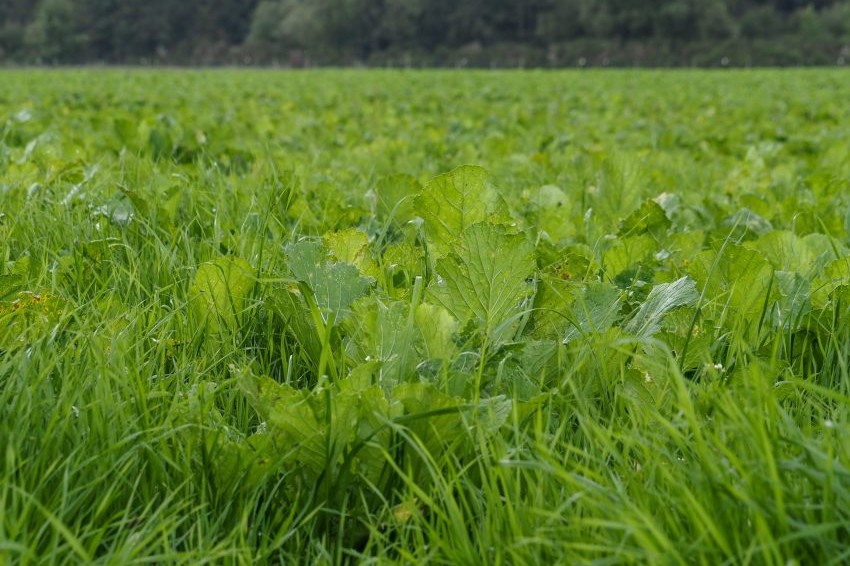
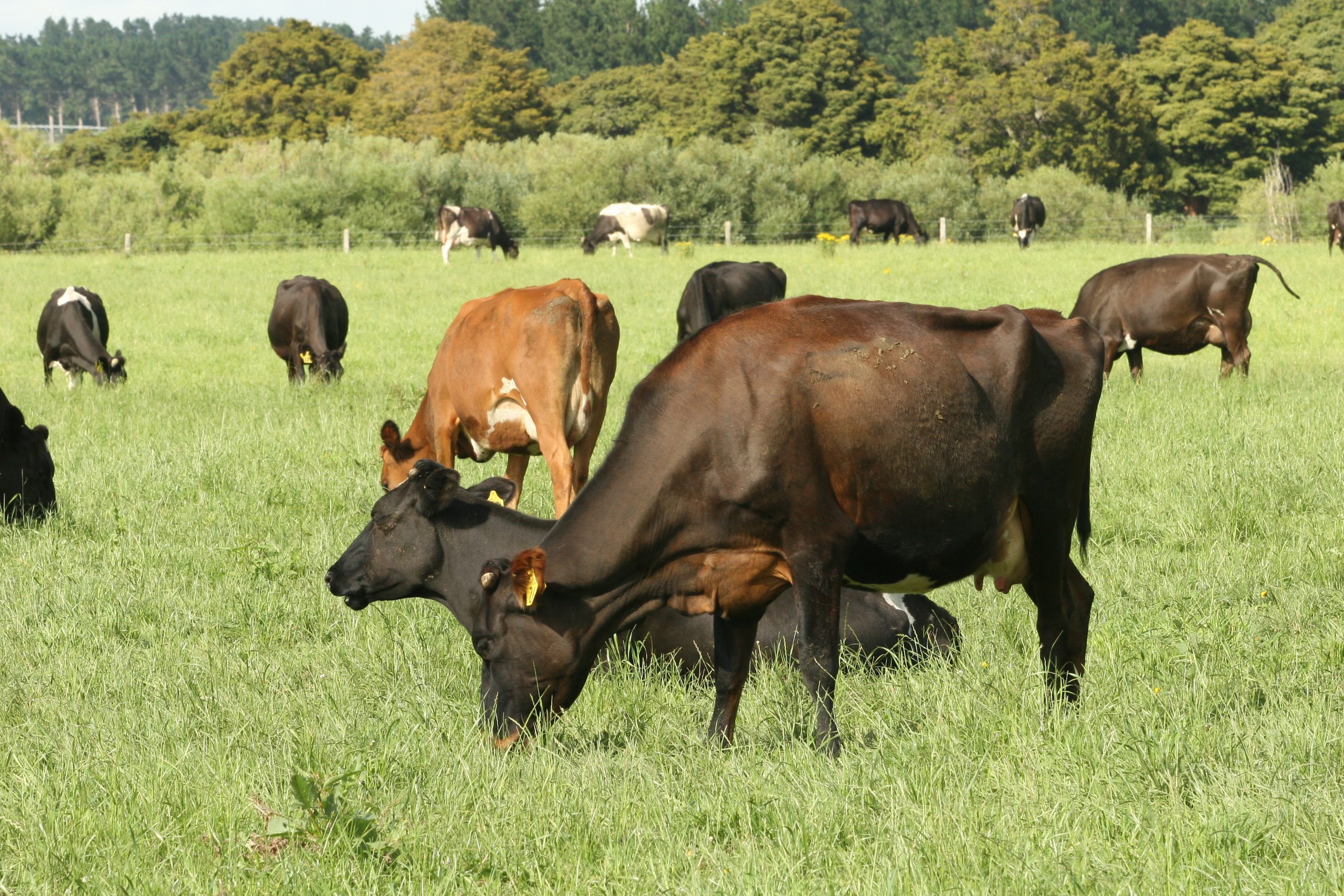
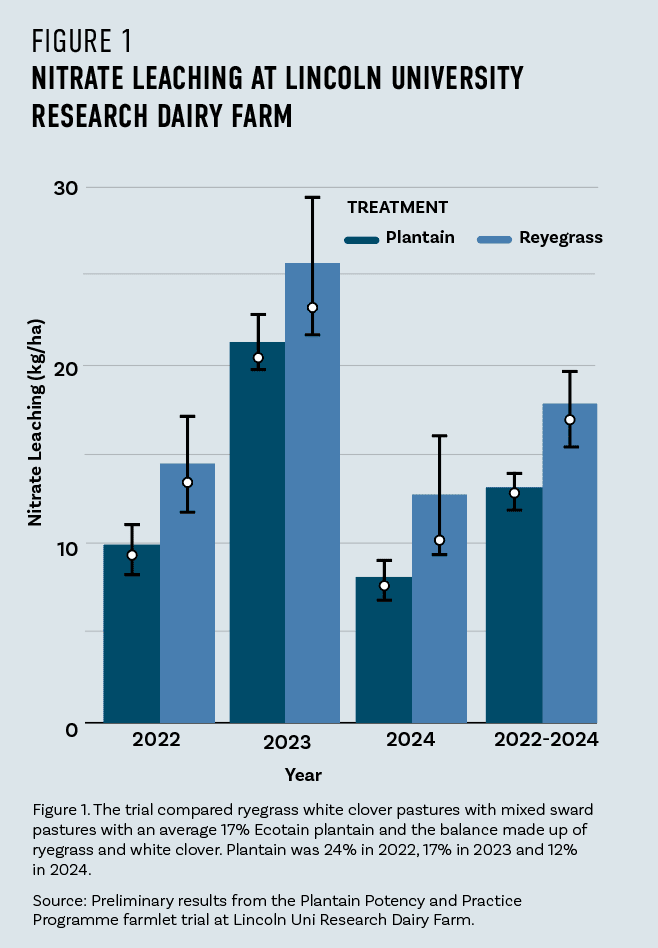
At Lincoln University, three years of farm-scale trials showed a 26% reduction in nitrate leaching with perennial ryegrass-based pastures averaging just 17% plantain content (dry matter). Massey University recorded the same reduction over four years with an average of 25% plantain in the mix. Milk production was maintained at similar levels to the perennial ryegrass and white clover comparison at both trials. These results across different environments make plantain hard to ignore.
Importantly, the findings come from replicated trials, Massey being a large grazed plot trial and Lincoln a farmlet study, meaning farmers can confidently apply them on the ground.
Practical Adoption on Farms
The good news: achieving effective plantain levels is realistic and affordable.
“Farmers don’t need extremely high plantain percentages to see meaningful improvements,” says programme lead, Dr Kate Fransen, from DairyNZ.
The Lincoln farmlet trial results indicate that levels as low as 12% can deliver substantial reductions in nitrate loss, making plantain an accessible mitigation tool.
Plantain is a short-lived perennial, declining more quickly in dense pasture swards. On four monitored Canterbury farms, renewed pastures averaged 30% plantain in their first year, declining to 15% in the second year and 8% in the third year. Broadcasting the whole farm each year with 1-2kg plantain seed/ha maintained levels at average 10-15% across the farms. In more open pastures on farms in Rotorua, broadcasting annually achieved 20% plantain across the farms.
Why It Works
Plantain is known to reduce the concentration of nitrogen in the urine patch. When modelled in Overseer, this results in a drop in nitrate leaching of around 0.6% for every 1% plantain. Barrel lysimeter studies show plantain has further potential to reduce nitrate leaching via reduced drainage and other soil-plant interactions. These may explain the higher than predicted reductions in leaching achieved at the Lincoln and Massey trial sites. Researchers are currently investigating these processes to refine models like Overseer.
Plantain in Action: Richard Fowler’s Story
Bay of Plenty farmer, Richard Fowler, illustrates plantain’s practical benefits. Farming under strict nutrient limits in the Rotorua Lake catchment, he needs to reduce nitrate leaching from his baseline of 51 kg/ha in 2018 to 40 kg/ha by 2032. Plantain has become a key tool for meeting that target without sacrificing performance.
“When we started using plantain in 2022, it meant that we could reduce our nitrate leaching by 6kg/ha. This allowed us to keep our cow numbers up and maintain production which was a real win,” says Richard.
For four years, Richard has broadcast Ecotain seed during annual fertiliser applications, starting with 4 kg/ha in the first year, which achieved 20% plantain. Levels have then been maintained with 2 kg/ha annually. Richard’s farm management has otherwise remained unchanged.
“We haven’t changed our farm system or management at all as a result of having plantain, other than to include the seed in our fertiliser each year.”
Richard has already met his 2032 target with a combination of plantain and tactical use of supplementary feed and nitrogen fertiliser at low rates (0-30 kg/ha/year). He has maintained milk production equivalent to the average DairyBase benchmark for the district and his low-cost structure has allowed profitability to be maintained at levels well above the district average.
Modelling for Rotorua dairy farms shows that including plantain in a mix of mitigation actions will achieve 5-9% higher profit than reaching the 2032 targets without plantain, equating to around $0.5M per year higher profit for the 26 dairy farms in the catchment.
“Farmers don’t need extremely high plantain percentages to see meaningful improvements.” – Dr Kate Fransen, DairyNZ
Recognition and Future Direction
Strong evidence has led several regional councils, including Southland, Canterbury, Horizons, Bay of Plenty and Waikato, to formally recognise plantain as a mitigation option for farm planning and consenting. An independent review praised the programme’s high research standards and urged wider adoption.
Looking ahead, in the final years of the Plantain programme, scientists continue to investigate plantain’s effects on soil processes and are working with farmers to achieve successful adoption in nitrogen sensitive catchments. The programme is also collaborating with aligned projects to quantify the effects of plantain on methane and nitrous oxide emissions.
Ecotain, marketed by Agricom, has been used in all the trials in the Plantain programme. The programme is developing an evaluation system to assess the efficacy of other plantain cultivars.