Efficiencies allow System change
For two dairy farming families in traditionally drier climates of Central Otago and North Canterbury, pasture management is crucial. They share their learnings on how they have changed their farm system with the introduction of Halter. Words Sarah Perriam-Lampp. Photos Jay French & Tom Powell.
Rivers Farm
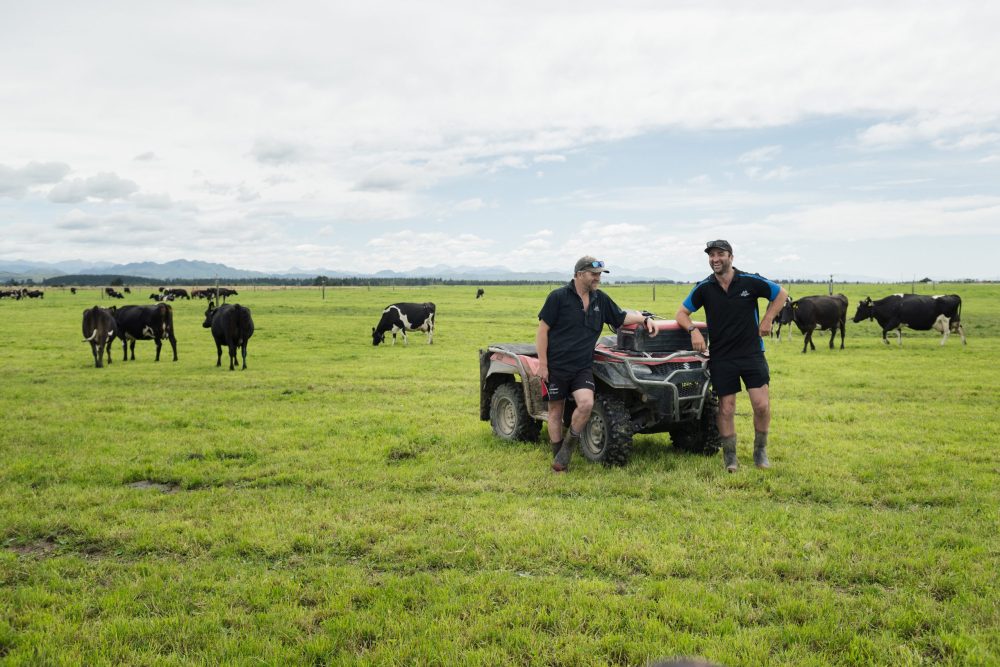
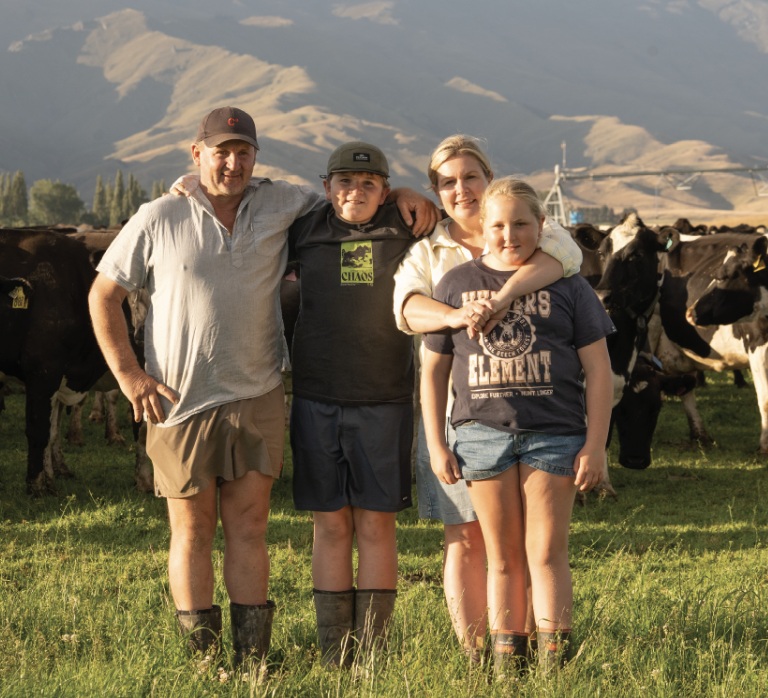
More control with less work has been the theme of Central Otago dairy farmers, Tim and Mel Rivers, in the last two years since installing Halter collars on their 1,200 cow hilly, spray irrigated dairy farm in Alexandra. They converted the dry “rabbit infested” block in 2017-18, coinciding with the first year of the Dairy Creek irrigation scheme.
They weren’t sure the investment in Halter in April 2024 would stack up. Today, they describe it as a fundamental shift in how they farm – not just a new bit of tech.
It came from mounting pressure for more management oversight rather than a single breaking point. The farm managers they relied on didn’t always hit the potential of the fully irrigated conversion so the Rivers’ saw it as an opportunity to step back into hands-on management. With Halter, it didn’t mean stepping backwards on lifestyle.
“Halter enabled us to take out the farm manager and have more influence, more control, but not take on more work,” explains Tim.
There are some misconceptions out there in the market that to be able to justify Halter, you need to drop a labour unit, but the Rivers’ move to Halter is about more control of the fundamentals with greater staff efficiency and ‘buy in’ to the day-to-day from their Filipino workers.
Tim doesn’t adopt new technology lightly and was nervous until he started to see results. They have experienced Halter through two full seasons, including mating, peak production, dry periods and staffing changes and now the numbers back it up.
“Halter allows for real system changes and to have more time to make higher value decisions.” – Hayden Craw, Agribusiness Advisor
Agribusiness Advisor, Hayden Craw, has worked with the Rivers’ since they bought the farm in 2014, converting it to a dairy farm and says Halter unlocked the system change they’d been aiming for.
Comparing their first Halter season with the year prior, Hayden says the Rivers’ Farm is tracking around 50,000 kg MS ahead, with about a 4-5% lift in production per year and roughly 2T/ha extra grass grown and harvested. At the same time, he shared their six‑week in‑calf rates have climbed from 63% pre‑collars to 77% after Halter, while death rates have dropped from close to 4% to under 2%.
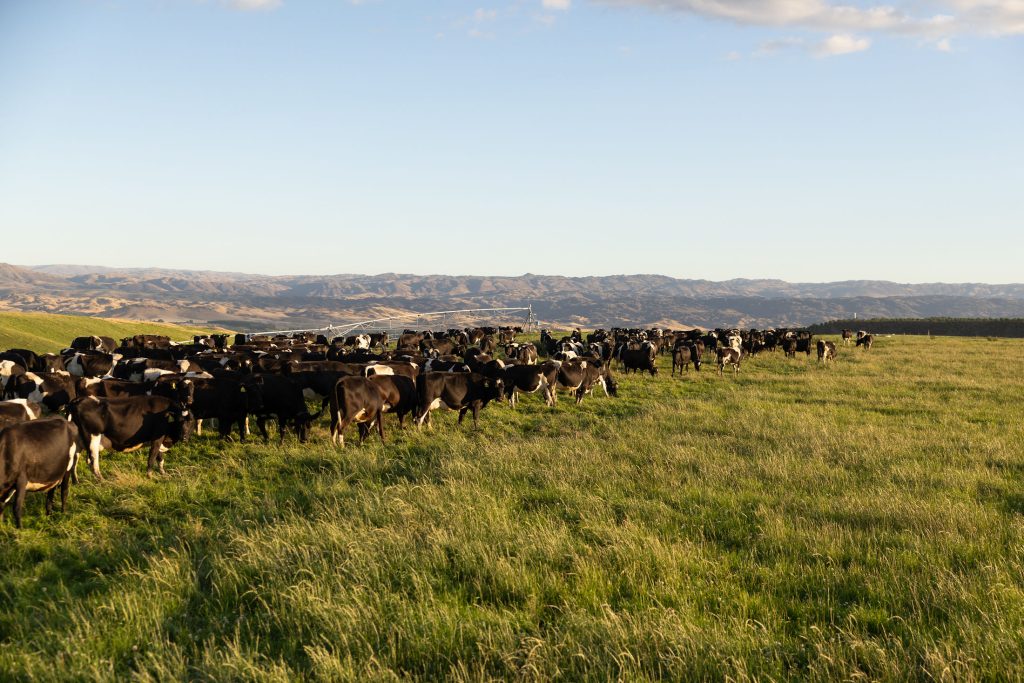
The farm is hilly, with terrain that makes traditional fencing, pasture control and consistent allocation more difficult. Shifting break fences and managing multiple mobs across uneven ground adds significant labour and mental load.
The major change to their farm system is how they have changed their pasture allocation and mob structure to a main “engine room” herd, a younger second herd, and a lighter, higher‑producing third herd kept closer to the shed.
“We have improved pasture utilisation and cow welfare, while also freeing staff from low‑value tasks,” explains Tim.
Halter has also reshaped how Tim and Mel winter their cows, particularly on beet. Before collars, they were feeding up to 12kg of beet per head and relying heavily on manual shifting. That combination created pressure: cows were over‑dependent on the crop, shifts were labour‑intensive and it was easy for things to go wrong in bad weather or under time pressure.
He used time‑limited breaks, watching cows come off the beet rather than leaving them on all night, so he could build trust in the system while protecting animal health. He then began to deliberately pull the beet back to around 8kg and filled the rest of the diet with other supplements. Crucially, the collars give him precise control over ‘time on crop’.
A significant shift is in how easily and often they can now move cows. Instead of sending “three guys out with bags and bikes,” to drag cows off a paddock, they push a button and shift mobs multiple times a day without wasting crop. That has reduced trampling and lift‑off losses, improved transitions and made it much simpler to integrate winter feeding with the rest of the farm system.
Both Tim and Mel link this to their wider productivity gains: better body condition and transitions into lactation, higher six‑week in‑calf rates and lower death rates. Later starts, fewer rushed decisions and reduced stress have had a meaningful impact on both staff retention and family life.
“Halter allows for real system changes and they have more time to make higher value decisions,” says Hayden.
Health and safety and wear-and-tear have also improved. Fewer early‑morning trips on steep country and far less quad work have cut risk and repair bills.
“Some of the really big gains are unmeasurable – the health and safety and peace of mind with staff getting around the farm. They’re not out in quite steep country at 4am bringing cows in and rolling a bike. That’s been huge for us,” says Mel Rivers.
Medstone Dairy
Similar advantages have been seen at Medstone Dairy, a large-scale, fully self-contained dairy operation run by the Ginders brothers, Sean and Craig, milking 1200-1350 cows.
They transitioned from Allflex to Halter, to focus on flexible virtual fencing and the ability to back-fence and reshape pasture allocation.
Whilst Craig Ginders’ primary focus is young stock, along with strategic oversight of the wider system, Sean runs the day-to-day dairy operation. He is responsible for pasture allocation, mating and reproduction, staff management and performance metrics, and is highly numbers-focused.
They experienced winter crop management with their first winter last year, putting Halter on in May 2025. What used to be a labour‑intensive, often wasteful job has made winter grazing on crops become precise, low‑stress and far more efficient.
If the weather turned, the lack of flexibility quickly showed by being able to easily make changes to the feed allocation instead of driving a tractor up and down crop paddocks and wasting whatever is run over. Sean now feeds cows more precisely with multiple shifts a day, feeding in increments throughout the day, regardless of conditions.
“There’s just no wastage. No wastage is key, I was struggling to find jobs for our guys over winter and told them to go on holiday,” says Sean.
“We’ve gone up in milk, we’re 12% up, and a lot of that’s to do with other things we’ve been doing on-farm, but I can definitely see that the pasture management from Halter is going to grow more grass.” – Sean Ginders, Medstone Dairy
Halter has also changed how Sean manages cow comfort and animal health over winter. Instead of a single long break, he can design the day around how and where cows rest and graze.
“We do fodder beet during the day and then kale at night, just letting them sleep on the kale at night so we don’t blow any cows over. But they’re always pretty much beside each other.”
The biggest change has been in how the Ginders’ manage pasture. Their pivot‑irrigated, pie‑shaped farm, used to rely on fixed back fences and reels, which limited flexibility. Halter lets him target the best grass first and avoid over‑ or under‑grazing in patchy paddocks.
“Now I’ve got the option to do whatever shape of fence I want, especially on those hot days, it means the cows are walking shorter distances to water troughs.”
Previously, the farm relied on weekly plate metering each Monday. Now, Sean has live daily growth information at his fingertips.
“We’ve gone up in milk, we’re 12% up, and a lot of that’s to do with other things we’ve been doing on-farm, but I can definitely see that the pasture management from Halter is going to grow more grass.”
Hard ground, rocks, irrigation infrastructure and broken standards made physical fencing time-consuming and unreliable, particularly on support blocks and with young stock. These challenges increase labour pressure and make consistency harder to maintain.
With collars on the young stock, the heifers are already trained on the Halter system before joining the milking herd, this means the farm is better set up for future seasons and takes one more thing off the to-do list. Halter is used to monitor returns and draft heifers on heat through the race, improving their mating management.
Sean said one of the stand-out things was how much he relies on talking to Halter’s AI bot, asking questions so as not to bother the support team. He also relies on farm system change learnings via other farmers in the local “Collar Club” set up by his vet.
“It’s hard to go back. No one will farm without Halter now that they’ve got it,” says Hayden Craw on his observations with the Rivers’ and his other farming clients with Halter.
Tim’s Top Tips
- Use it for system change, not just shifting cows: Don’t treat Halter as an “expensive heading dog”.
- Put staff on higher‑value work – assessing pasture cover alongside Halter’s pasture model, managing feed and making decisions
- Build trust in stages, especially in winter – start with shorter breaks and time‑limited access to crops so you can watch how cows respond.
Sean’s Top Tips
- Start before calving if you can – getting cows and heifers well trained ahead of calving makes that busy period much easier
- Use the flexibility of virtual fencing – design breaks to hit the best grass first, reduce walking to water, and shift more often to cut wastage
- Lean on the support network – use Halter’s local Account Managers, Customer Support team, AI bot and local “collar clubs.”
Visit halterhq.com