Extended Lactation: A New Approach to Easing Peak Workload
Could a 24-month calving interval ease spring workload and reduce non-replacement calves? After two years of research, DairyNZ is now working with a commercial farm to test the system – and early signs are promising. Words Dr Paul Edwards.
Spring calving is one of the most intense periods on a dairy farm. Labour demand spikes, animal health issues peak and the next generation of the herd requires careful attention. In 2022 the question was raised: is there another way?
DairyNZ’s Extended Lactation Project is exploring one option – lengthening the calving interval from 12 to 24 months. The goal? Smooth out seasonal pressure, reduce non-replacement calves and maintain profitability.
From theory to trial
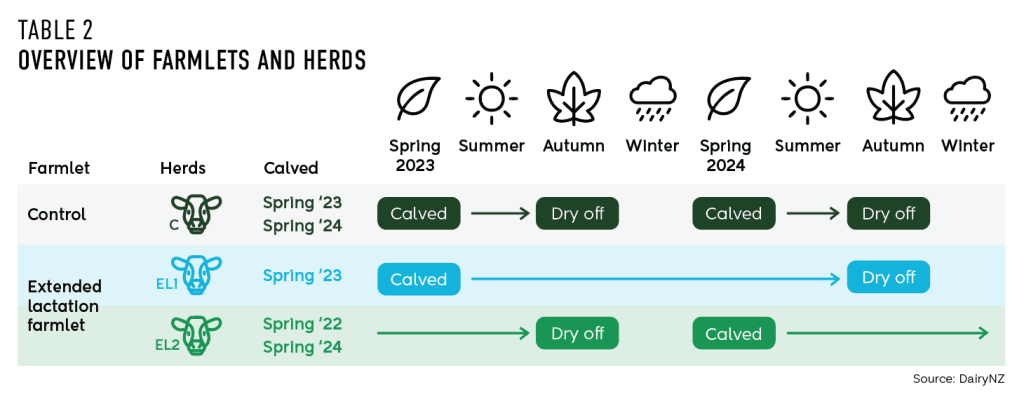
The idea of extended lactation emerged from a co-design workshop involving farmers, where spring workload was flagged as a major stress point. Modelling suggested that a 24-month calving interval – with half the herd calving each spring – was the most practical and profitable option. Profitability was predicted to be higher in Northland, similar in Waikato, and slightly lower in the South Island. Eighteen-month intervals were ruled out early. While they might have higher milk production, profit was less due to mismatched pasture growth and therefore supplement requirements.
Two years at Scott Farm
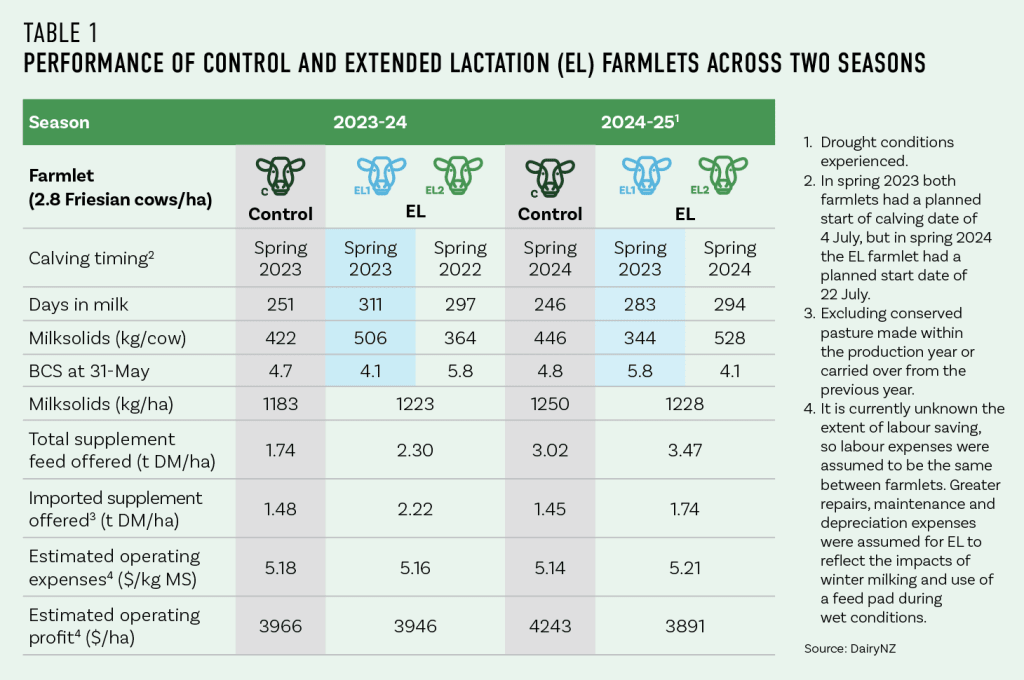
Since 2023, DairyNZ scientists have compared a 24-month system with the traditional 12-month cycle at Scott Farm in Hamilton. The trial uses Friesians stocked at 2.8 cows per hectare, with half the herd calving each spring.
After two seasons, results show milksolids production, operating profit and sustainability were broadly similar between systems. But there were challenges. Keeping cows milking through winter required extra feed – about 180kg per cow in year one. In year two, researchers delayed calving and aimed to boost autumn pasture cover to reduce this need for supplement, but that reduced days in-milk and lowered profit. The trial has since returned to the same calving dates for both 12- and 24-month systems, with some extra winter feed now planned.
 Fewer calves, less pressure
One clear opportunity is fewer non-replacement calves. With only half the herd calving each year, the typical 22% replacement rate drops to 11%, which is too low. To maintain herd age balance, about a third of cows calving each year are first-calvers, making an effective replacement rate of 17%. Between fewer calves born and a greater proportion of these becoming replacements, non-replacements are reduced by
almost 60%.
To illustrate the magnitude of this effect, if every farmer operated this system, the number of non-replacements would be similar to the existing number the sector rears for dairy beef.
Taking it on farm
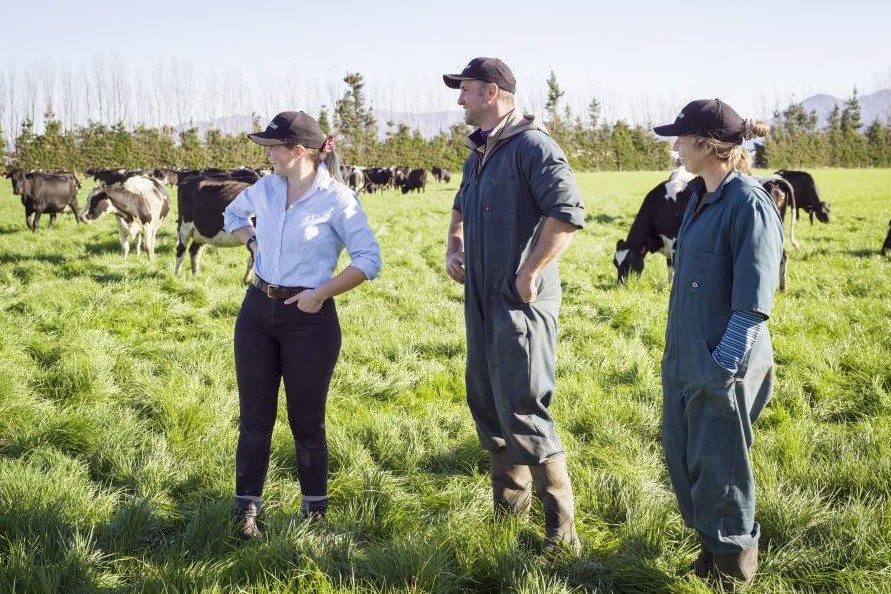
After promising farmlet results, DairyNZ sought to partner with a commercial farmer to scale up the system. Sharemilkers Ben Fisher, Emma Gardiner and Caleb Higham at Gordonton put their names forward. Their 240-cow crossbred herd began transitioning in 2024, mating only 60% of cows that spring. The first calving under the new system has just wrapped up in early September 2025.
Ben says most cows adapted well.
“They milked strongly through winter. One cow dried herself off and another will be culled, but we expected it wouldn’t suit every animal.”
The biggest difference? People.
“We noticed our farm manager seemed significantly less stressed during calving,” says Ben. A compact six-week mating period and sexed semen meant most heifer replacements were in the shed within three weeks. Health issues were similar proportionally, but with fewer cows calving, the total number was lower. And bobby calves? “We used beef semen, so the only real bobbies were from two-year-old first-calvers.”
Emma sees the upside but admits it’s a mindset shift.
“You have to get used to seeing cows cycling that won’t be mated for another year.”
What’s next?
Jersey herds joined the farmlet trial at Scott Farm in June to assess breed performance and the potential for crossbreeds. Researchers will continue monitoring profitability, feed demand and animal health, and farmers like Ben and Emma will continue sharing their experiences.
Could extended lactation become a mainstream option like once-a-day or flexible milking? It’s early days, but the signs suggest, depending on your location, it could ease pressure without sacrificing profit.