Native Planting and Community Action
In a shift from an exclusively mitigating approach, to one that includes restoration and rehabilitation, DairyNZ’s focus on improving freshwater is working with dairy farmers and catchment groups in a new wave of environmental care. Words Jacob Quinn.
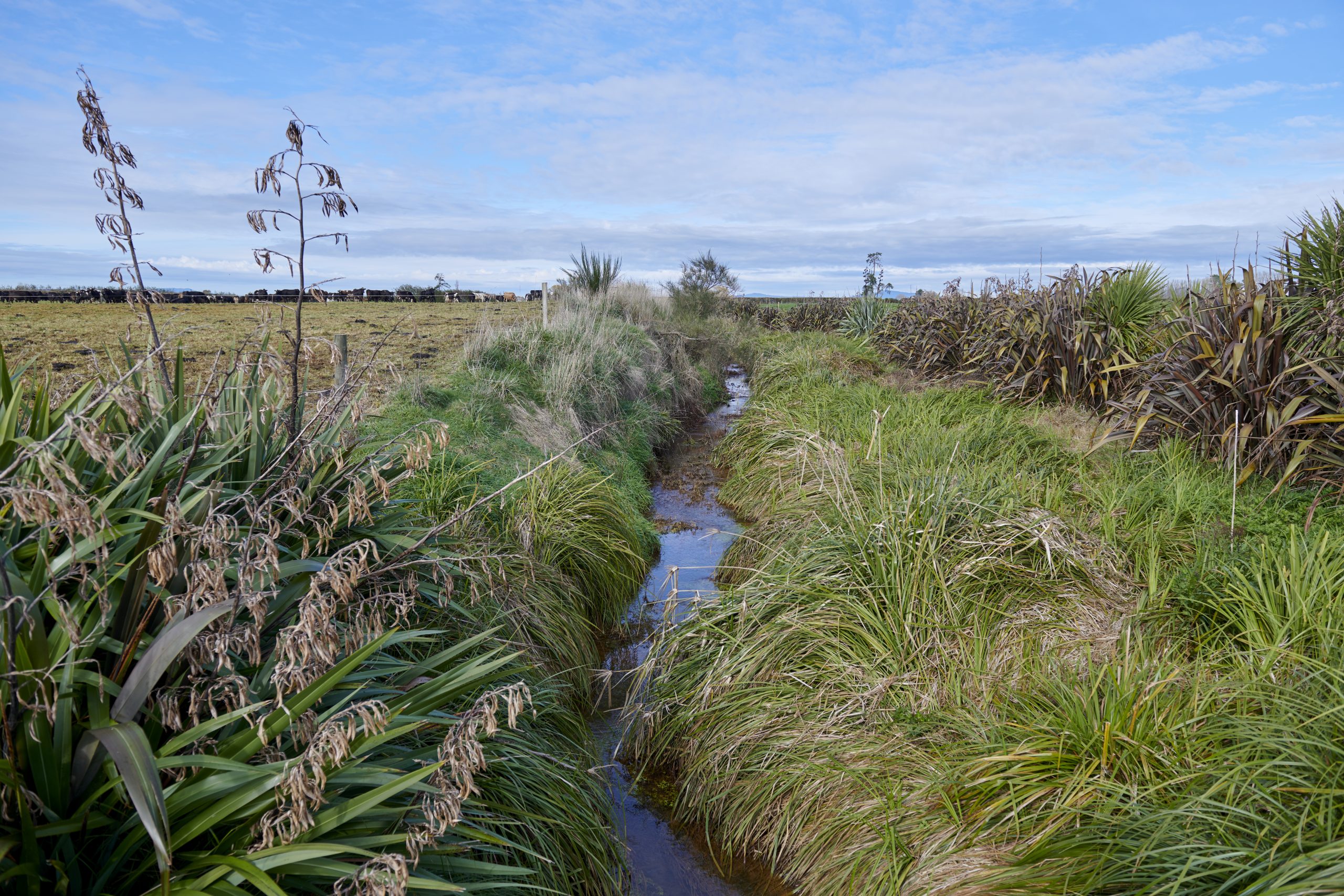
Dairy farmers and catchment group’s focus’ are shifting from beyond nutrient limits to restoring ecosystems and improving freshwater health. While reducing nitrogen, phosphorus and sediment losses remains important, focusing only on contaminants risks missing the bigger picture. Healthy streams depend just as much on habitat, biodiversity and natural processes as they do on nutrient and contaminant management.
From Mitigation to Restoration
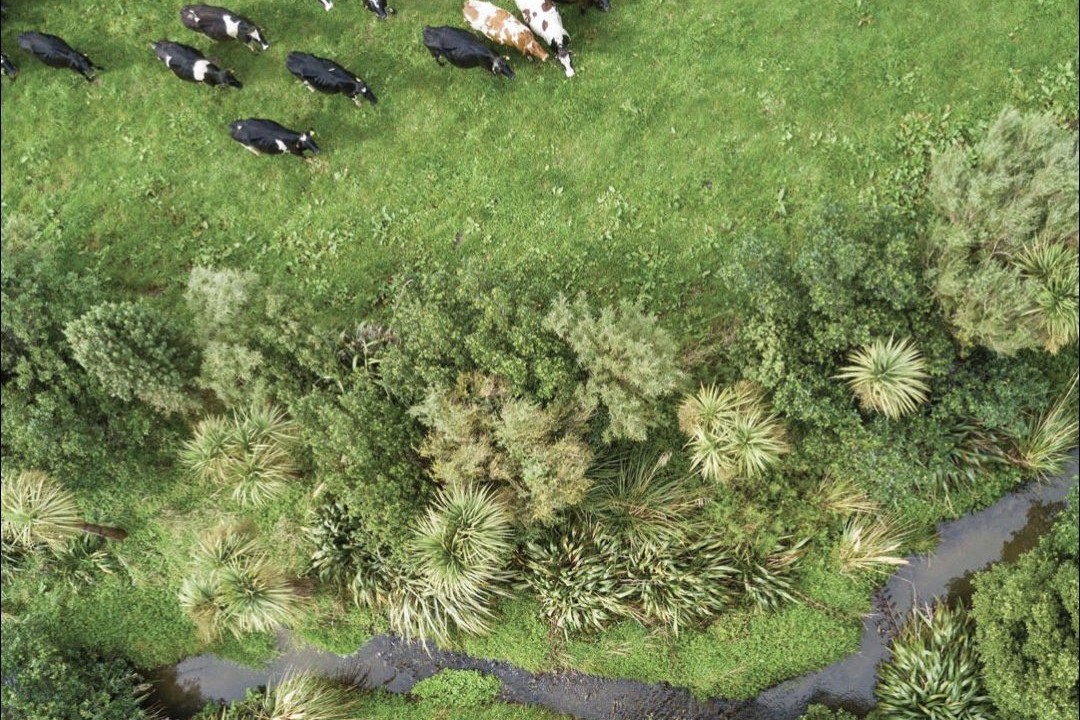
DairyNZ advocates for a shift from an exclusively mitigating approach to one that includes restoration and rehabilitation. Riparian planting, wetland enhancement and biodiversity corridors not only reduce contaminants but also strengthen ecological integrity, creating thriving habitats for native flora and fauna. These are the ultimate signs of healthy waterways.
The Power of Riparian Planting
Riparian planting is one of the most effective actions available for improving stream health in pastoral streams. It stabilises stream banks, provides valuable habitat for native fish and shade that controls nuisance weed growth and cools the water. This is critical because small pastoral streams can be 10 to 12 degrees warmer than forest streams, and many native fish cannot survive in water above 25 degrees. No amount of nutrient reduction can fix overheating streams. Shade is the solution.
Small streams make up around 75 percent of New Zealand’s stream network. They respond quickly to restoration, supporting species like banded kōkopu and tuna (eels), and influencing downstream health.
Just one kilometre of riparian planting can cool a stream by five degrees, a powerful nature-based solution. “The science of shading is more robust than the science of contaminant limit setting,” says Dr Craig Depree, DairyNZ Principal Freshwater Scientist. Research confirms that habitat quality, stream temperature and biodiversity are better indicators of ecosystem health than nutrient concentrations.
Policy Needs to Catch Up
Despite this evidence, national freshwater policy has been slow to reflect these priorities. DairyNZ is advocating for a framework that moves away from rigid nutrient targets towards attributes focused on what is important to communities – for example, native fish diversity. Supporting catchment groups, which have proven to be leaders in on-the-ground improvements to aquatic and terrestrial biodiversity in productive catchments, is central to this approach.
Farmers Leading the Way
Across the country, farmers are partnering with iwi, councils and community groups to plant natives, restore wetlands and protect waterways. Johan van Ras, a DairyNZ Environmental Specialist and farmer in the Piako catchment, says: “We’re doing this for the next generation, and I’m proud of what we’ve achieved. The power of the group is the only way we’d have got this done.”
Johan has seen practical benefits too. After Cyclone Gabrielle, his planted stream banks stayed intact while neighbouring banks collapsed. He no longer needs to clear sediment or weeds from drains, saving time and money. Wetland restoration on his farm is creating habitat for taonga species like tuna and could attract endangered birds such as the Australasian bittern (matuku-hūrepo). “It really hits home when you see these things on your farm and know it’s because of what we’ve done,” Johan says.
Simple Wins: Planting sedges on edges for small waterways
Native plants like sedges are unsung heroes. They spread quickly, stabilise banks, resist floods and provide valuable food and habitat for aquatic life. “Planting sedges is the simplest thing a farmer can do,” Johan says. “It’s robust, lays down during floods and reduces maintenance costs.”
Community Support Matters
Farmers do not have to do this alone. Catchment groups provide co-funding, plants, expertise and people power. They connect communities, share knowledge and help farmers adopt good practices. These groups are one of the best opportunities to improve waterways and boost biodiversity while supporting productive farming.
A Call to Action
What can you do? Shade your small waterways or learn about planting, understand the science of shade and protect your land from extreme weather. Together we can create healthy streams and biodiverse landscapes while sustaining a productive dairy sector.