Nutrition the missing link in profitability
A major rethink of how New Zealand dairy farms feed their animals. Kaitlin Bates says smarter, science-based nutrition may hold the key to dairy’s next productivity and profitability gains. Words Sarah Perriam-Lampp.
There is a surprising disconnect at the heart of New Zealand dairying. Although nutrition is recognised as fundamental to animal health and milk production, Waikato-based Farmlands Technical Field Officer, Kaitlin Bates, found in her 2025 Kellogg’s research that it remains “inconsistently understood and poorly integrated” across many farm systems.
Drawing on 18 in-depth interviews with nutritionists, industry bodies, farmers and rural professionals, alongside a comprehensive literature review, she found New Zealand dairy farmers are “leaving money, performance, and resilience on the table” by failing to treat nutrition as a strategic driver of farm success.
“Smart nutrition isn’t about chasing the latest product or feeding fad. It’s about building strong foundations for your business by investing early in stock,” says Kaitlin.
New Zealand’s pasture-based dairy system has long been considered the country’s competitive advantage. But Kaitlin points out pasture alone cannot meet the increasingly complex demands placed on the modern dairy cow, particularly high-genetic-merit animals with significant energy needs in early lactation.
Her Kellogg’s report, released in 2025, titled “Smart Nutrition, Stronger Herds: A Holistic Approach to NZ Dairy Excellence”, focused on young stock being the hidden weak link alongside a notable gap in formal training for animal nutrition advice to farmers
Young Stock: The Hidden Weak Link
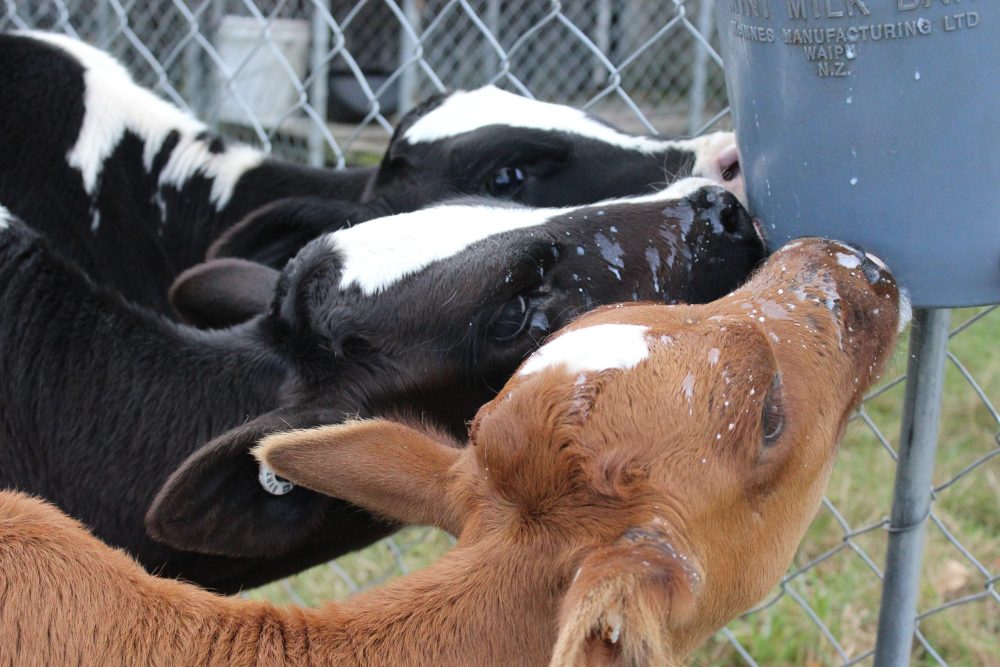
One of her report’s starkest findings concerns young stock. Kaitlin suggests that improving young stock nutrition is one of the most cost-effective ways to increase herd productivity and one of the most urgently needed shifts in practice.
“Despite calves representing the future of a farmer’s herd, the six to nine month post-weaning period remains chronically overlooked on many farms. This phase, along with the second winter, is critical for bone development and future milk production.”
Kaitlin points out that the first six months are only part of the story. The real pressure often comes between six and twelve months, especially in tough summers.
“We go into a dry summer and feed them cheap feed. While there is a time and a place for that, it’s just not the right time and place for young stock. They’re our investment animals.”
Her evidence from local and international research confirms that early-life nutrition is directly linked to first-lactation performance, reproductive success and long-term health. Poor growth rates and inadequate protein-energy intake have been associated with structural issues such as spontaneous fractures in first-calving heifers.
“We’re not actually recognising them for their potential. We don’t fully understand what the investment needs to be from day zero all the way to 10 years old.”
Missing Standardised Knowledge
Her interest in this area, enhanced by her day job at Farmlands, allows her to look at the ‘whole farm system’ – pasture, young stock, cows, environment and economics.
“It’s not just about selling the next truckload of feed but bringing value to farmers through quality advice.”
“Despite calves representing the future of a farmer’s herd, the six to nine month post-weaning period remains chronically overlooked on many farms.” – Kaitlin Bates, FARMLANDS & 2025 KELLOGG’S SCHOLAR
Due to a notable gap in formal training across the sector, she has seen the compounding issues of variable pasture quality and excess crude protein leading to nitrogen losses.
Tertiary institutions offer limited hands-on or ruminant-specific nutrition training, while existing professional development often centres on product knowledge rather than systems thinking. Interviewees repeatedly stressed the need for “standardised, practical, nutrition training” across the sector.
“In New Zealand, we don’t have a career pathway or an accreditation. The title nutritionist has no association to any formal training yet can hold huge implications on animals health or productivity and ultimately farm businesses.”
Nutrition as an Economic Lever
Kaitlin’s report makes a strong economic case for smarter feeding. Feeding strategies significantly influence feed conversion efficiency (FCE), a key driver of milk income over feed cost (IOFC), emissions intensity and overall farm profitability.
“Farmers or advisers may look at cost cutting without recognising the return on investment that comes from high quality feed.”
Many farms lack essential cow-level data like daily milk output and milk income over feed cost (IOFC), which hampers economic performance visibility and informed decision making. Integrated financial-nutritional advisory models to support this analysis such as the Dairy Victory Platform (DVP) could help farmers quantify the economic benefits of improved feeding decisions. The DVP uniquely calculates economic key performance indicators (KPI) at the cow and herd levels and benchmarks these against a dynamically selected cohort of farms, facilitating comparisons across various farm sizes, and milk production levels.
She calls for a sector-wide effort to revive and modernise the once-influential FeedRight programme, develop nationally recognised micro-credentials for nutrition advisors, and create cross-disciplinary advisory teams combining vets, agronomists, nutritionists and financial specialists.
A common theme emerged for Kaitlin while doing her Kellogg’s report – New Zealand does not need more information, it needs better integration.