Owl Farm 10 years of sharing dairy wisdom
A Waikato school dairy farm’s tertiary collaboration is proving a successful model for sharing best practice with farmers and bringing on the next generation. Words Anne Lee.
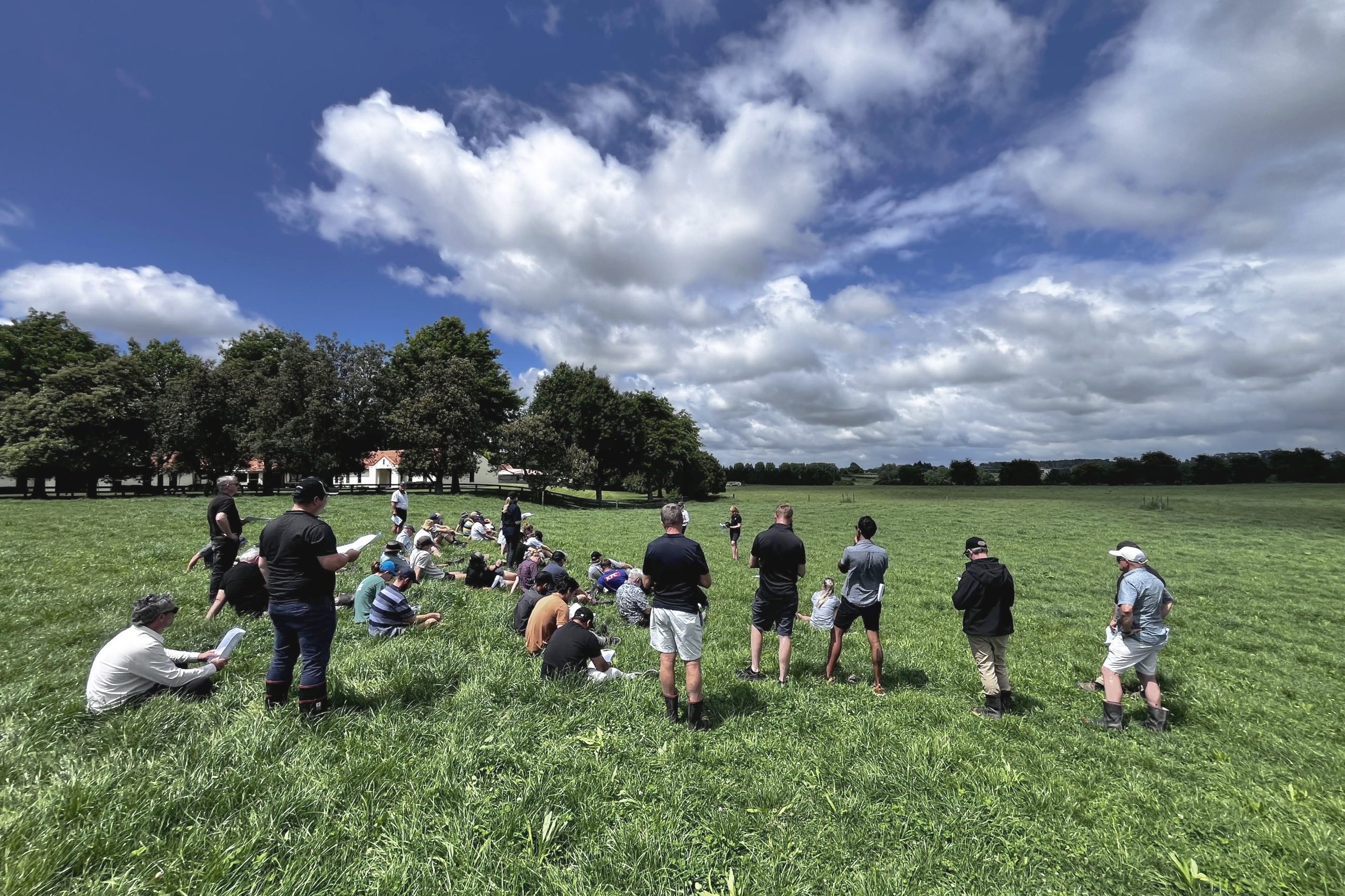
More than 22,000 people have passed through Owl Farm’s gates over the past 10 years.
Some have been farmers and rural professionals keen to hear the practical side of implementing practices that lift productivity while reducing environmental footprint. Some have been members of the public attending farm open days with an eye to seeing cows close up and connecting with rural New Zealand. Others have been researchers or overseas customers for New Zealand dairy products. And some have been the scores of St Peter’s Cambridge school students who have used the farm to bring real world aspects to their classroom learning. The farm has had students completing geometry projects, measuring pasture feed breaks and paddock layouts, they’ve carried out experiments for science fairs and engaged with the farm across a range of practical settings.
The farm’s current Demonstration Manager, Jo Sheridan, says the whole farm team, the school community and Lincoln University, had a chance to reflect on the farm’s success when Owl Farm celebrated the 10-year anniversary of its formation as a joint-venture operation late last year.
It was a chance sports event sideline conversation between former Lincoln University Vice Chancellor, Dr Andy West, and founder of specialist rural recruitment and human resources company Fegan and Co, John Fegan, that led to the ultimate formation of the joint venture in 2015. The farm has been part of the school since 1935. The aim of the joint venture was to bring best farm practice and good science together, sharing it with farmers and the wider farming sector, but also, importantly, it was a means to show students the array of opportunities agriculture held as a career pathway.
Since the joint venture began, the number of students studying in the food and fibre sector has almost tripled. The 140ha farm milks 360 cows using a DairyNZ System Two management system to produce a target of 400-440kg milksolids (MS)/cow.
Over recent years it has employed strategies to reduce potential nitrogen (N) loss, cutting it from 40kg N/ha/year to 24kg N/ha/year.
The farm team has worked to reduce bobby calf numbers and boost the number of calves bred to be marketable animals, reared to have purposeful lives. Since 2018 it has lifted the number of those calves from 34% to 83%.
In-shed feeding
At its most recent focus day, the agenda focused on using data from pasture and cows to inform decisions on in-shed feeding. The systems are increasingly being installed in Waikato as an alternative to feedpads and to reduce damage in paddocks from palm kernel (PK) trailers.
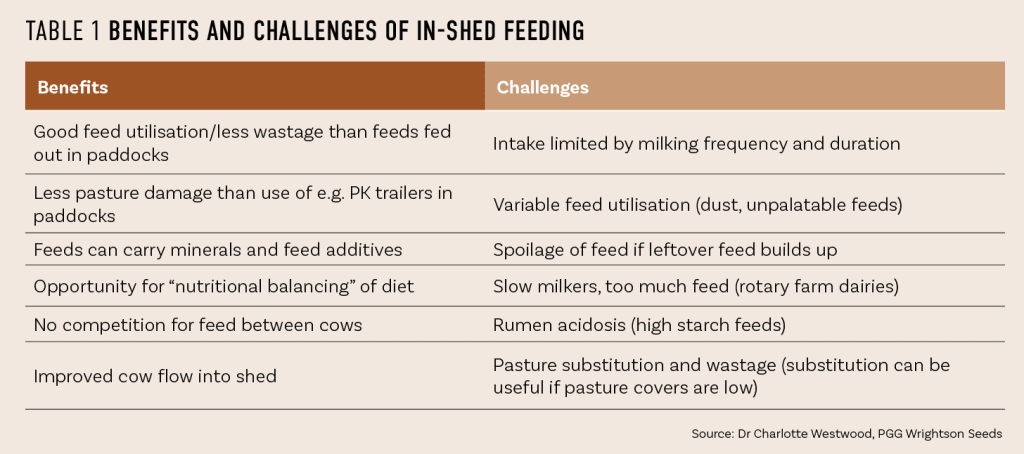
PGG Wrightson Seeds Veterinary Nutritionist, Dr Charlotte Westwood, outlined the challenges and benefits of the systems for cows and the overall farm business.
When compared with feeding silage or balage in the paddock, in-shed feeding of grain, blends or pellets typically results in improved supplement utilisation.
“After accounting for feed costs, interest, repairs and maintenance, nutrient quality and feed wastage, the cost per kilogram of dry matter (DM) and per megajoule of metabolisable energy (MJ ME) actually consumed by cows, is often lower with in-shed feeding than with silage,” she says.
The value proposition is strongest for farms already feeding silage in paddocks rather than those with well set-up feedpads or barns and well-managed, high quality silage systems.
One big advantage for in-shed feeding is that, regardless of weather, it enables minerals to be blended with feed concentrates and provides for efficient, low-labour delivery year-round.
“For much of the year cows require mineral supplementation – particularly calcium and magnesium in spring and zinc during summer and autumn,” Charlotte says.
But on the down side, high mineral inclusion rates can create dustiness or reduce palatability leading to feed refusal. Some animals may not consistently consume feed offered at milking which means they miss out on mineral supplementation. Dry cows will also need to be supplemented in another way.
In-shed feeding provides an opportunity to manage cow diets and provide additional energy if pasture quality is low. It can also correct excess or insufficient nutritional aspects of their pasture diet.
Monthly testing of pasture is ideal to understand changes in its energy, protein, fibre and mineral content.
“Owl Farm has used in-shed feeding to enable the inclusion of limeflour in the feed blend because pasture testing revealed low levels of calcium during spring this season,” Charlotte says.
“Don’t expect in-shed feeding to improve cow flow if cows are slow or unwilling to come into the farm dairy because of stray voltage,
poor bail comfort or yard design,” she warns.
“But it can improve cow flow if palatability is good. Conversely though, highly palatable, tasty feeds can cause problems in rotary farm dairies if cows don’t want to leave the feed and the bail.
“Care has to be taken in managing in-shed feeding of slow milking cows that stay on the platform longer than others because they can be inadvertently offered double or even triple their intended allocation.
“Risk of rumen acidosis will be high for high starch concentrates and although technological advances have reduced the risk compared with older shed designs, this remains an issue that requires careful monitoring,” she says.
Substitution is where cows leave pasture in the paddock and don’t reach desired grazing residuals because they are being fed supplements.
“Post-grazing residual management is essential at all times of the year but becomes especially important when high-quality, starch-rich feeds are being offered,” Charlotte says.
The best returns on supplement will come when high quality pasture is fully utilised first.
In-shed feeding can be used as a grazing management tool when pasture supply is low. It’s an efficient way to add in supplements and, while still achieving desired residuals, lengthen the grazing round.
Choosing the right feed to truly supplement pasture and planning well, will give the best outcomes.