Pasture-Based Wintering: The Low-N Alternative
Research from a recent Canterbury farm study shows wintering on diverse pastures can have a range of benefits. Words Dr Racheal Bryant.
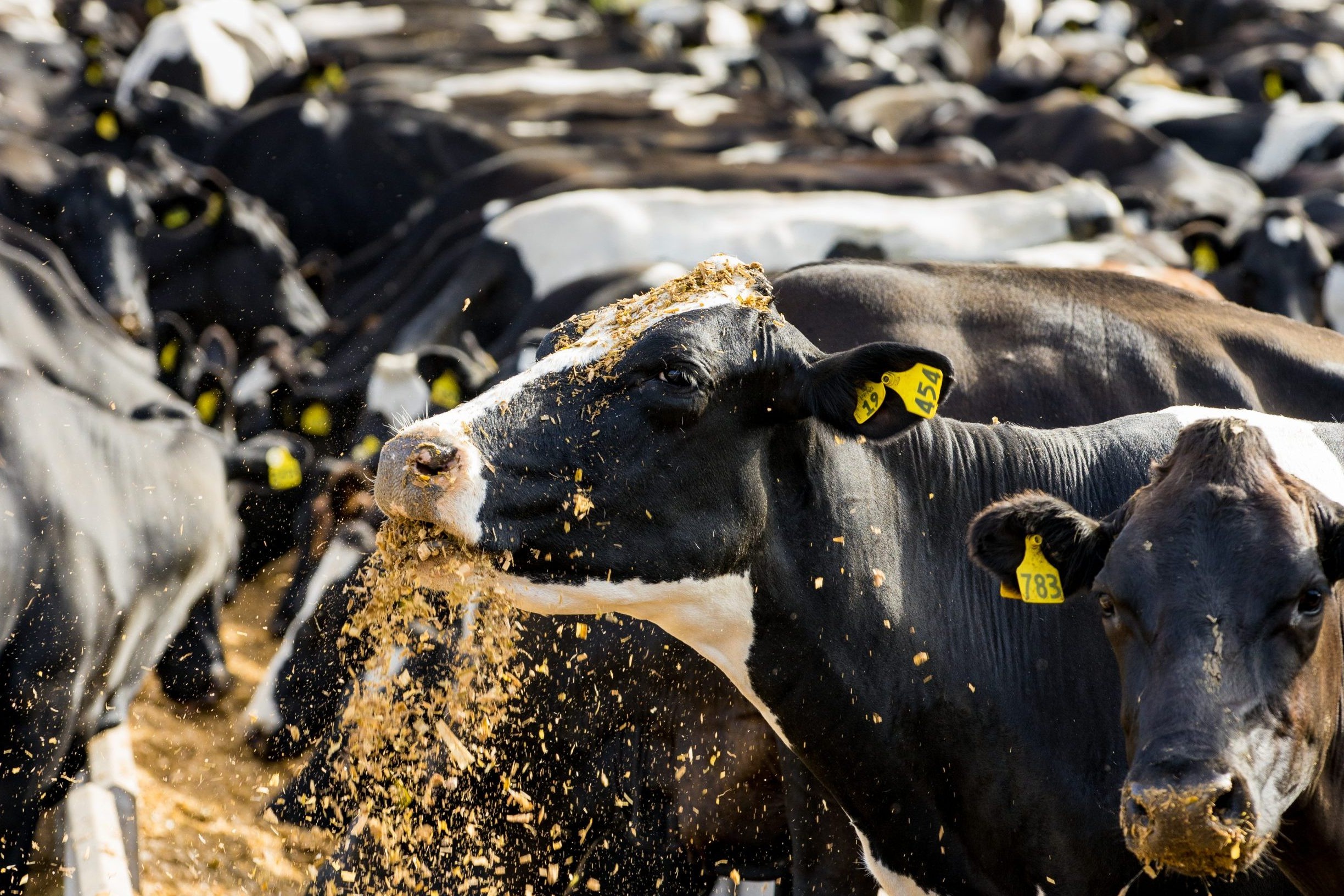
For decades, wintering dairy cows on annual forage crops like kale or fodder beet has been standard practice in the South Island. Although they offer advantages in terms of high quality yields, high stocking densities are associated with environmental risks for nitrate leaching, soil damage and surface run-off, as well as potential animal welfare risks under wet conditions.
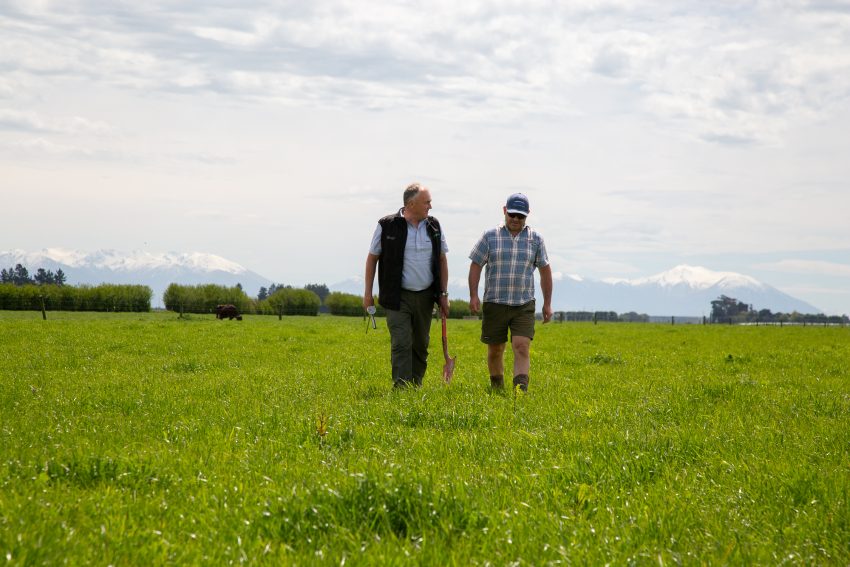
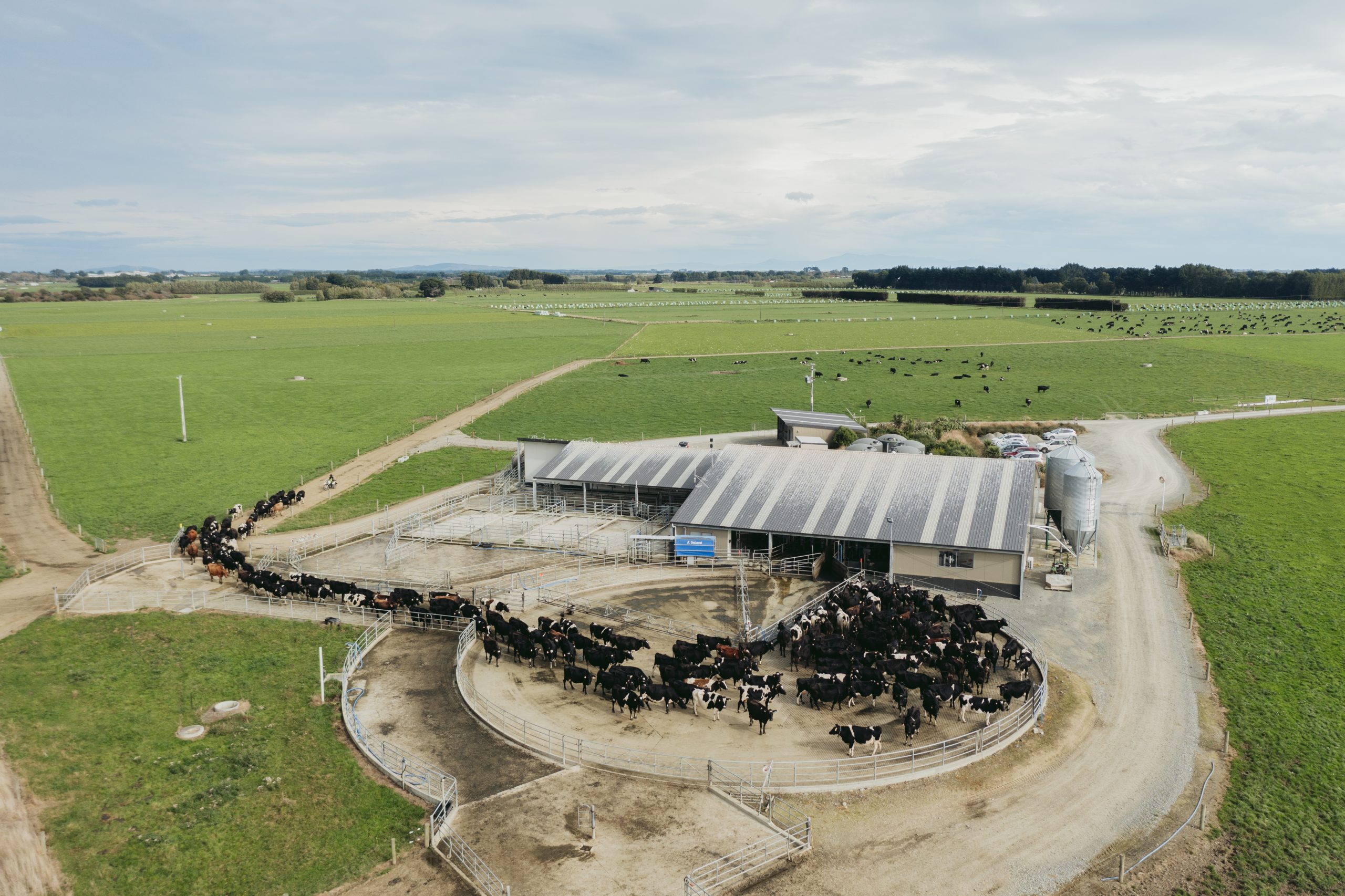
New research, conducted on commercial dairy farm, ‘Backtrack Dairies’ near Methven, provides compelling evidence that wintering on diverse pastures significantly reduces the risk of nitrogen (N) loss compared with traditional kale (or fodder beet) systems, offering a potential alternative for those considering their options around managing their N footprint.
The study was carried out during June and July 2023, comparing:
Kale Crop Wintering: 360 pregnant kiwi-cross cows grazing 10 ha of kale supplemented with baleage, with the area cultivated and direct drilled with perennial ryegrass and red and white clover in late August 2023. This represented the high-density (7.3 m2/cow/day), traditional system.
Diverse Pasture Wintering: 61 cows grazing 5 ha (20.5 m2/cow/day) of a diverse pasture mix supplemented with baleage. The pastures were established at the same time as kale in December 2022, and included Italian ryegrass, triticale, red and white clovers, Persian and Caucasian clover, chicory and plantain. After wintering, the diverse pasture was undersown with perennial pasture mix in late August 2023.
Total inorganic N in the soil profile (between 0-90 cm depths) was measured at two critical times: immediately after grazing (July 2023) and following spring regrowth (November 2023). Inorganic N, particularly nitrate, is highly mobile and represents the immediate risk for leaching below the root zone (i.e. below 30 cm).
The research was a collaboration between Lincoln University, farmer Jeremy Casey from Backtrack Dairies, and a team of experts from DairyNZ, Enviro Collective and the Bioeconomy Science Institute (BSI) – AgResearch Group. The project was part of the DairyNZ-led Low N Systems research programme, funded by New Zealand farmers via DairyNZ and by the Ministry for Business, Innovation and Employment, with additional backing from Fonterra and CRV.
 The Key Findings
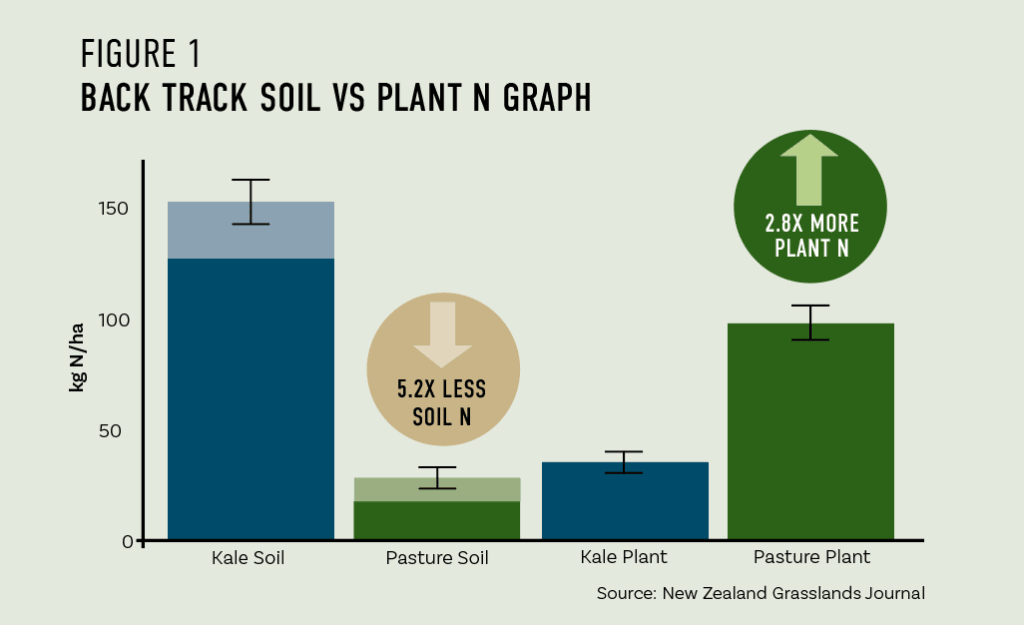
The results clearly showed that wintering on diverse pastures reduced the amount of soil inorganic N available to leach compared with a kale crop system. Immediately following the winter grazing period in July, the total soil inorganic N content in the 0–90 cm depth under the kale paddock was two times greater than under the diverse pasture paddock.
This higher level of N risk persisted into the spring. Four months later (November), after pastures in both areas had grown, the soil inorganic N following kale was more than five times greater than the pasture wintering treatment.
Importantly, the N following the kale crop was accumulating deeper in the soil profile, often reaching high concentrations at the 30 cm depth, and increasing the likelihood of N leaching below the root zone.
The lower N loss risk of the diverse pasture system is attributed to three factors: 1) greater herbage N uptake due to the presence of viable plants immediately post-winter grazing and from cool season active species; 2) the reduced overlap of urine patches due to the lower stocking density and different grazing pattern compared with intensive crop grazing; and 3) lower dietary N intake with potentially lower urinary N excretion (g N/day). Although the latter was not measured in this study, subsequent experiments at the Lincoln University Research Dairy Farm show promising results that these three mechanisms are repeatable.
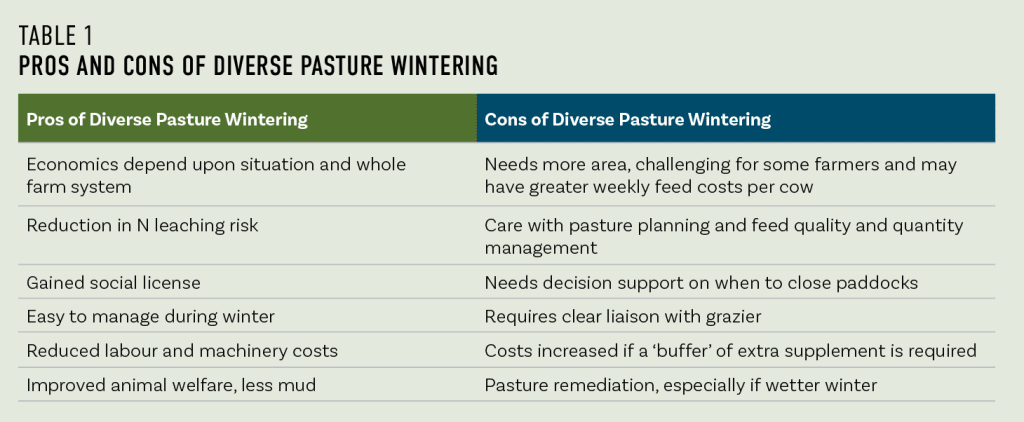
The research highlights several practical and economic considerations for farmers utilising pasture-based wintering. The pasture approach had greater weekly feed costs per cow associated with 2.5 times more land but, for this particular farm, it worked well financially across the whole farm system.
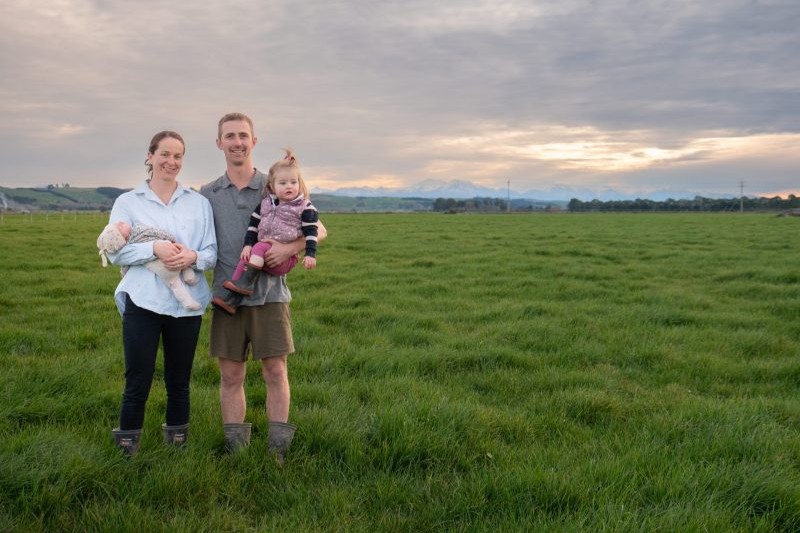
The case study farmer, Jeremy Casey, also recognised several additional benefits, resulting in greater use of pasture wintering in subsequent winters. Working with local farmers he’s able to utilise areas that can be grazed by other stock or used for baleage at other times in the season.
The next research phase is investigating the N leaching risk reductions and animal welfare benefits of different pasture-based wintering approaches compared with kale crop wintering followed by oats catch crop. Importantly, the economic and large-scale practicalities of the greater land requirements are also being explored.