The global leader in cow wearables
With 40% of the world’s cow wearables market, data from 8 million connected cows worldwide and two decades pioneering RFID cow monitoring technology proven on New Zealand farms, Nedap is anything but new. Now you can access their cow technology ecosystem directly.Words Sarah Perriam-Lampp.
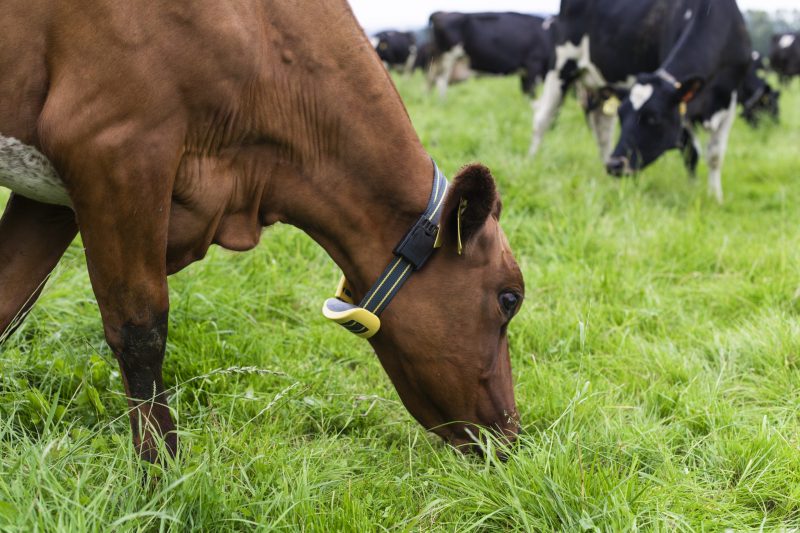
Dairy Farmers have never had more choice in wearable technology. This year, the most globally experienced player entered the New Zealand market as Nedap, despite having had a presence here for 20 years through the supply of their technology to other wearables. Bringing with it the world’s largest algorithm, with 8 million cows connected worldwide.
When comparing heat detection, Greg Hamill, Nedap General Manager Oceania, says that this is a powerful tool for accuracy. For most farmers, mating improvement is the driver, and the payback stacks up quickly.
“You’ve only got to increase your six-week in-calf rate by 1–2% to make a huge impact, not just in the following season but in multiple seasons, because it can be cumulative.”
Nedap has been developing technology since 1929. The Dutch company employs more than 1,000 people worldwide across four streams – livestock, healthcare, security and retail – and was first in the world to use RFID technology in cow monitoring in the 1970s. Today, it is the world leader in cow wearables, with 40% of the market share. However, the name is unfamiliar to many New Zealand farmers, and Greg says they have been here but are flying under the radar.
“We’ve been selling in New Zealand for the last 20 years through business partners under their own brands,” Greg says. “The technology is already well proven on New Zealand farms – what’s changed is how farmers can access it.”
With the rapid growth in wearable technology locally, Nedap put its own sales and support team on the ground in January 2026, while continuing to work alongside its long-standing business partners.
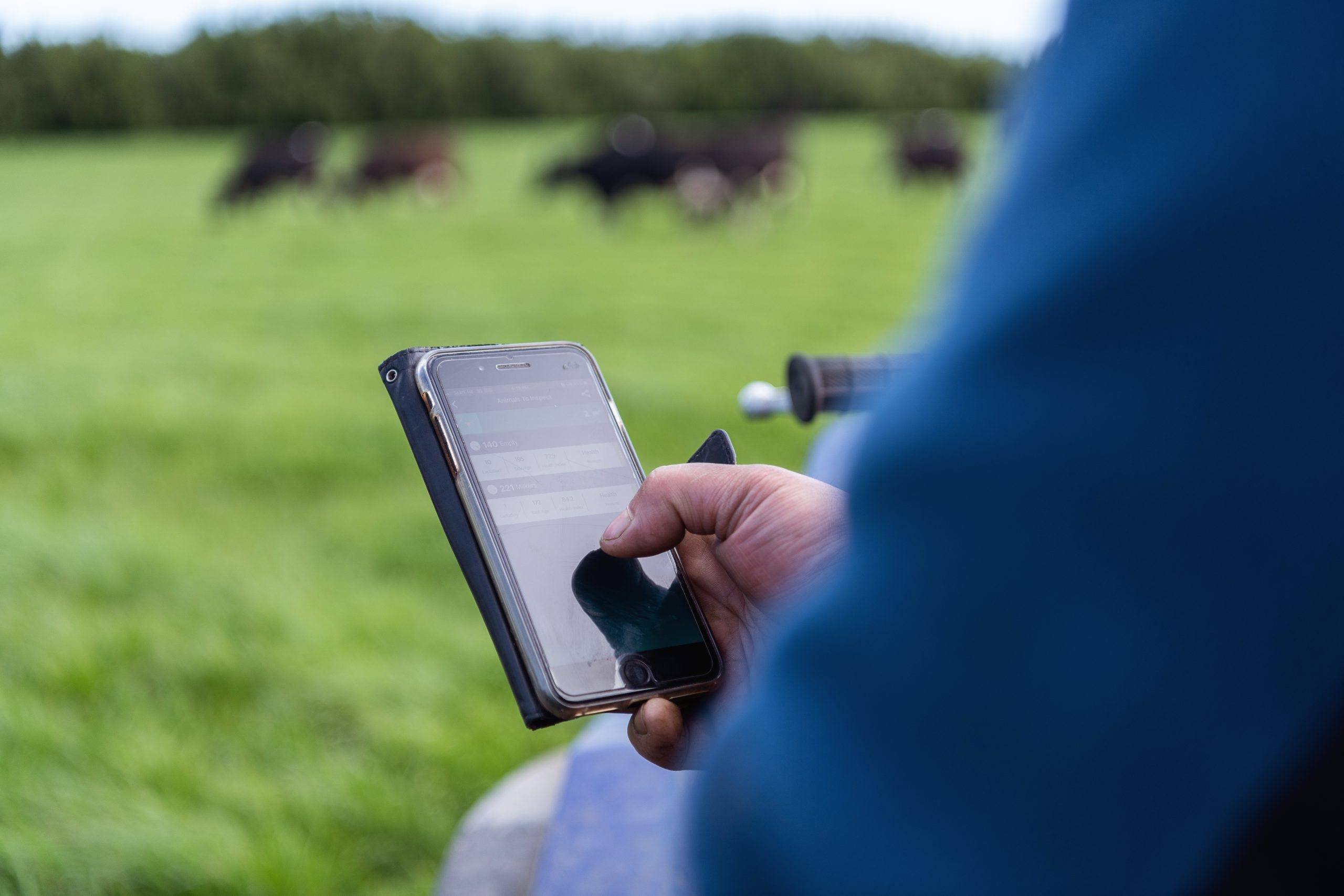
The Nedap ecosystem includes their own drafting gates, milk meters and a camera system that measures each cow’s locomotion as she enters the shed, detecting lameness earlier than both their SmartTag neck and ear tags data alone. This means farmers don’t need to buy everything at once. A herd can start with collars alone, then add drafting, milk metering or camera monitoring as budgets allow and as new technology is released – each component feeding into the same platform rather than sitting in a separate app.
“But you’re not locked in – we integrate with just about anybody. If you’ve got a different drafting gate, we’ll talk to it. In this day and age you’ve got to have your APIs compatible,” Greg says.
That openness extends to a partnership with Gallagher, allowing farmers to run a Nedap SmartTag ear tag alongside a Gallagher eShepherd virtual fencing collar – combining pasture control with heat and health monitoring on a single device.
Their camera scores body condition, with a New Zealand trial under way to validate the algorithms for pastoral systems following launches in the United States and Ireland.
“It’s hard to see a 500kg cow lose 10-15kg, but if you’re measuring that daily at a herd level you’ve got options – feeding cows to protect peak milk in spring, or making sure they calve at body condition score five.”
Practical details matter in a pastoral system. The SmartTag neck and ear tags are the lightest on the market because they carry no counterweight, and the battery is guaranteed for five years but typically lasts 8-10 – some in the market are 16 years old – with tags simply moving from one cow to the next.
A pen-correction feature accounts for weather events, so a herd huddled in a corner overnight will not trigger 20% of cows being wrongly drafted as a health event the next morning. Data flows to the shed antenna once cows come within 250m, with solar stations available for round-the-clock coverage – valuable through winter and calving.
If you are assessing wearables and wanting a flexible suite of options with the power of global data, Nedap is a very compelling solution.
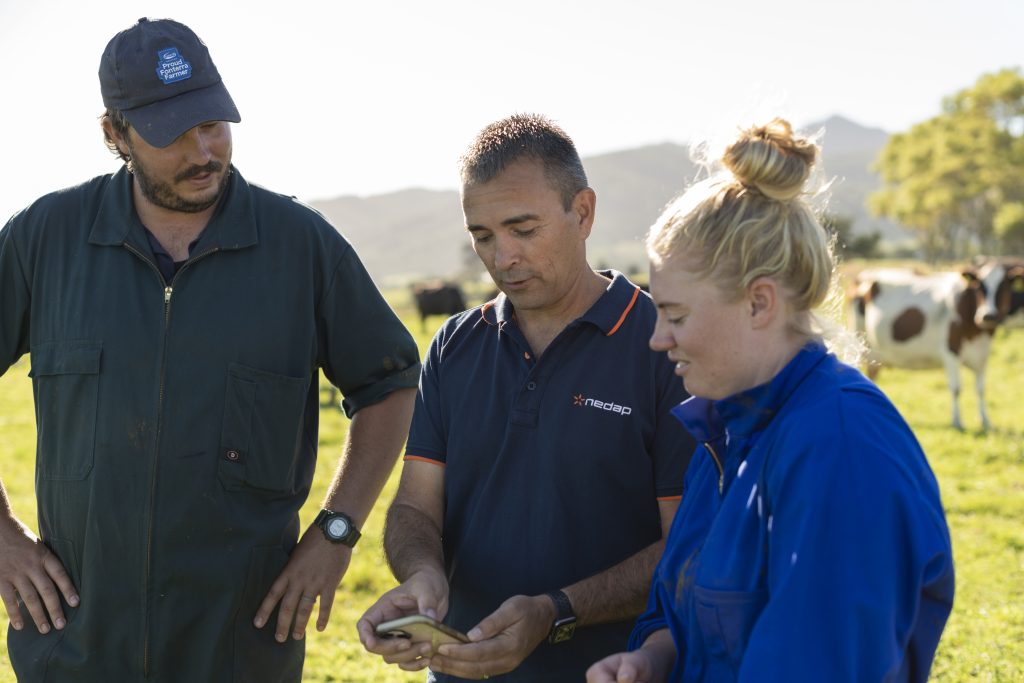
Top Tips for assessing your wearable needs
- Start with the ‘why’, not the feature list – Be clear on your primary driver – is it labour saving, earlier lameness detection or more accurate heat detection? Don’t pay for features you won’t use.
- Look behind the reliability claims – Every provider will quote 96-99% accuracy. Ask how many animals sit behind the algorithm and how long the technology has been proven in pastoral systems.
- Do the sums on reproduction – Improving your six-week in-calf rate by even 1-2% delivers a payback that compounds across multiple seasons.
- Check integration – Make sure the system talks to your existing drafting gate, herd management software and milking plant – open APIs matter.
- Ask about the practical details – SmartTag neck collar and ear tags, weight, battery life, failure rate and whether collars transfer between cows. These all affect labour and lifetime cost.
- Match connectivity to your farm – Confirm how data reaches the shed and whether solar stations are needed for round-the-clock coverage of springers and wintering blocks.
- Choose an ownership model that suits your business – Weigh outright purchase against subscription based on cashflow, tenure on the farm and access to future upgrades.