Dilution the solution is there a cost?
In what is believed to be the largest study ever carried out on plantain and the effects on animals, a New Zealand scientist has made a number of ground-breaking discoveries that could help farmers manage nitrogen loss and will advance the understanding of ruminant intake physiology. Words Anne Lee.
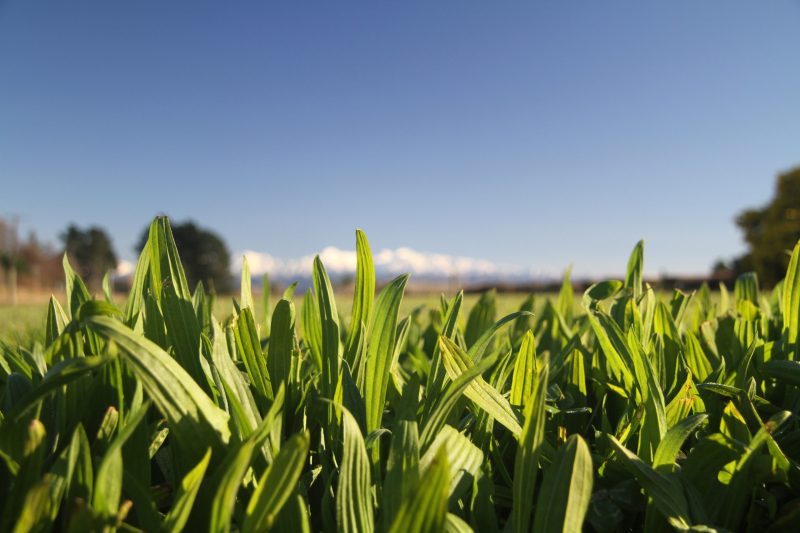
Water in, water out – that’s the driving factor when it comes to the impact different plantain cultivars, diploid ryegrass and chicory can have on urinary output, Dr Nadeesha Jayasinghe’s research studies have found.
Drymatter levels, not chemical plant compounds, are behind the ability of the plant to increase urine volumes and dilute urinary nitrogen concentrations, her studies suggest.
That and additional findings in her research, open the way for the need for further investigations into other low drymatter forages that could be used as tools to lower nitrate loss, particularly in dairy farming systems.
Results from the detailed study, carried out as part of her PhD research, have recently been published in the prestigious Journal of Animal Science. The research is part of a larger study led by her academic supervisor and co-author, Dr Jim Gibbs, supported by Dr Alistair Black and Dr Matt Deighton. The paper has also broken new ground on long held assumptions in animal physiology, with more insights into how ruminants are able to consume and process high volumes of water through feed.
Plantain is being used by farmers as a means of reducing nitrate leaching in dairy systems with findings that some cultivars, when grazed in a mixed sward, can significantly cut urinary nitrogen concentrations. Other factors are also under investigation in the plant as suggested pathways to reducing nitrogen leaching.
“More low drymatter forages should be investigated as possible nitrogen loss mitigation tools and larger, broader studies need to be carried out to appropriately assess this.” – Nadeesha Jayasinghe, Lincoln University
As part of Nadeesha’s PhD research at Lincoln University, she compared all eight available plantain cultivars, a diploid ryegrass and a chicory cultivar and found that when sheep were transitioned onto the feeds and fed adlib quantities, they produced urine volumes that increased in a direct relationship to the volume of water in the feed.
Chicory had one of the lowest drymatter percentages and animals consuming chicory produced the most urine per day.
They also produced similar urine volumes, on a per kg of bodyweight basis, as those animals consuming plantain cultivars with drymatter percentages around a similar level.
Any suggestion that chemicals in plantain – acteoside, aucubin or catalpol – are responsible for higher urine volumes because of a diuretic effect, was refuted by Nadeesha’s research.
“If anything, there was a weak negative relationship between those compounds (acteoside, aucubin or catalpol) and urine output,” she says. That suggests that as concentrations of those compounds rise there could be a slightly higher chance urine volumes will decrease rather than increase.
Nadeesha used 120 sheep for the study, putting them into groups of eight and feeding them a single diet of one of the plantain cultivars, ryegrass or chicory. They were transitioned carefully, over a period of more than 30 days, onto the diets. Each group spent seven days, out of the total 25-day study period for each group, in metabolic crates where all feed inputs and outputs, such as urine and faeces, were collected and measured each day.
Feed inputs were measured throughout the study, feed quality components measured with animal blood samples and urine samples also taken and analysed.
She says there was no evidence that any of the cultivars caused nitrogen to be partitioned away from urine into faeces, as feed nitrogen proportions in faeces were all similar.
Drymatter percentages of the feed offered were measured each day, along with a range of other feed quality metrics. In another significant finding, Nadesha’s results showed the drymatter percentages varied greatly within cultivars over the period of the study and that variation could be just as great as variations between cultivars.
Her study was carried out in autumn, through March and April. Results from the larger project, including urine production at different times of the day, and the repeat study of those same forages in spring, are also being published.
Nadeesha says her findings show the need for more low drymatter forages to be investigated as possible nitrogen loss mitigation tools. Work on forages such as hybrid tetraploid ryegrass is already supporting that.
“If anything, there was a weak negative relationship between those compounds (acteoside, aucubin or catalpol) and urine output.” – Nadeesha Jayasinghe, Lincoln University
Ground breaking science
Nadeesha’s detailed research has also given new understanding into how ruminants were able to consume vastly more water than previously thought possible.
It had been believed that for any ruminant, drymatter percentages of less than 16% would result in lower feed intakes but drymatter percentages of 8.5-12% were common in her study. Sheep were still able to consume about 17kg/day wet weight of the forage.
They consumed up to 397ml of water per kg body weight without any apparent effects on overall health, doing so by eating it rather than drinking it. The volumes of urine they subsequently produced were about 700% greater than the volumes believed to be typical. Animals in her study produced up to 290ml/kg body weight compared with the accepted 40ml/kg body weight.
“Usually, ruminants will only produce about the same volume of urine as the volume of blood they have in their bodies. In this study, they produced four to five times their blood volume,” she says.
But there could be a drawback to this. Producing that volume of urine could be coming at an energy cost to the animal. Nadeesha was alerted by the fact body weight gains didn’t match the high feed intakes animals achieved.
Results from blood sampling carried out during the study, along with urine analysis and energy balance calculations, are pointing to two places where more energy is being used and where energy is being lost.
More water is passing across the rumen wall and being processed by the kidneys which requires additional energy. But significantly, she discovered more minerals, including carbon-based compounds, are being flushed out of the animal’s system with the extra urine, indicating likely energy loss.
Her findings show the need for a new approach to urine production from forages, she says.
“More low drymatter forages should be investigated as possible nitrogen loss mitigation tools and larger, broader studies need to be carried out to appropriately assess this,” she says.
“Nadeesha’s work is firstly, a marvellous intake study, and it has flipped the understanding of how water in the diet influences drymatter intakes. Her contribution to science, that the rumen, blood and renal excretion processes of water ‘eaten’ likely control maximum intakes of these low drymatter forages is a world first, and the first significant work in the field for almost 30 years,” Dr Jim Gibbs says.
Click here to read Nadeesha’s study in the Journal of Animal Science.