Put it where it pays
Ravensdown's HawkEye Pro pairs more than 40 years of soil science with machine learning to take the guesswork out of fertiliser planning, helping dairy farmers put fertiliser where it works hardest. Words Sarah Perriam-Lampp.
DAIRY FARMERS ARE BEING asked to do more with less – lift productivity, keep input costs in check and meet environmental expectations, all while making confident decisions for their farm, their business and the land. Ravensdown’s answer is HawkEye Pro, its latest innovation in precision fertiliser planning.
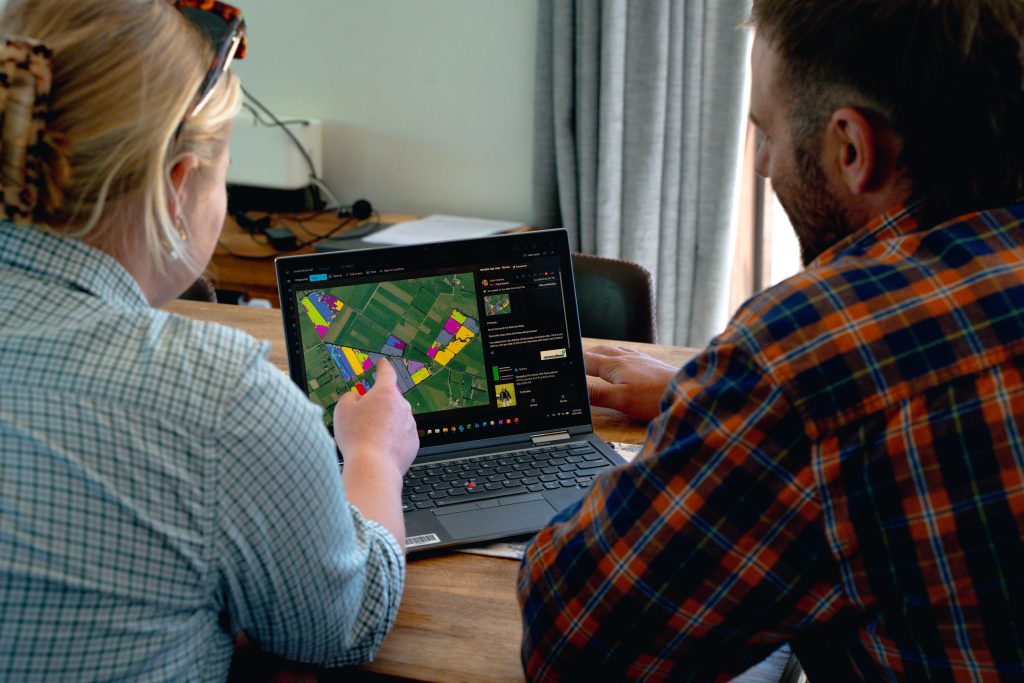
Built on farmer knowledge, Ravensdown’s soil science expertise and high-level machine learning, HawkEye Pro creates detailed nutrient maps and variable-rate fertiliser plans that show where nutrients are needed, where they are not and how to get more from every pass.
Since its release, feedback from farmers and the agri managers advising them has been really positive, Ravensdown Chief Science Officer, Mike White, says – not because precision fertiliser is a new idea but because HawkEye Pro finally makes it achievable.
“The concept is really simple – it’s about putting your fertiliser where it makes the most sense,” says Mike. “The concept is not hard; it’s actually the execution. A lot of farmers and agri managers have wanted to do this in the past but they haven’t had the time or information to develop a fertiliser plan with the accompanying level of increased precision.”
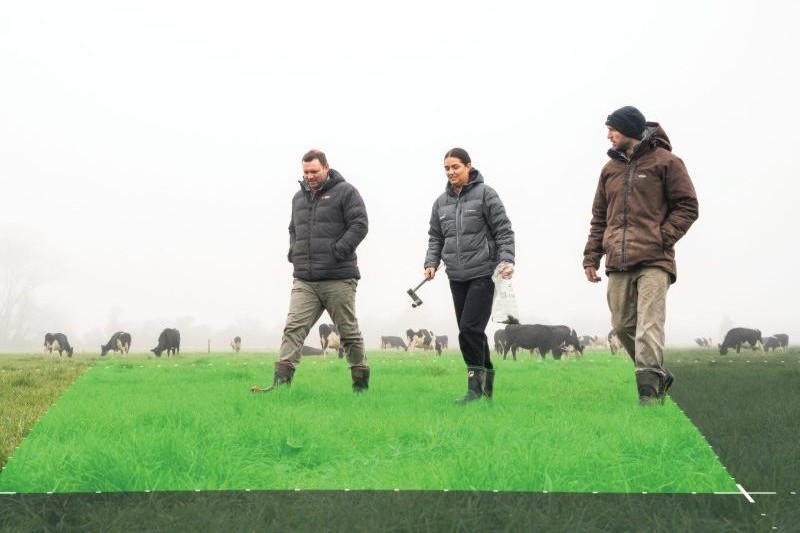
The advance, he says, is moving from the macro to the micro. Where fertiliser advice has traditionally divided a dairy farm into a handful of blocks, HawkEye Pro can manage variation paddock by paddock, or even within a paddock, driven by soil type or irrigation.
“It’s precision ag that we have not been able to do at this resolution in the past. The more that we can target fertiliser to those places that give us the best bang for our buck, the better off our farm systems will be.”
The same targeting, he adds, pays dividends for the environment.
“The return on investment is about optimising where fertiliser goes, not necessarily buying less of it.” – Mike White, Chief Science Officer, Ravensdown
None of this replaces the humble soil test. “We still need to benchmark with soil tests,” says Mike. “AI is only as good as the information that you put into it to learn from.”
On flat dairy platforms in particular, soil testing establishes the base fertility behind the big calls – where fertiliser can be withheld without losing production and where more nutrients are needed.
Alongside soil data, HawkEye Pro draws on long-term pasture production data to infer the maintenance requirements of each paddock. “That’s the scalability that we have now – we can do this for most dairy farms in New Zealand.”
The current focus is on phosphorus (P) and sulphur (S). “The New Zealand system is really driven on a mixed pasture with clover,” Mike explains. “The P and S is really around driving that legume production within our mixed pasture sward, which then drives nitrogen for us.”
Potassium is the next stage of development, while nitrogen calls for a different strategy again – future plans centre on precisely targeting nitrogen to fill feed deficits, rather than the annual maintenance approach that suits phosphorus and sulphur.
On the ground, farmers can take the precision as far as suits their farm.
“That’s the beauty of HawkEye Pro – it can go right down to the micro-scale variation, but for many farms you don’t have to go down that full scale to get the benefits of saving nutrients or using it more efficiently,” says Mike.
Block-level recommendations can be handled by any spreader in New Zealand, while paddock-by-paddock and within-paddock plans are best delivered, where spreader capability allows, by variable-rate machines – a GPS unit ingests the precision map and a control unit automatically adjusts the belt speed or gate, delivering visible proof-of-placement maps and confidence in every pass.
“I’ve been really surprised – there are more of those systems in New Zealand than I thought.
“I would expect there will be more spreaders equipping themselves with it – but I’m quite impressed with how many are out there already.”
As for whether precision means buying less fertiliser, it was the first question Mike was asked by farmers.
“In a general sense, we’re not changing the fertiliser quantum so much, but we are certainly putting it in slightly different places. But I can think of farms where they’ve got high fertility, so they can mine some of that fertility and not lose production, and pull back. HawkEye Pro will certainly recommend that where it’s appropriate – it’s good for the shareholder, so it’s good for us.”
Among the early farmer adopters is the Lincoln University Dairy Farm, running HawkEye Pro this season. The tool is available to Ravensdown shareholders, with agri managers working alongside farmers as partners behind the farm gate – enhancing farmer judgement, never replacing it.
How HawkEye Pro works
- Soil tests benchmark each farm’s base fertility.
- Long-term pasture production data infers paddock-by-paddock maintenance needs.
- Deep learning turns that data into a transparent product and rate recommendation.
- Where spreader capability allows, GPS-equipped spreaders apply variable rates and deliver proof-of-placement maps.