Agreements need new laws
New Zealand’s dairy sector has been forged by globally unique farm operating structures, but, according to some advocates, the laws relating to them are no longer fit for purpose. Words Anne Lee.

New Zealand’s sharemilking legislation needs to be expanded to include herd owning sharemilkers and contract milkers to give greater protection to those operating farms and those owning them, says Louise Gibson from The Sharefarming Consultants.
Currently, the only specific sharemilking legislation, The Sharemilking Agreements Order 2011, covers agreements between farm owners and variable order sharemilkers or those who do not own the herd.
“There’s no specific legislation for herd owning sharemilkers or the ever-increasing number of contract milkers and the farm owners who have agreements with them. There’s very little in the way of legal protections for any of the parties.
“Contract law can go some way, but it’s not designed for farming situations where there are so many variables due to climate and biological systems. Any disputes between the parties are more likely to go to mediation than go to court and that’s aimed at finding an acceptable compromise between the parties, not protecting any minimum rights of those parties,” she says.
The weaker party is more likely to concede and the imbalance of power on a financial basis and a personal basis means that weaker party is inclined to be the sharemilker or contract milker, she says.
“Aside from having less financial backing, they stand to lose their home and the security they have for their family if they raise the dispute before they move to their next role. Once they’ve moved, time limits in agreements may prevent them raising a claim at this stage anyway.
“For a contract milker, who has had their payment withheld – which is illegal under contract law – they’re unlikely to be able to afford litigation anyway. They’re not even likely to be able to afford the $5000 or so to take it to mediation,” Louise says.
“It goes back to the fact that some of the contracts out there aren’t fit for purpose. Then people are trying to squeeze those contracts into a law that isn’t fit for purpose either.” – Louise Gibson, The Sharefarming Consultants
Some templated agreements for sharemilkers and contract milkers will include clauses that stipulate situations where withholding payments can happen.
“Even if both parties sign that, contract law could technically override it, but that requires the dispute escalating to litigation where lawyers and a judge are involved. Mediators are less likely to be lawyers and rather than making a ruling on the basis of contract law, they’re acting as a referee between the parties.”
Some templated agreements go too far when it comes to personal information too – requiring the contract milker or sharemilker to grant farm owners access to medical records. In other cases they may allow the farm owner to share their personal information and the sharefarmer’s employees’ information with a third party.
But farm owners can also find they’re without protections. They may not want to allow a contract milker or herd owning sharemilker to have a second job.
“Contract law doesn’t work in the farm owner’s favour here. It’s designed for situations like contracting a builder. You’d never expect to require your builder to only work on your house site, so you can’t stipulate that for your sharemilker or contract milker.
“That’s why the sharemilking law needs to be expanded to cover herd owning sharemilkers and contract milkers. It is reasonable for a farm owner to require they only work for them – at the moment they can’t legally do it.
“It goes back to the fact that some of the contracts out there aren’t fit for purpose. Then people are trying to squeeze those contracts into a law that isn’t fit for purpose either.”
Agreements need to spell out what sharemilkers or contract milkers are to carry out and what happens if they don’t perform.
Some agreements rely on farm policy being a signed addendum to the contract, but Louise believes fewer than 20% of agreements have a comprehensive, written farm policy that’s signed and agreed to by both parties.
“What’s important needs to be stipulated in the contracts to be more outcomes based, like a home building agreement.
“Getting the details right in the changes to the Act is important.
“It’s going to take a lot of work and it’s going to mean talking as an industry to determine what is really important and then including that as performance metrics.”
The most common dispute topics in sharemilking arrangements also need to be addressed by the new legislation, she says.
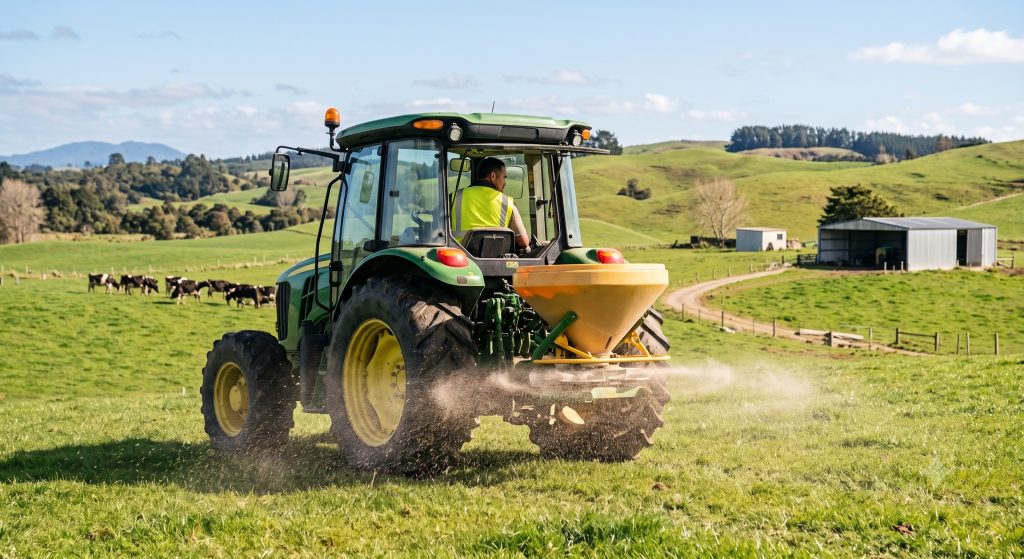
“We see situations for sharemilkers where they’re required to pay 100% of the fertiliser spreading cost and the farm owner is required to provide a nutrient budget to back up the fertiliser spend. But the farm owner doesn’t do that and surprises the sharemilker with unbudgeted fertiliser spreading bills. That’s when arguments arise over what’s capital and what’s maintenance.”
It should be a requirement that sharefarmers know and agree to the costs for the expenses they’re expected to share. Contracted feed prices, fixed milk pricing, fertiliser spreading and maintenance costs for example.
“This has to be a two-way street, but surprise costs are common and cause a number of disputes,” she says.
“There are protections in the current Act that could provide a lot of protection if the Act was extended to cover contract milkers.” – Louise Gibson, The Sharefarming Consultants
Contracts need to be more tailored to outcomes and deliverables too.
“They need to specify how many calves are to be reared, to what weights and by when. They need to include in-calf metrics to ensure good performance and what the farm owner is going to commit to in terms of interventions or feed management at mating.
“Milk production is a metric too but it has to include what feed will be fed and when. Often farm owners complain that the contract milker is too quick to ‘pull the cord’ for the in-shed feeding, but the farm owner – while they have an expectation on milk production – doesn’t
provide the appropriate average pasture cover at the start of term, or details on urea or fertiliser use.
“We know those things all impact pasture and milk production but there’s not enough protection for either party because they’re not specified in the agreement. There’s also no provision for what happens next if something isn’t provided as expected.
“Current case law also needs to be considered in the changes to the Act.
“I’ve seen production target disputes using the claim that cow numbers were too low, but there is case law now which states that, provided cow numbers are within 10% of the minimum cow number in the agreement, that can’t be used as an argument in a dispute despite what is included in the agreement.”
Feed budgets that deal with the detail of what feed will be available when, body condition score management and milking frequency – when is once-a-day or other milking frequency expected? They all need to be written into the agreement, she says.
It’s a similar story for reproduction metrics and expectations for heat detection before and during mating. But often these details are not typically included in standard contract templates. They are left to farm policies that are then seldom written down and agreed to, and if they are in place, may not have an appropriate pathway to be upheld.
“There are protections in the current Act that could provide a lot of protection if the Act was extended to cover contract milkers. For instance, not paying more than your percentage of the milk cheque in feed or urea. Some contract milkers have to pay 20% of the feed bill but are only paid the equivalent of 15-17% of the milk cheque.”
Minimum financial returns are written into some existing agreements but in the case of contract milkers, the minimums focus on milk production shortfalls as the main reason for a lower than expected return. To protect the contract milker they stipulate acceptable ranges and make provision for the contract milker to still receive up to 80% of the remuneration they should have achieved.
“But that guaranteed minimum return is only triggered by milk production issues. It isn’t triggered if expenses are higher than expected. In practice, it has failed to be an adequate protection and it’s not a clause I’d want to see in a new Act,” she says.
The 300-cow rule for variable order sharemilkers should be replaced too, Louise says. That requirement in the Act stipulates that a variable order sharemilker with 300 cows or fewer must be paid a minimum of 21% of the farm’s total milk price payment plus the agreed share of operating costs. If they have more than 300 cows, the percentage can vary.
“When the payout suddenly dropped to $3.90/kg MS a few years ago, we saw variable order sharemilkers lose everything. We saw situations where they couldn’t afford food.” – Louise Gibson, The Sharefarming Consultants
Louise says that instead, a breakeven percentage needs to be established to ensure the job will return an amount that allows the sharemilker to draw enough to live on as a minimum, no matter the cow number.
The DairyNZ calculator is the only calculator she endorses to help assess or determine contract and variable order sharemilking rates.
It’s important to use a three-year average milk price or the opening farm gate milk price to determine the percentage share of income. If the opening farm gate milk price is a range, the lower number should be used to establish the minimum break even return required and the minimum percentage. That’s the minimum, it’s the floor and acts as a protection so that contract milkers and variable order sharemilkers can at least feed their families. The percentage or contract rate then needs to be set above that point to ensure a premium over a manager’s wage.
“When the payout suddenly dropped to $3.90/kg MS a few years ago, we saw variable order sharemilkers lose everything. We saw situations where they couldn’t afford food.
“Of course today, there are plenty of situations where sharemilkers and contract milkers do exceptionally well and farm owners are doing well too but there just aren’t good enough protections within agreements to deal with the situations where someone is exploiting the other party.
“About 40% of New Zealand’s dairy farms are operated using contract milkers or sharemilkers. That’s a significant percentage of the country’s economy so those operating structures need to have better provisions in law to ensure they remain robust.”