Going far together
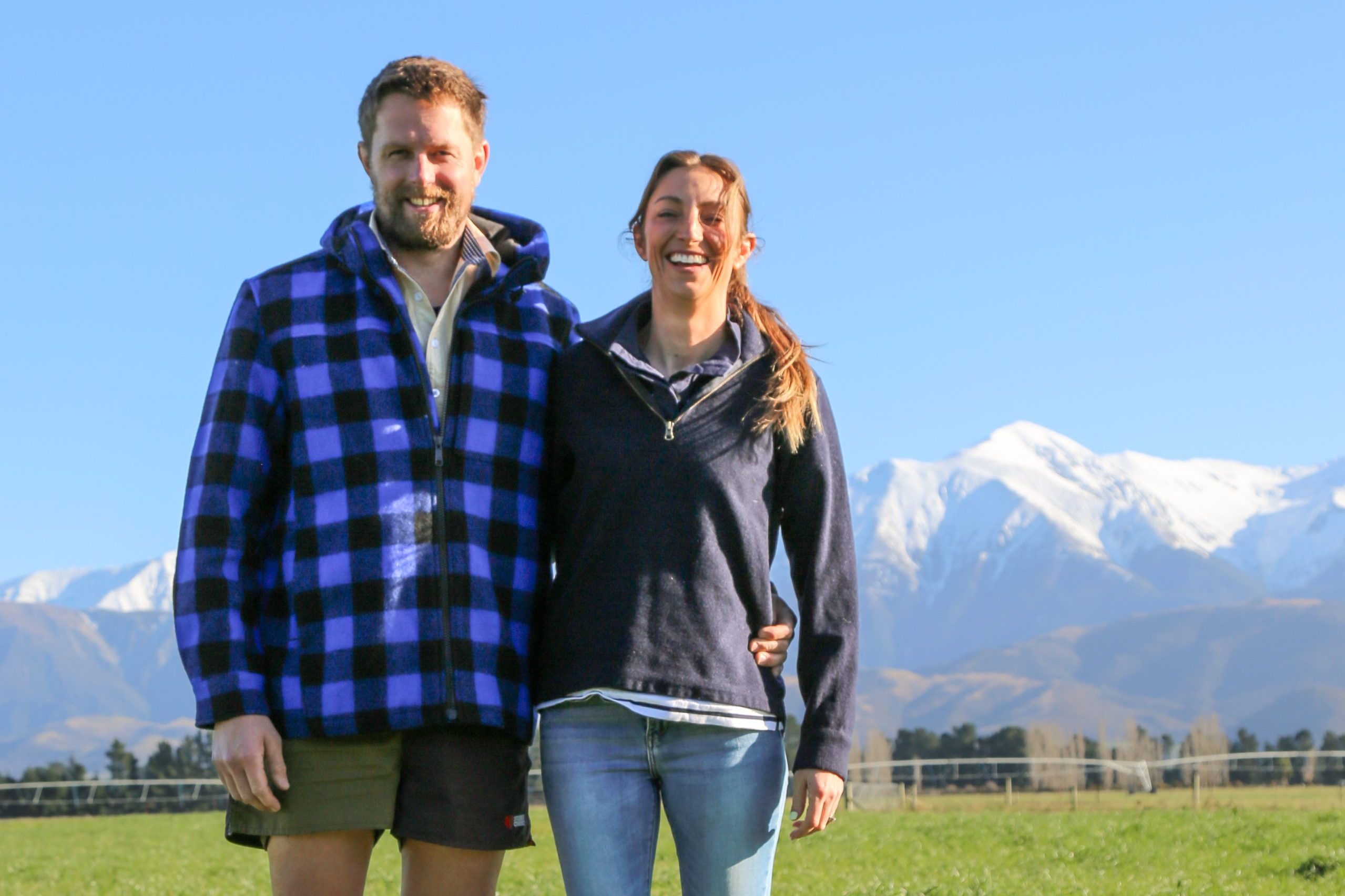
This year’s New Zealand Sharefarmers of the Year know just how important it is to get sharefarming agreements right so that all parties are winning. Words Anne Lee, Photo Stan McDowell.
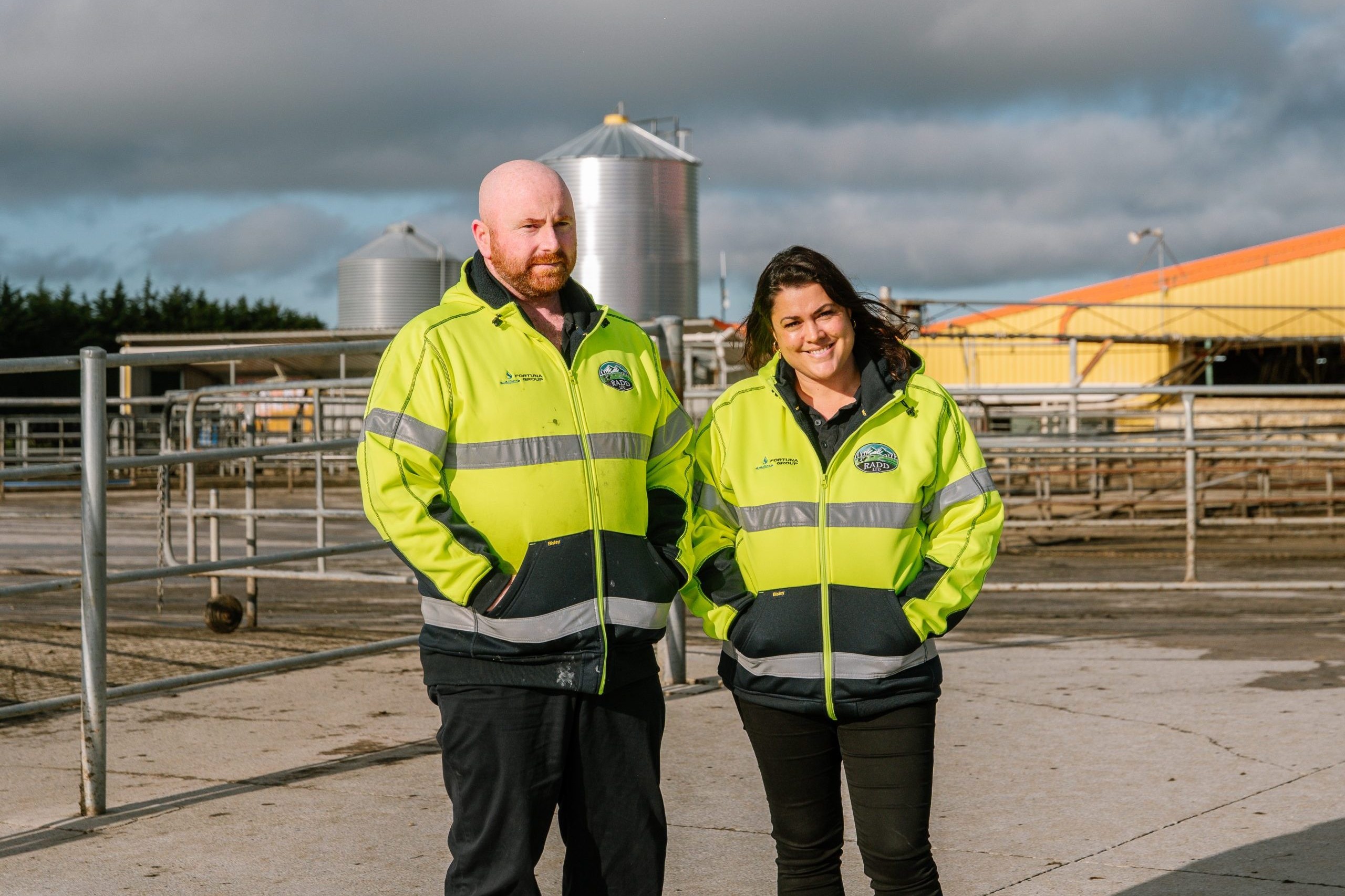
Scott and Stacey Mackereth know what it’s like to sit on both sides of the table when it comes to sharefarming agreements – they are contract milkers but they’re also equity partners in a large-scale business that employs contract milkers.
The couple are this year’s New Zealand Sharefarmers of the Year, taking out the national title in the New Zealand Dairy Industry Awards in May. They contract milk 1500 cows on a 464ha (effective) farm at Edendale in Southland for Fortuna Group, a company that’s majority owned by the Dodunski family and operates 24 farms in Southland. Late last year, Scott and Stacey took up an equity stake in Fortuna Group (South Otago) Ltd which operates three farms on a 10-year lease agreement near Clydevale. About 2500 cows are milked across those three farms.
To top it off, Scott also oversees properties for Fortuna that are home to about 2800 cows.
“I’m involved in the management of about 5800 cows in total and Stacey and I are personally involved, via contract milking or equity partnership, in about 4000 of those cows,” Scott says.
It’s been a whirlwind of a time since the couple joined the company in 2023, not long after moving to Southland from the North Island.
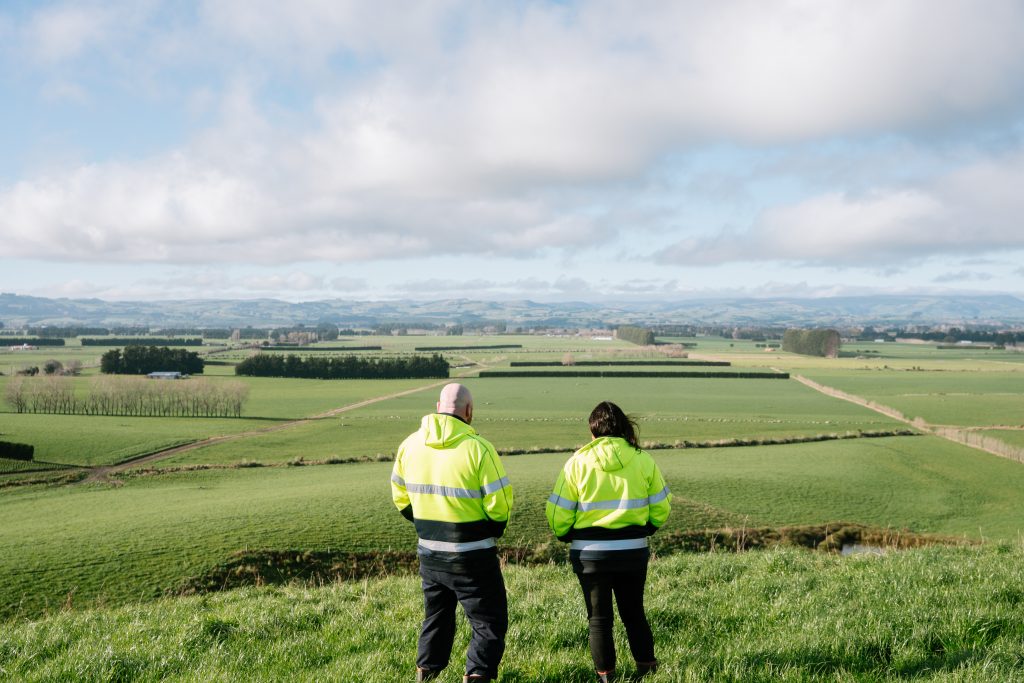
While they’ve known each other since they were young children in Coromandel – Stacey’s father worked for Scott’s grandparents on a sheep and beef farm in his younger years – it wasn’t until 2020, after both went through a marriage breakup, that they brought their blended family together.
Scott has always farmed – either at pace or at scale. In just the fourth year of his career, after working exceptionally long hours, buying carryover cows and getting them in calf, going sharemilking with 240 cows and then leasing more area, he was in a position to buy a small dairy farm.
“But that didn’t really appeal because everyone I’d seen with a small farm the size I could afford ended up stuck running it hands-on for the rest of their lives,” he says.
Instead, he and his wife at the time, moved to the US to work on large-scale, Kiwi-owned dairy farms. They were there for 11 years and built equity that he then wasn’t able to repatriate.
“I had plans for other opportunities in the US with other large businesses. I was consulting for a vertically integrated company with 35,000 cows but Covid happened when I was home to renew my visa, we had lock downs and life took its various turns and I never went back,” he says.
After farm consulting in the North Island and together then with Stacey, the pair decided to seek out opportunities in dairy farming again, knowing it still offered the best way to grow equity fast and rebuild.
They looked to the deep South, and rebuild is exactly what they’ve done, to stellar effect.
Partnering with great people has allowed the pair to put into action Scott’s motto of going fast alone but preferring to go far together.
“We came down here to rebuild from very little. Contract milking is a way to do that, especially when you partner with good people. I don’t know that there’s any other industry like it where you can progress so quickly if you work smart and hard,” Scott says.
“If the farm owner isn’t making money, they’re not going to want to, or be able to, drive the farm forward. Likewise though, if the contract milker isn’t able to make progress, they’re not going to be motivated to do a good job.” – Scott Mackereth, Southland
The couple have some sage advice for anyone looking to use sharefarming agreements, including contract milking, as a means to develop their business and grow wealth.
“The first thing is to get good advice no matter what sort of agreement it is. You need a good network of advisors and mentors, that could be other farmers but it can be accountants, bank managers or farm consultants.
“It has to be someone who can go through the contract itself to check its wording and clauses, but you also have to have someone with a good handle on their numbers and systems to check that they are realistic,” Scott says.
“You’re going from being a farmer to running a business. You’re putting on more than one hat and I think you need to have the right professionals on your team to fill any gaps you have in your knowledge and understanding of the agreements,” Stacey says.
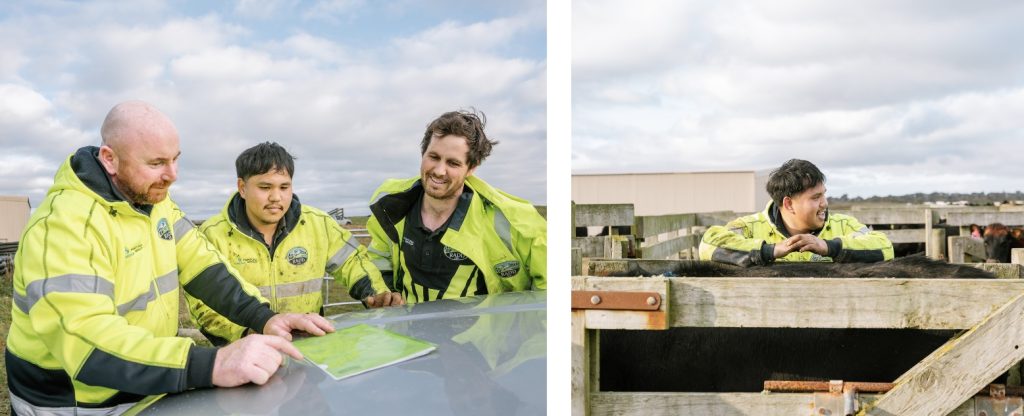
Fortuna has multi-year budgets for its farms which gives a high level of certainty and comfort when it comes to knowing the costs for specific items in the contract.
That was important for Scott and Stacey going into their contract milking job at Edendale and something Scott had first-hand experience of, having spent their first year in Southland working for the company, overseeing farms.
“There’s a lot of historical data and, as a company, there’s a lot of forecasting and monitoring of actuals versus budget, so I could see from that experience there’s a lot of certainty around the numbers,” Scott says.
The farm management policy and plan for the season are also well mapped out so, as contract milkers, they knew what to expect when it came to milking frequency, dry-off targets and feeding levels. “While still leaving enough rope to put our own spin on the farming system,” Scott says.
“We’ve had all those discussions and we have plans and policies so there are no surprises and that’s important for both parties in the agreement.
“You also have to be very sure at the outset that, as a contract milker, you’re aligned with the farm owner, and vice versa. Contract milkers’ returns are driven by production and the farm owner is driven by profitable production and the two don’t always align. You have to be very clear about how the farm will be operated, so the right drivers are in place to get the outcomes for each party.
“It has to be win–win. If one party is really reaping all the rewards at the expense of the other, then that’s just not sustainable,” Scott says.
Their experience sitting on the farm owner side of the table has included having some tough conversations with contract milkers where the agreement wasn’t fairly balanced for the farm owner.
“It’s about transparency too. We had to be able to show what was happening to explain that and that means sharing all the figures. But, we could also show that if we had the right drivers to improve the performance of the farm, we created a better win-win situation.
“And that’s happened, everyone’s leaned into it and they’re hitting record production but both parties are sharing in that. If the farm owner isn’t making money, they’re not going to want to, or be able to, drive the farm forward. Likewise though, if the contract milker isn’t able to make progress, they’re not going to be motivated to do a good job,” Scott says.
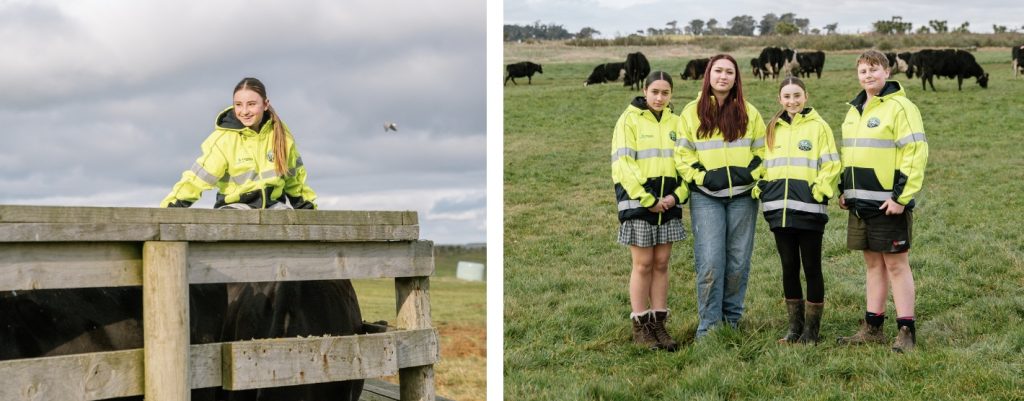
The agreement itself has to be right and the numbers, in terms of the payment per kilogram of milksolids, have to be right, as does what’s written in as the cost centres to be paid for along with the numbers and percentages attributed to each cost centre.
If there are variances from budget, or performance isn’t where either party expects, it’s important to have the discussions early.
“We’re making sure we have those conversations straight away, not six months later. And we’ll be asking what’s happening here, is there a reason for it, should we be doing that? What can we do differently to get back on track?
“Every month we go through the cashflows and every month we have meetings with every farm manager, every contract milker. We share all the numbers with the team on the farm here too. We keep having those conversations and we’re always forecasting.
“I try and keep the business heading true North. It’s easier to have a conversation when you’re going North, North East than when you’re heading East or South,” Scott says.
In their agreements, using more than a pre-agreed level of in-shed feed can see a 15% charge for the cost
of that extra feed go to the contract milker.
“If it’s a weather event or we’ve come to an agreement that more feed needs to go in for some reason, then that’s not going to be charged, ultimately this is to ensure the right drivers are in place for profitable production.”
Staffing levels are also stipulated to protect the contract milker as well as the performance of the farm.
“We don’t want people burning out. Caring for our people is a big priority for us,” Stacey says.
She’s a qualified counsellor and worked full-time in that field until earlier this year, when she took on more responsibilities within the couple’s farming business.
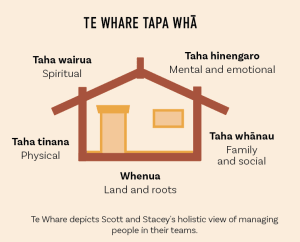 They centre their people focus around the wellbeing model, Te Whare Tapa Whā – shaped like a house (whare) with the walls representing physical and family/social wellbeing and the roof spiritual and mental/emotional wellbeing. Supporting mental and emotional wellbeing comes through giving recognition and praise both face to face in meetings and through the Whatsapp groups used within the team.
“We’re strong believers that people have to feel they can fail safely. They’re going to get things wrong sometimes – that’s how they learn. Training people well is our job,” she says.
Seeing team members grow and progress is a source of huge pleasure for the pair and already they have helped key staff move up and off farm to other management roles within the wider company.
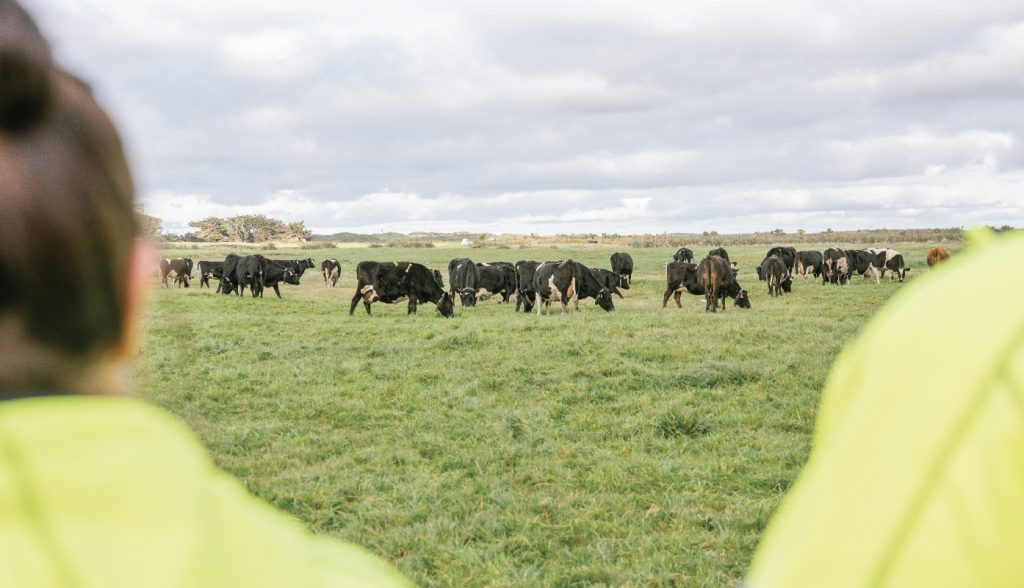
Every aspect of the farming business has targets and policies which are well communicated with every team member. Pasture management is a key focus. “It’s by far our busiest Whatsapp chat group,” Stacey says.
Pasture covers, grazing intervals, round lengths, residuals and leaf stage are words and concepts that everyone has a very clear understanding of. The key metrics are on high rotation in the conversations and form what’s become a universal language.
A major drainage project and the commitment to grazing management have helped push pasture eaten to more than 14.1t drymatter (DM)/ha, up from 9.3t DM/ha in 2023/24 and dramatically improved the overall performance of the farm.
Scott’s confident of further improvements and has set a target of 15t DM/ha with the aim to continue the focus on three-leaf grazing principles to maximise plant growth and cow intakes. They’re also managing grazing intervals after nitrogen application to optimise pasture response and aiming to harvest 1600kg DM/ha per grazing with pre-graze targets of 3200kg DM/ha and post-graze residuals of 1600kg DM/ha.
“The aim is to prioritise pasture harvested and utilisation over production alone,” he says.