Benchmarking the businesses of dairy
DairyBase analysis over the past five seasons (2020/2021 to 2024/25) provides a clear picture of how different dairy business structures are performing, from owner-operators through to sharemilkers and contract milkers, offering useful insights into profitability and other performance measures. Words Felix Rodriguez-Firpo.
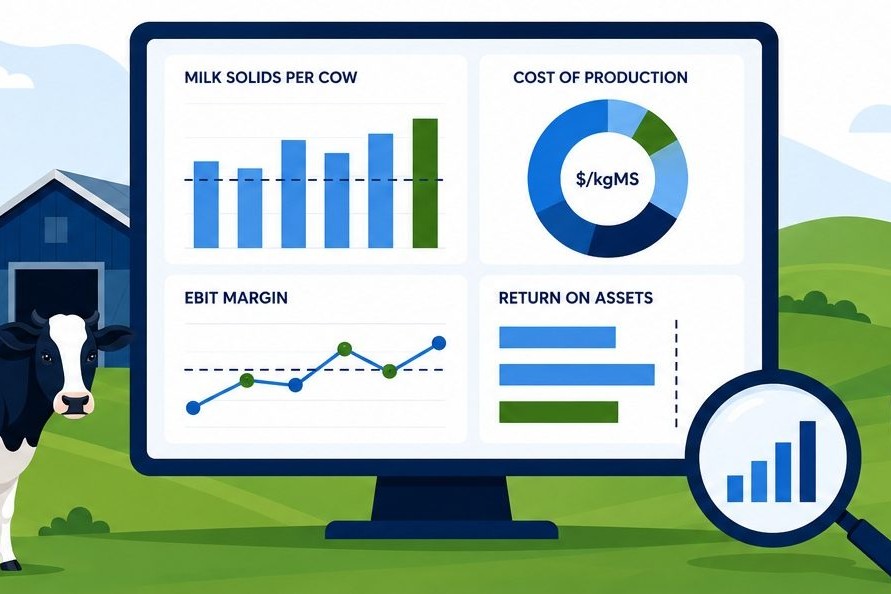
Performance of dairy business can be assessed using Operating Profit and Return on Assets (RoA). Operating profit is particularly useful for comparing profitability between farms, as it includes adjustments such as unpaid family labour, owned support blocks and depreciation – enabling fair comparisons.
RoA is also a critical measure, as it links profit to the value of land and dairy assets, making it one of the most meaningful KPIs when comparing farms with different land quality.
What sits behind the top performers?
Across all business types, performance varies widely, with some farms achieving strong results regardless of system, scale, production level or location. This reinforces the importance of management capability and how well decisions are implemented. What sets these top performers apart is their ability to consistently harvest high levels of pasture relative to their potential, alongside tight control of operating expenses per kilogram of milksolids (kg MS) and a disciplined approach to capital expenditure and reinvestment decisions.
Where partnerships exist (such as with contract milkers or sharemilkers), stronger outcomes are typically observed when both parties work closely together with aligned goals and a shared focus on success.
Importantly, top performers are not always the highest performers in any single year. What distinguishes them is consistency over time, driven by a strong focus on both the farm operation and the business side, and a clear understanding of how day-to-day decisions impact long-term performance.
Comparing owner-based systems
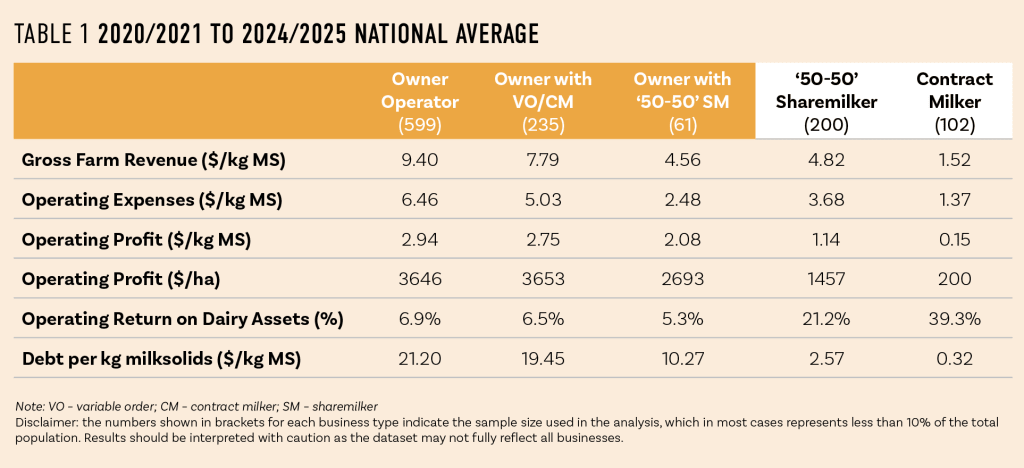
Among DairyBase participants, owner-operators (including those employing farm managers) and owners with contract milkers show very similar performance. Operating profit for both sits at around $3600/ha, with RoA at 6.9% and 6.5%, respectively. This suggests that employing a contract milker does not significantly affect farm profitability within the farm businesses included in this analysis.
In terms of owners with 50:50 sharemilkers, they showed a lower RoA at 5.3%. While this looks like a noticeable drop, our data indicates that this result often comes alongside lower debt levels, making it a practical option for those stepping back from day-to-day management or planning for succession.
Sharemilking: higher returns, higher expectations
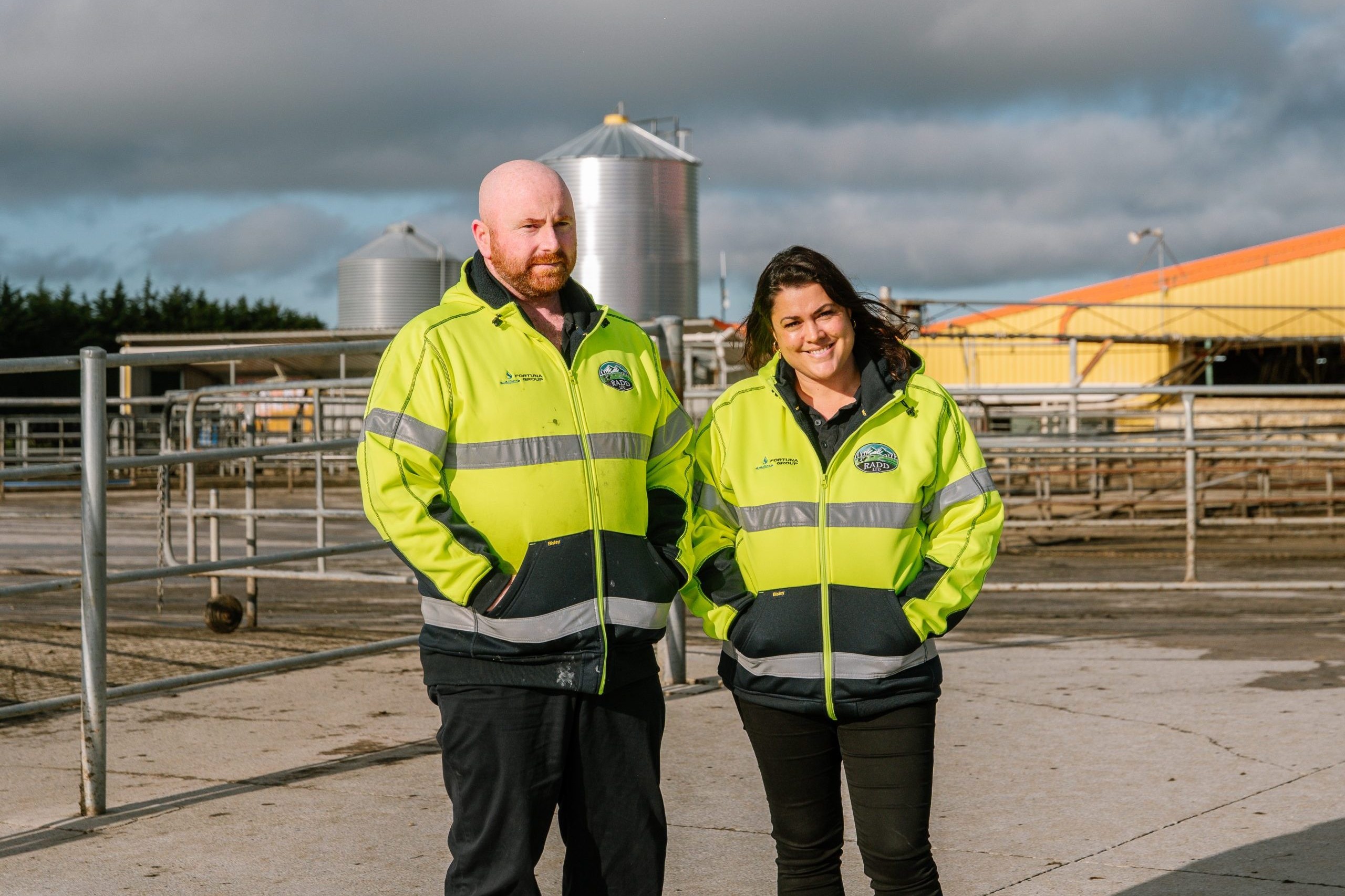
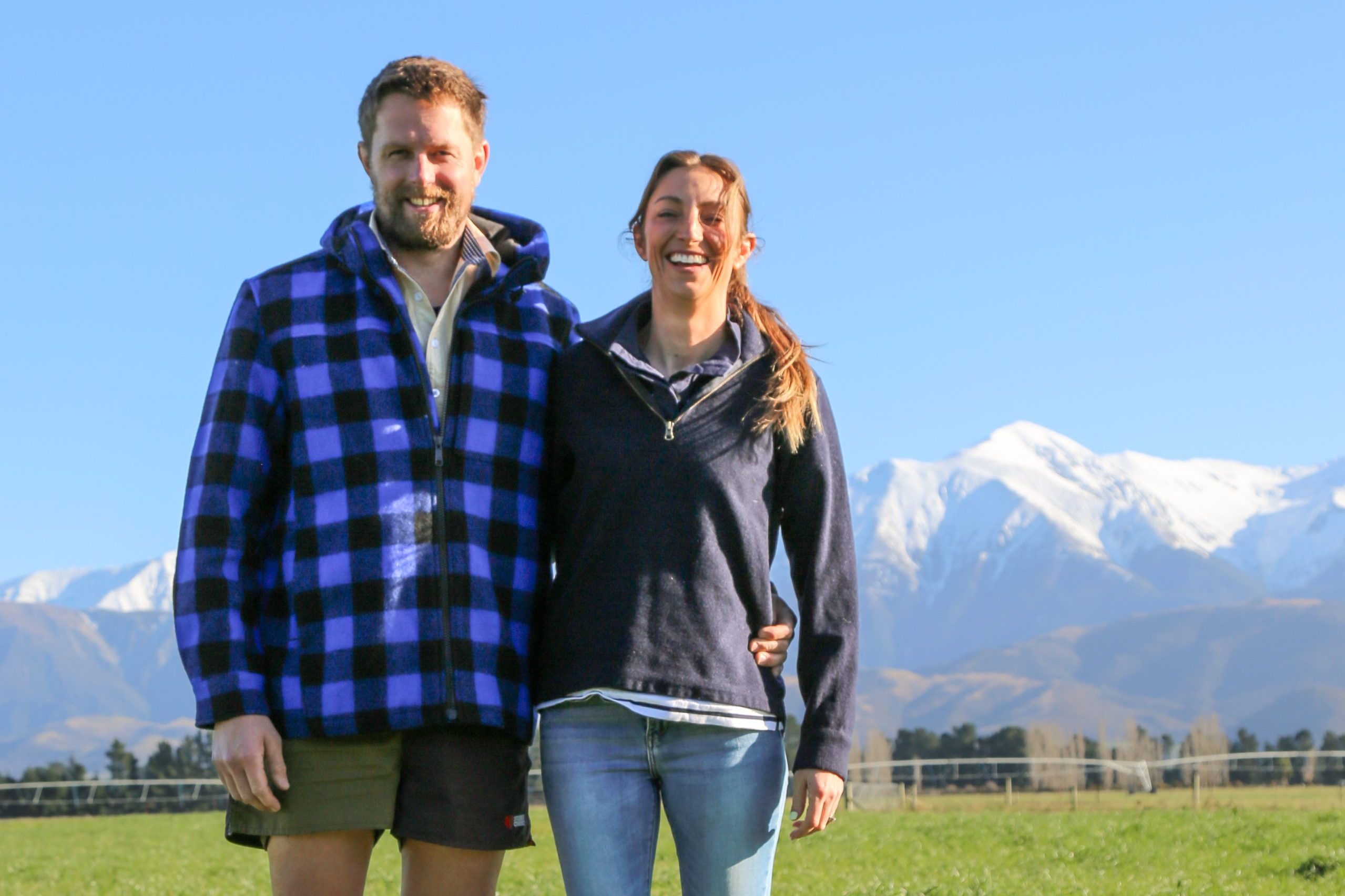
Sharemilkers in DairyBase have significantly higher RoA, averaging 21.2%, with the 2025/26 season also tracking strongly, supported by high milk payouts and capital gains linked to increased livestock values. Prior to the 2021 season, sharemilker RoA was typically between 12-15%, making current results very positive and enabling many to build significant equity and potentially progress towards farm ownership, increasing their asset base and scale of operations.
Contract milking: the model works well but performance varies widely
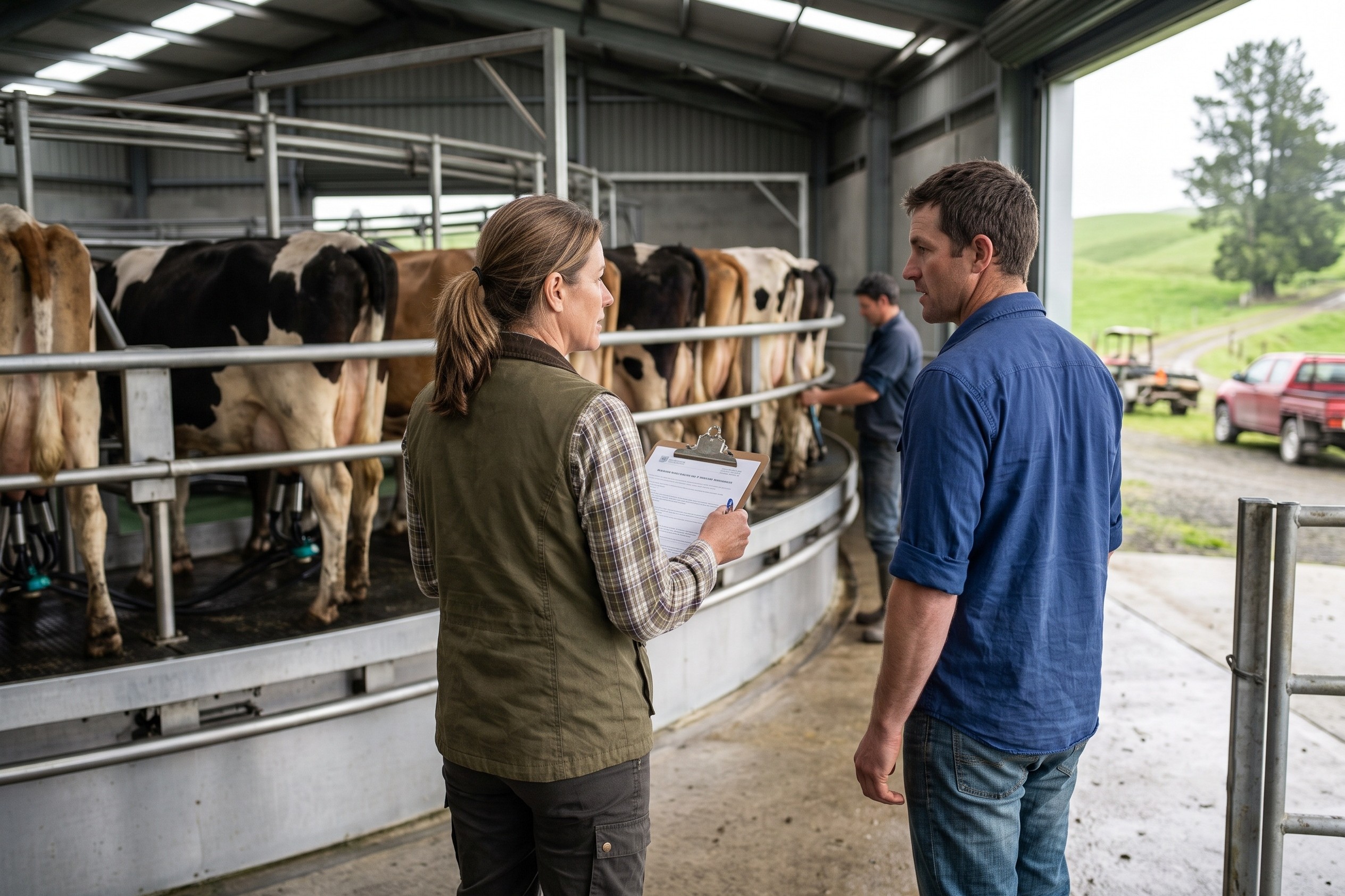
Performance among contract milkers is more variable, with profitability driven primarily by the margin between contract income and operating costs – rather than simply securing the highest contract rate. Personal drawings also play an important role; higher drawings can slow equity growth given the smaller scale of these businesses and their more limited capital base. The bottom third of contract milkers in DairyBase are not doing well financially. This could be for a variety of reasons including viability, skill levels and support available.
That said, top performers demonstrate the model can work well. Those who closely track performance, benchmark regularly and surround themselves with strong support – while maintaining financial discipline – are the ones making consistent progress in the industry.