Greater legal scaffolding needed
Sharefarming agreements, including those for contract milkers, would benefit from updates and greater legal clarity to give more certainty for sharefarmers and farm owners. Words Anne Lee.
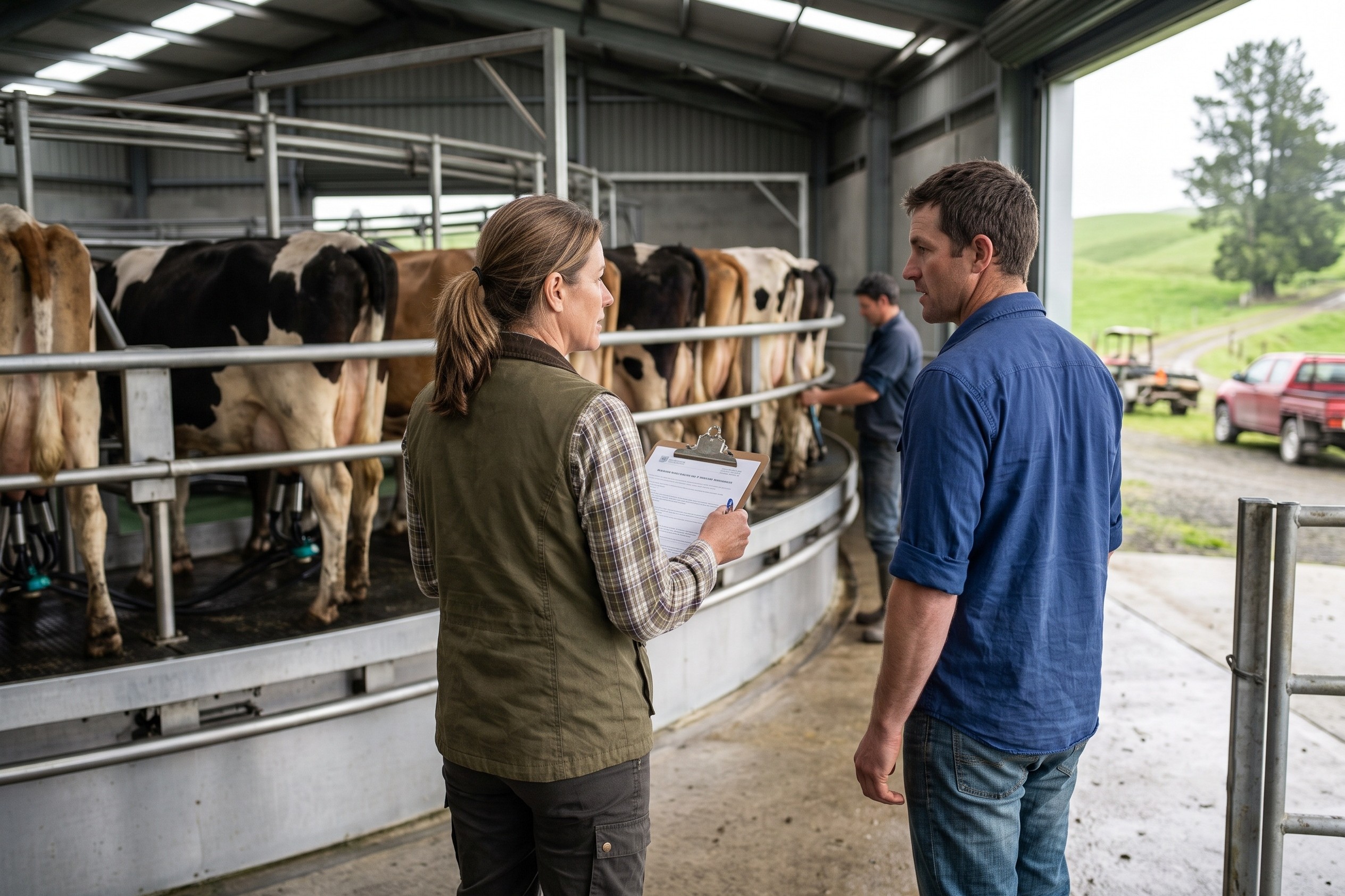
Sharefarming agreements need greater clarity around accountability, payments, farm policy and exit arrangements, AgFirst agribusiness consultant, Lycinda Lett, says.
As sharefarming agreements, contract milking agreements in particular, would benefit from greater ‘legal scaffolding’ around them because they fall outside the current Sharemilking Agreements Order.
“Contract milking agreements operate in this grey area and that leaves both contract milkers and farm owners somewhat exposed, especially around what the consequences are of non-performance by either party,” she says.
“Unless it’s a severe case, a lot of farm owners, when it comes to things like mastitis or poor mating results, run with the philosophy of, this isn’t working, get this person out of here. We’ll fix the problem with the next person.
“But when it comes to things they’ll receive an invoice for, they’re more likely to withhold final payments, or they’ll take a dispute to get that cost back. Things like someone failing to irrigate out the effluent pond earlier in the season, as required under the farm policy, so the farm owner ends up having to get someone in to pump it out and remove it, which comes at a cost.”
For the contract milker or sharemilker, the consequences of the farm owner not holding up their side of the agreement when it comes to feed or fertiliser need to be spelt out in the agreement, she says.
While the standard agreement used by most farmers could always be improved, given rapidly changing dynamics in the wider industry, one of the best ways farm owners and sharefarmers could avoid future issues is to ensure they leave no blanks in the agreement documents.
“Blank spaces create assumptions and ambiguity and they open everyone up to issues.”
Although standard agreements state that monthly contract milking payments should not be withheld, the farm owner commonly controls the supply agreement and can instruct the dairy company to change the payment.
It’s a longstanding issue that needs addressing definitively in law relating to sharefarming agreements, including contract milking, she says.
“Contract milking agreements operate in this grey area and that leaves both contract milkers and farm owners somewhat exposed.” – Lycinda Lett, AgFirst
Flat payments or payment smoothing arrangements, where the contract milker receives 80-85% of predicted monthly income in equal payments up until June, followed by a wash-up at the end of the season, can create a further layer of risk. While they’ve been developed by farm owners, acting in a way that aims to protect sharefarmers, they can be misused.
“They can rely on the farm owner passing the money on and that’s a high-trust model. You’re putting all your faith in a person that you might have only met not long before you sign that agreement.”
An independent payment administrator or trust-account-style structure could reduce that risk by holding those payments and standing between thedairy company and the sharefarmer, although it would carry a cost. “I think this is something the industry, as a whole, needs to have some discussion on to get a more even playing field for each party.”
Completing a full farm policy document and having that included as part of the agreement can provide both parties with more clarity and a level of security, providing it includes what if scenarios.
The guaranteed minimum return helps shield sharefarmers from effects of climate variation but it doesn’t protect them from issues on the expense side of the agreement. More could be done to provide protection using an agreed flexibility arrangement when it comes to expense inflation. People are signing agreements in November for the following season that starts in June and goes through to the end of May the next year. Even by June those costs could be outdated.
“There needs to be a way we can create flexibility alongside more clarity,” she says.
Another area that needs looking at for agreements is exit clauses and exit strategies.
“We have end dates and that a work notice needs to be issued by February 28 outlining the work that needs to be completed by the end of the season, but we need agreed strategies for how the agreement is wound up if someone wants to leave.
“Is there a way people don’t have to try and happily hold hands for another 12 months if everybody is suffering?
“Overall, I think there are a lot of good aspects to the current agreement most people use, it’s been developed over a long time based on real life experiences, but I think we can do a better job in some areas, particularly for contract milkers. We have to keep modifying to move with the times.”