Couple Goals
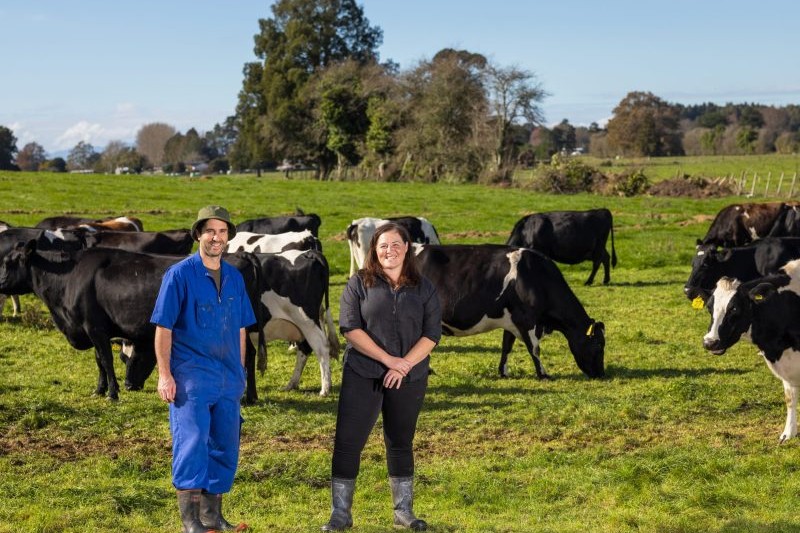
South Waikato farmers, Hugh and Anna Edward, showcase the impact of strong operational discipline and smart equity growth. From cost-focused sharemilking beginnings to expanding their two-dairy system, providing a practical blueprint for profitable, modern dairy farming. Words Anne Lee, Photos Emma McCarthy.
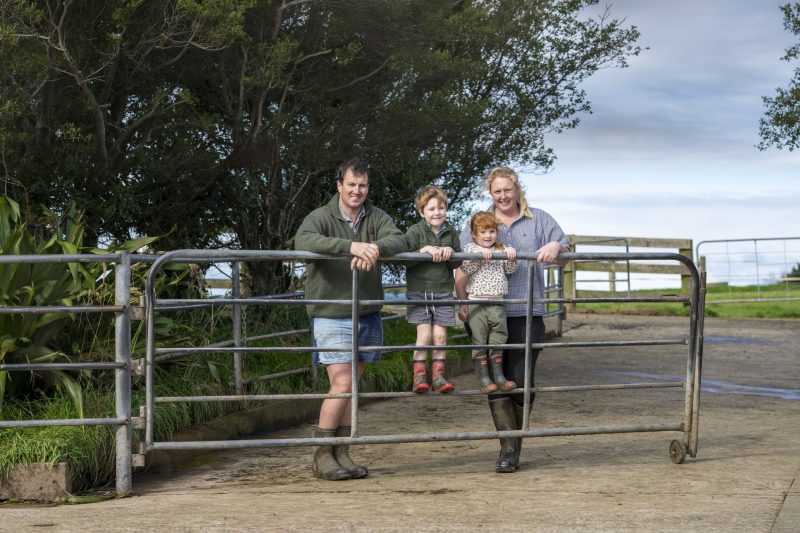
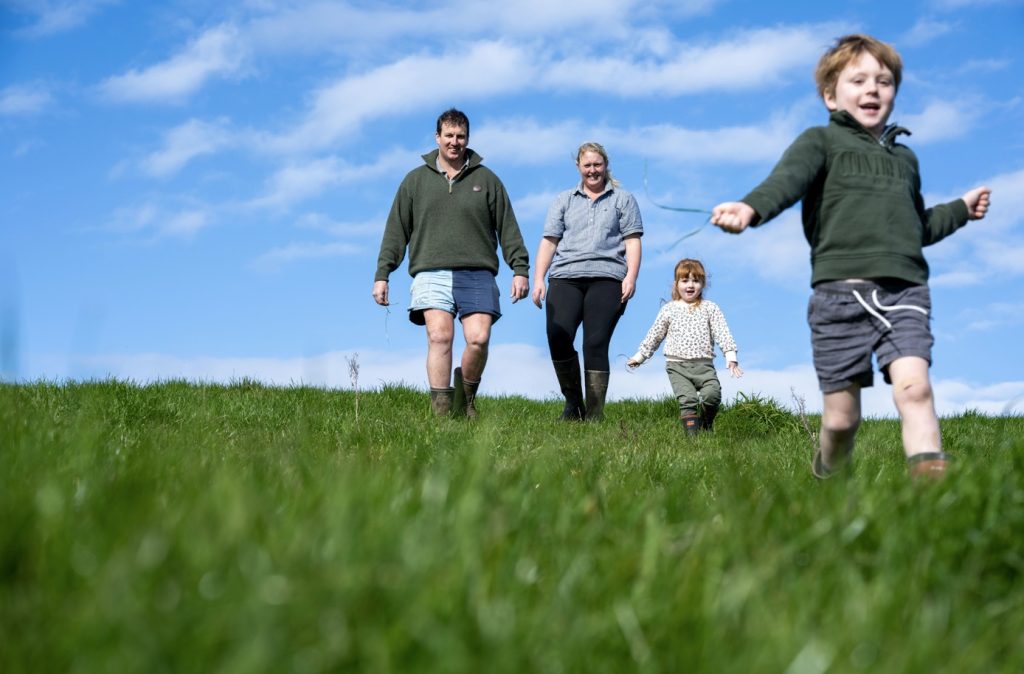
South Waikato couple, Hugh and Anna Edward, are a dynamic duo who combine their farming skills to drive a high performing system that includes his and her herds.
They run a stocking rate that ensures every blade of grass counts and add judiciously priced supplements in a way that results in a high milksolids (MS) response, thanks also to their high-quality cows and tight calving spread.
Towards the end of the 2025/26 season, they opened their farm and their books to more than 200 visitors at the Pasture Summit field day, sharing the ‘how to’ behind their impressive numbers.
They met in 2015, near Otorohanga, when Anna was running her own sharemilking business with 300 Jersey cows, just a couple of farms away from where Hugh was sharemilking 400 cows of the black and white variety. Anna had started sharemilking in 2012 at just 21 years old and Hugh too had worked hard in his early 20’s, rearing youngstock to build equity and had jumped at the opportunity to contract milk 300 cows just two years into his farming career.
It took four more years before he found the next step up to sharemilking 400 cows. The $3.90/kg MS payout that year meant he was paid about the same as he had been as a contract milker but had to carry a lot more costs.
“That $3.90 a year, and managing costs, it’s burned into my brain,” he says.
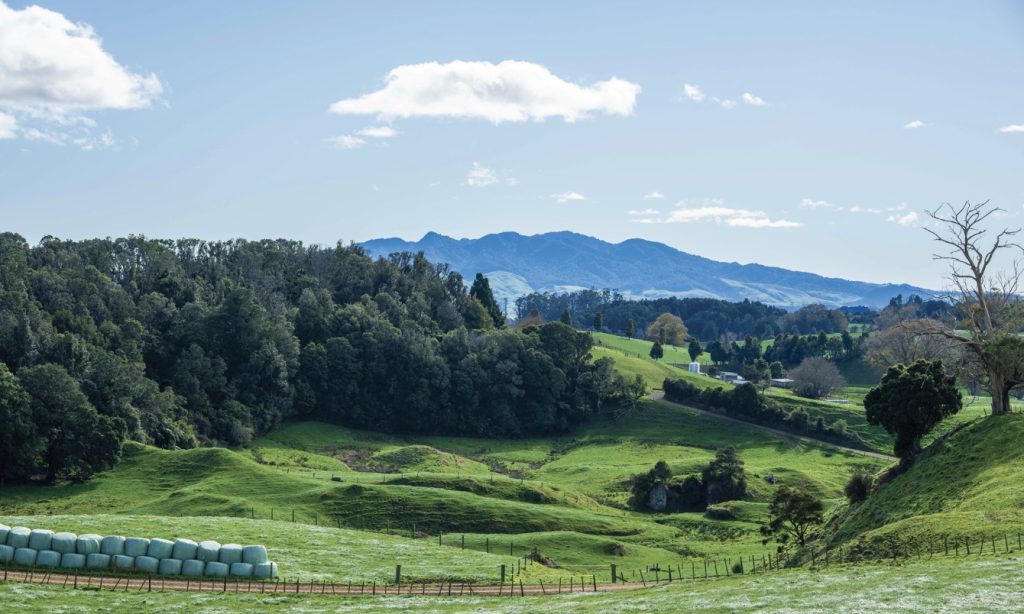
By putting their equity together in 2018, Anna and Hugh were able to purchase a 124ha farm (known as the top farm) 20km south east of Putāruru, very close to where Hugh’s parents owned a drystock property.
They ran it with a contract milker for the first two seasons, milking Anna’s cows there. They also began leasing a 120ha support block nearby. Hugh and Anna kept Hugh’s sharemilking job, running it together to keep extra cash coming in. In 2020, they wound that up and moved to their own farm but also began leasing the ‘bottom farm’ – a 109ha, 85ha effective property with its own farm dairy.
“If you go higher than 3200kg DM/ha, you’re risking quality and a graveyard of daughter tillers.” – Hugh Edward, Waikato
In 2024, they bought the 85ha lease farm with their high profit returns and rapidly building equity enabling the purchase.
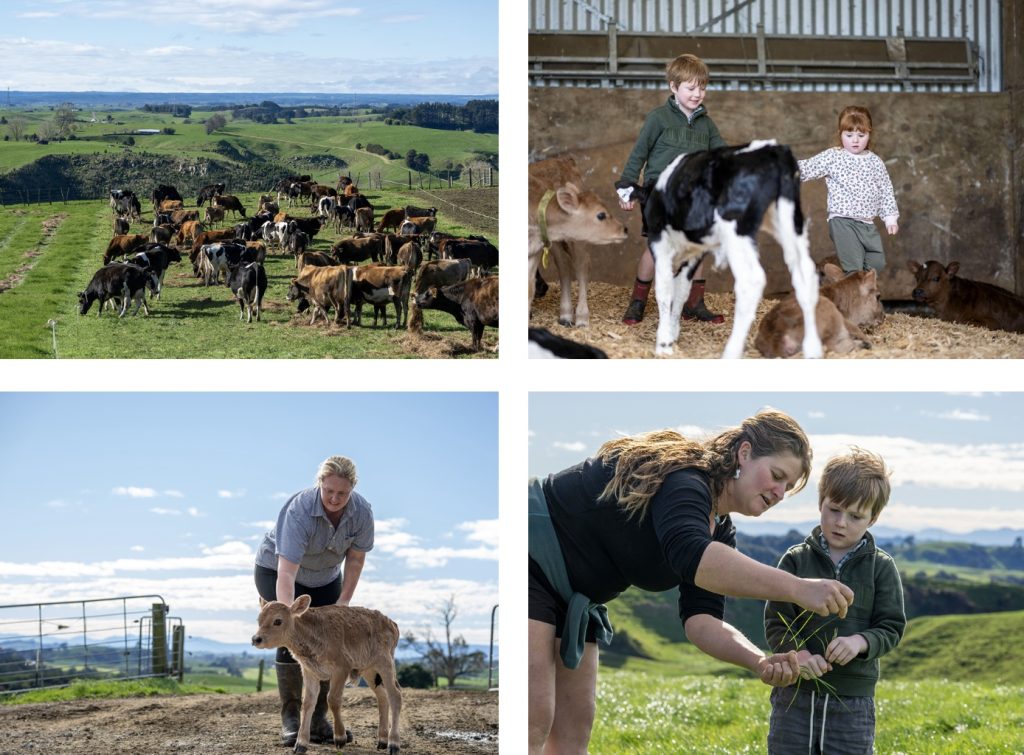
Eight years on from joining forces, they still run their two herds separately through the main milking season. The Friesians and Jerseys calve together, with all colostrums milked through the top farm dairy. The calved Friesians move down to the bottom farm once the top farm dairy is full and they have about 300 cows calved.
“The second farm just milks whole milk Friesian cows – there are no cows calving down there, no colostrums,” Hugh says.
Each farm dairy can be operated by one person and the couple employ two full-time staff – one for each farm dairy. Anna and Hugh step in to relief milk to provide days off.
Spring is the trickiest time of the year for pasture management in what is otherwise an increasingly straight forward system. That’s in part thanks to paddocks now being sized to suit the 24-day round that runs through much of the season, with each paddock accommodating each herd for a 12-hour break.
“We have to manage that early spring period pretty carefully though because we have a lot of cows calving quickly and we need to leave enough at the top farm for the Jerseys to carry on with once the Friesians have left,” Hugh says.
They calve on 10ha of oats and annual ryegrass to provide a good bank of feed and protect the milking platform area. About 200 cows and the heifers are grazed on the support block over winter, allowing the dairy platform to recover through June, with the aim to have an average cover of about 2400kg DM/ha at planned start of calving on July 10.
While they’ve used platemeters in the past to assess pre- and post-grazing covers, they’re confident they have now honed their skills well enough to assess paddocks by eye. At the field day, Hugh’s assessment skills were put to the test, along with others, and checked against platemeter readings and assessments by the phone-based pasture analysis technology, Aimer.
The conclusion was that his skills were highly accurate with all three approaches closely aligned.
While they use a version of the spring rotation planner, calculating area required per cow calved in early spring, they’re also constantly monitoring and reviewing, assessing pasture covers, thinking about weather forecasts and monitoring growth.
I’m really trying not to go too fast until balance date, so we’re using the supplement to manage that,” Hugh says.
Maintaining quality is the absolute key focus. The relatively high, 3.4cows/ha stocking rate means there’s only a short period of time when true surpluses are likely, and deficits have to be carefully managed to avoid over-grazing.
“We don’t ever want to go below 1500kg drymatter (DM)/ha. You’re taking out daughter tillers below that level and not leaving enough for the pasture to recover.
“For pre-graze covers we’re really looking for about 2900-3000kg DM/ha and checking for that three-leaf stage to give the plant the chance to make the most of those solar panels (leaves).
“We’re not letting paddocks get much over that, even if there’s a surplus, we’re not locking it up for silage,
we’ll take it straight away. If you go higher than 3200kg
DM/ha, you’re risking quality and a graveyard of daughter tillers,” Hugh says.
Having their own machinery to cut and make silage means they can be proactive on the dairy platform rather than relying on contractors.
“We’re doing everything we can to maximise ME (metabolisable energy) because ME makes the milk,” he says.
“We’re putting in about 2kg DM/day in the shed and that’s mostly palm kernel that we forward contract about half of in June. As part of the mix, we add in whatever is the best value.” – Hugh Edward, Waikato
“When I’m assessing the paddock and thinking about allocation, I’m going right into the paddock. I’m looking at what’s between the clumps, I’m looking at how thick the pasture is, I’m looking at how high it is on my boots – that’s all taken into consideration.
“We’re looking every day at what the cows have left behind and what they’re going into next and we’re looking about four days ahead all the time so ideally we have the grazing plan set for those four days. But I’ll change that if I need to because we’re looking closely every day.
“We’re also observing the cows, looking at how fast they’re coming into the shed looking for feed or are they just hanging back in the paddock? And of course we’re looking at the vat.
“We have a paddock diary and we record every grazing so we can look back and see what happened with that paddock last time and when we grazed it. If we didn’t quite hit residual for some reason, it’s noted down and it will either be cut for silage or mowed before cows go in next time,” Hugh says.
In-shed feeding and silage are used to maintain residuals through spring and autumn as well as dry periods through the summer. In total they’re feeding about 1.3t DM/cow with most of the maize and grass silage made on the support block. It’s fed in the paddock, under fence lines, to try and reduce wastage.
“We’re putting in about 2kg DM/day in the shed and that’s mostly palm kernel that we forward contract about half of in June. As part of the mix, we add in whatever is the best value. Depending on the time of year, that could be tapioca, DDG (dried distillers’ grain) and oat hulls,” Hugh says.
Hugh puts a high priority on managing the cost of feed inputs and Anna’s stock focus ensures cows are high quality and in fighting fit condition to turn feed into milk.
A Northland study into returns from supplement has shown lifting milk response from 80g MS/kg DM supplement to 100g MS/kg DM lifted profit by $600ha.
Dropping feed costs from $400/t DM to $300/t DM improved profit by $300/ha.
Both are important and have a positive effect on profit, but there’s more impact by ensuring there’s a good milk response.
For Trifecta Farming, the response to supplement is estimated to be about 90g MS/kg DM. If the payout was to fall significantly, Hugh says they would look at reducing feed demand by culling earlier, but may consider lowering the stocking rate to better fit the grass curve.
“It’s something we’d consider. You have to run all the numbers carefully to assess those options,” he says.
Cow centric
Great reproductive performance creates a higher chance of breeding great replacements and having a tight calving spread helps increase days in milk.
Anna’s cow focus helps achieve both. The farm has an impressive six-week in-calf rate of 84% after four weeks of artificial insemination (AI) followed by five weeks with bulls.
“At calving, I’m with the cows every three hours checking progress and taking notes on any hard calvings. I’m quick to intervene if a cow hasn’t calved within 10-15 minutes, bringing the vet in if we need it.
“But getting a good in-calf rate really starts back in January and making sure cows are well fed to achieve condition score targets,” Anna says.
Both Anna and Hugh are in the farm dairy milking on a regular basis and have plenty of contact with their cows. Through autumn, anything that’s lighter and not meeting BCS targets will be dried off, although the aim is always to have cows well fed.
As cows join the milking herds after calving, they’re tail painted, with the paint colour changed every two weeks. They metricheck cows and will take a close look at any that aren’t cycling again based on tail paint rubbing to see why. They also use teaser bulls through the AI period and believe that helps active heats.
They also apply ‘scratchy’ heat detection patches 24 hours before planned start of mating to help identify cows in heat. They don’t use any hormonal intervention to get cows cycling. Anna typically does the AI herself although last year she was injured and Hugh had to step into that role.
“Cows aren’t waiting in the yard, they’re AI’d right away each morning and are back grazing with the herd quickly,” Anna says.
She nominates semen, with the aim to get a strong, robust cow that’s about 450kg liveweight – a big Jersey or a smaller Friesian. Calving ease, good udder support, good capacity and good production breeding values are important.
Friesian is used over Friesian and Jersey over Jersey. They rear Jersey bulls as service bulls to sell to dairy farmers and Friesian bulls to be sold at the calf markets. They use Angus bulls over the Jerseys and Herefords over the Friesians to produce beef-on-dairy calves that will sell well.
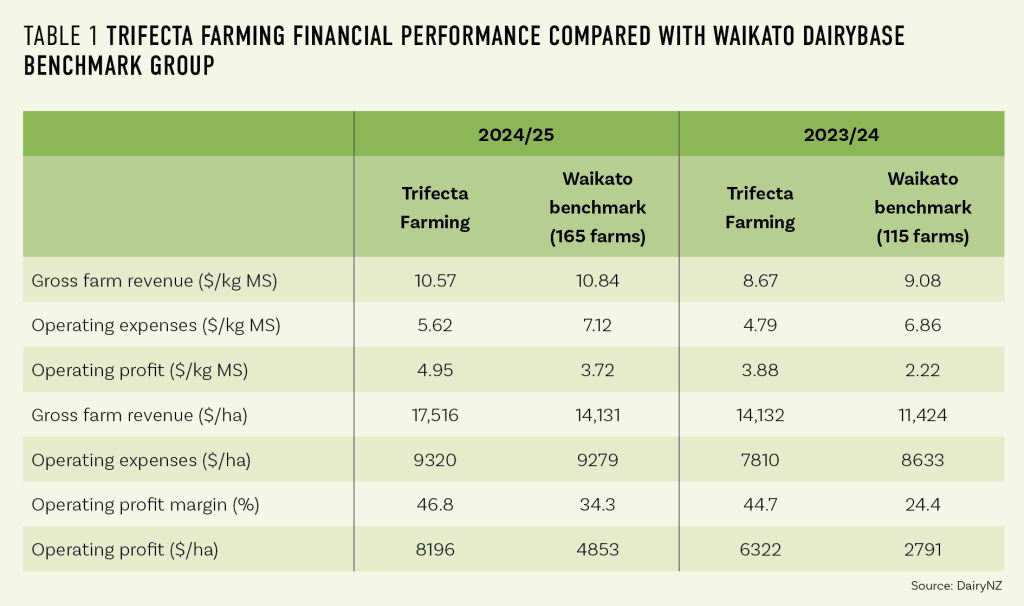
Hugh and Anna’s productivity prowess is not just paying off in terms of production and reproduction. It’s converted into profit. Benchmarking puts them among the top performers in a group of 200 farms on DairyBase in Waikato.
Those results have in turn helped them pay down debt and build equity quickly. That’s got them looking at what their next steps could be for growing their business further.