Extended milking enables beef-on-dairy
A shift to extended lactation and mating half the herd each year, in combination with the use of more beef semen, is allowing Waikato sharemilkers to rear more calves for beef without increasing the spring workload. Words Lydia Farrell.
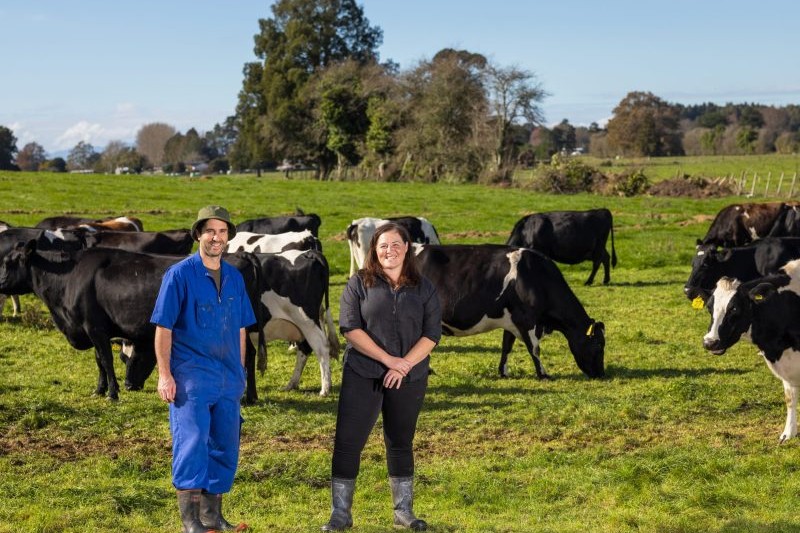
The Sandowne sharemilking operation in Gordonton, Waikato, is one of the first commercial farming operations to adopt a system that could help lower bobby calf numbers through changes identified in DairyNZ’s Extended Lactation (EL) Project.
The project, part of the Dairy Beef Opportunities programme, looks at how to reduce the number of calves born through extended lactation systems and increase the proportion of those born that can go to the beef industry.
Sandowne Extended Lactation pilot
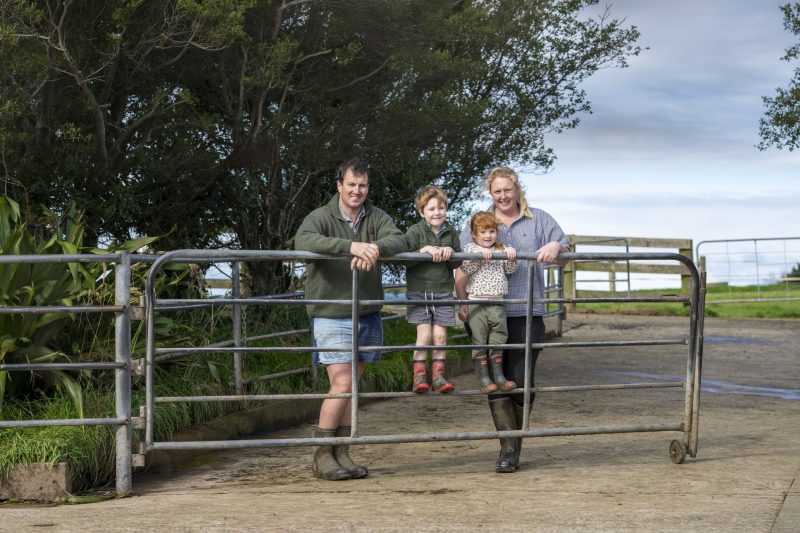
Sharemilkers, Ben Fisher, Emma Gardiner and Caleb Higham, have transitioned their 240-cow herd at Gordonton to a 24-month calving interval system, where half the herd calves each spring. They mated only 60% of their crossbred herd in spring 2024 and completed their first calving under the new system in early September 2025.
They made the change to reduce stress during calving and cut the number of non-replacement calves born on-farm after seeing the system in action at DairyNZ’s Scott Farm. Ben says the pilot is going well with most cows performing strongly.
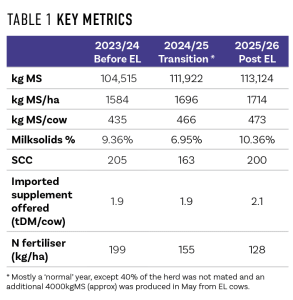 “Our goal was to achieve the equivalent or more of last season’s production and not have any reduction, so we are very happy with that,” he says.
“Extended lactation requires quite a mindset change, particularly seeing the cycling of cows whose mating has been delayed a year.
“Having been brought up in traditional spring to spring calving, when you see a cow in heat then you want to get it in calf, so that was a bit strange for me and for our farm manager Matias for a couple of weeks, but it didn’t take long for us to get our heads around it.
“Seeing the advantages of having a smaller number of cows to mate and calve, we are keen to continue.”
He says it has also reduced staff stress, particularly during calving.
“We have a shorter mating period, down from 10-12 weeks to a maximum of nine weeks, and we are calving 140 instead of 240,” he says.
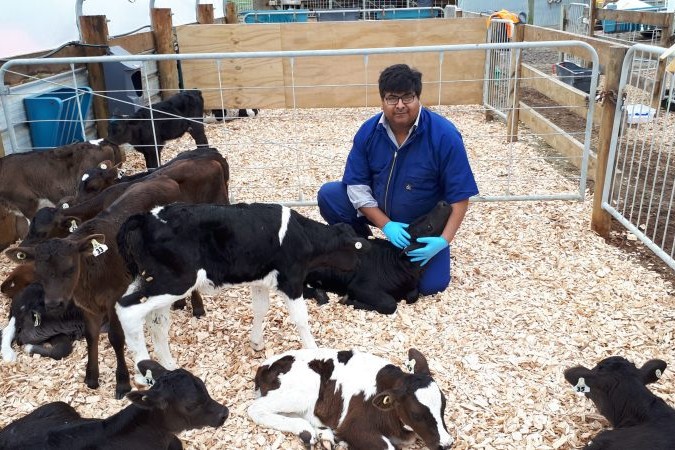
“That means there are not as many calves to be fed, fewer calving issues, it is easier to train heifers because you have cows already milking, and there are just fewer animals to deal with.”
Transitioning the system
Sandowne mated only 60% of their crossbred herd over six weeks in spring 2024.
The 99 unmated cows averaged 1.45kg milksolids (MS)/day during winter, managed on a 45-day round length with pasture supplemented with maize silage, palm kernel and dried distiller’s grain (DDG).
The remainder of the herd (140 cows) completed calving in early September 2025.
Improved reproductive performance
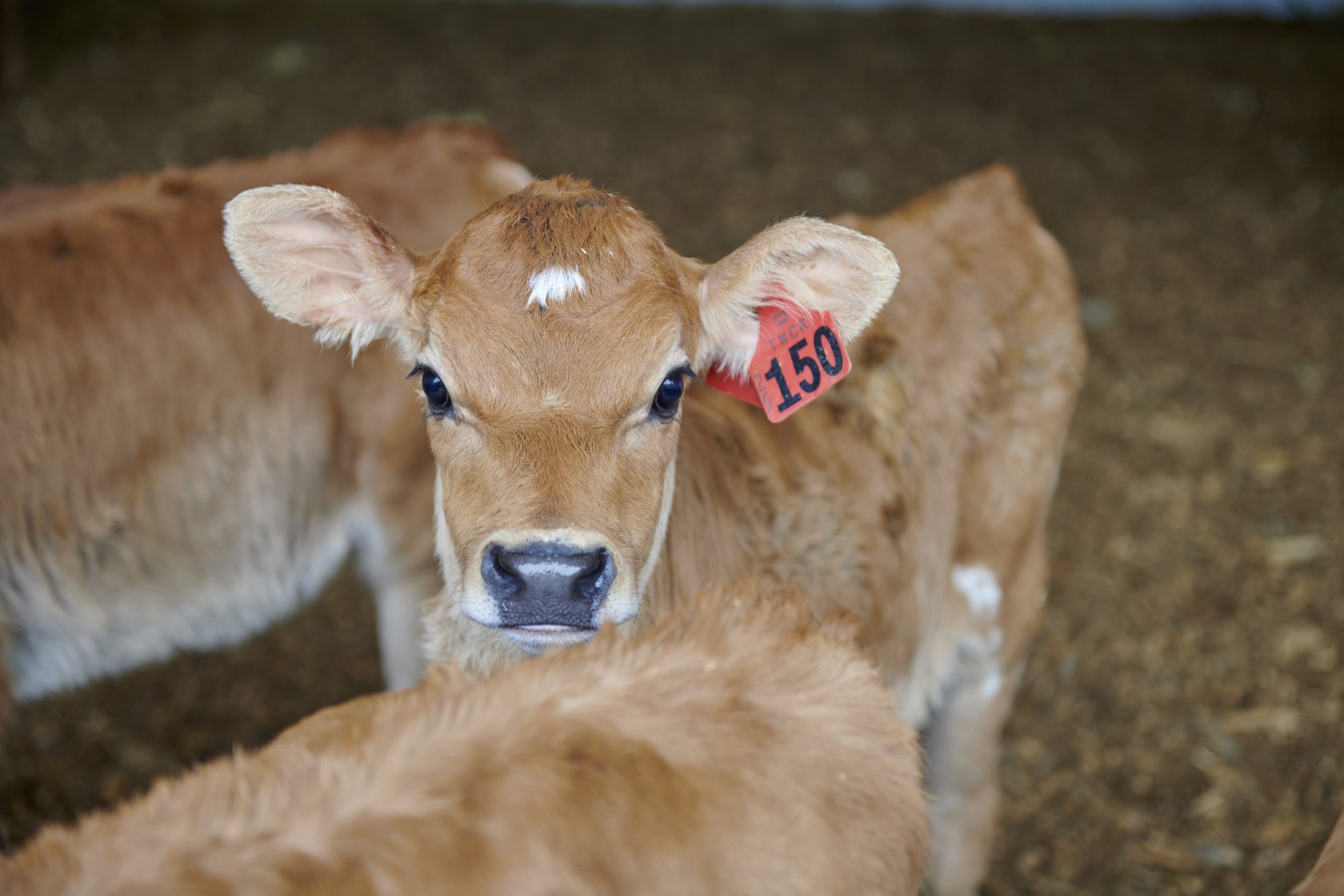
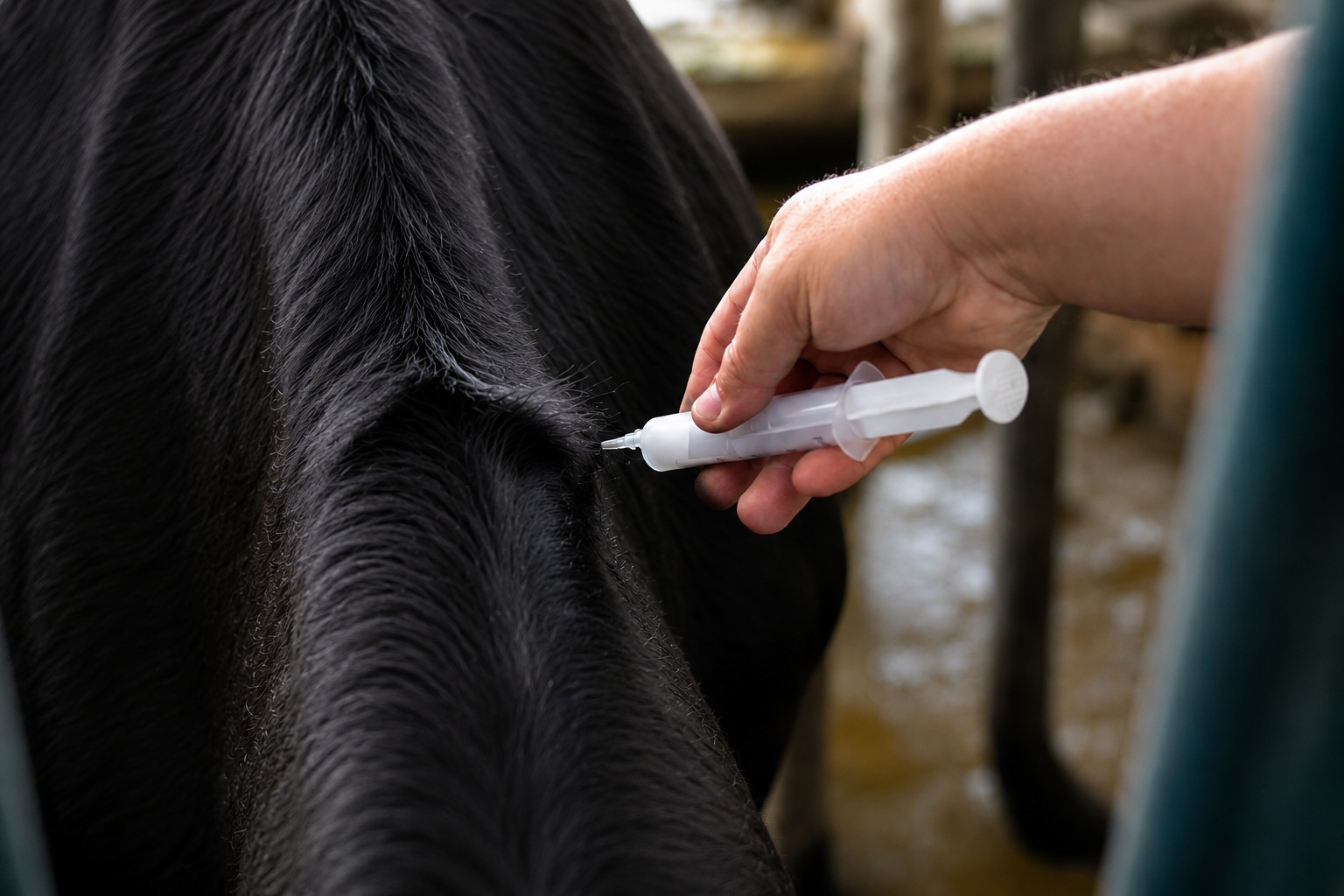
As well as mating only 60% of the herd during the compact six-week mating period, more beef semen was used in combination with frozen sexed semen. This meant in spring 2025 there were 74% fewer non-replacement calves, driven by fewer calves born on-farm (from 242 the previous year to 137 in 2025), and a greater proportion of beef-sired calves (increasing from 6% to 26% of calves born).
During the first mating under the EL system (spring 2025), where cows to be mated were in higher body condition (5.1) than they would have been with an annual system, they ran a nine-week mating period and continued to use sexed and beef semen.
The conception rate of the cows in an extended lactation was greater (64%, 95 cows mated) than cows still calving annually (49%, 47 cows) which resulted in a higher overall in-calf rate.
“In spring 2025 there were 74% fewer non-replacement calves, driven by fewer calves born on-farm and a greater proportion of beef-sired calves.” – Lydia Farrell, DairyNZ
Less stress on farm
Farm manager, Matias, was less stressed during calving and early lactation – that’s backed up by data collected by DairyNZ using a Garmin watch and from timesheet records on PaySauce.
Compared to the previous year, his heart rate was on average 6% lower during July to September while his daily step count was down 12%.
Over June to November there were 9% fewer hours worked. This was made up of 13% fewer hours worked from July to November but 20% more in June for tasks such as milking.
Ben said Matias had found calving less stressful all round and enjoyed it more.
“He is someone who likes to be busy, but when you are often working on your own, there is a lot of pressure if anything goes wrong. With fewer cows calving and fewer calves to feed, he has said he has more time to deal with any issues that arise,” Ben says of Matias.
The journey so far
2023-24
- Set up Sandowne Ltd. Started on the farm in Gordonton in June as 50:50 sharemilkers.
- Managed the farm with a 12-month calving interval. All 240 cows dry in winter, calved and mated over 12 weeks in spring.
2024-25
- Calving all 240 cows, then transitioned to a 24-month calving interval system.
- Shortened the spring mating period to six weeks.
- Deliberately did not mate 90 cows (40%) destined for an extended lactation with a 24-month calving interval
- Dried off 87 pregnant cows in early May.
- Continued milking 104 unmated and empty cows to end of season, entering an extended lactation
2025-26
- Started the season winter milking extended lactation cows.
- Calved 135 cows in spring.