Feed calves more and reap the rewards
New research findings show that feeding calves higher milk allowances can have major lifelong effects on cow production and benefits on a range of animal health factors, prompting a review on advice for calf feeding. Words Anne Lee.
An intensive lifetime study that followed more than 300 calves from the day they were born to the end of their fourth lactation has revealed that good colostrum management and higher milk allowances can lead to better growth rates early in life and an extra 300kg of fat and protein corrected milk in each lactation.
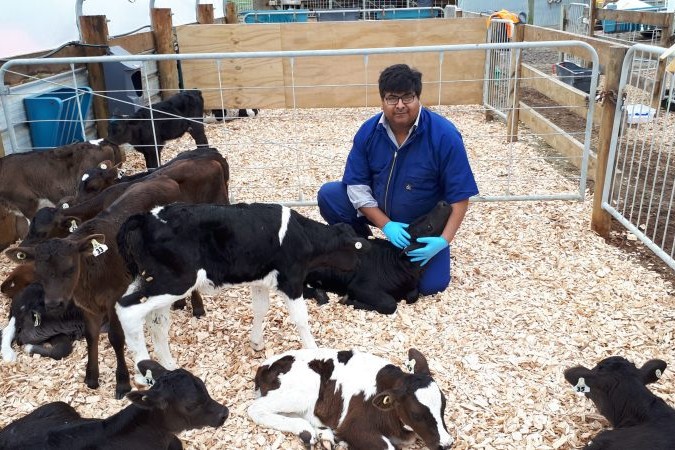
Bioeconomy Science Institute senior scientist, Dr Ajmal Khan, has been studying the outcomes of different calf rearing systems in New Zealand for the past 11 years and before that was investigating calf nutrition at the University of British Columbia, Canada.
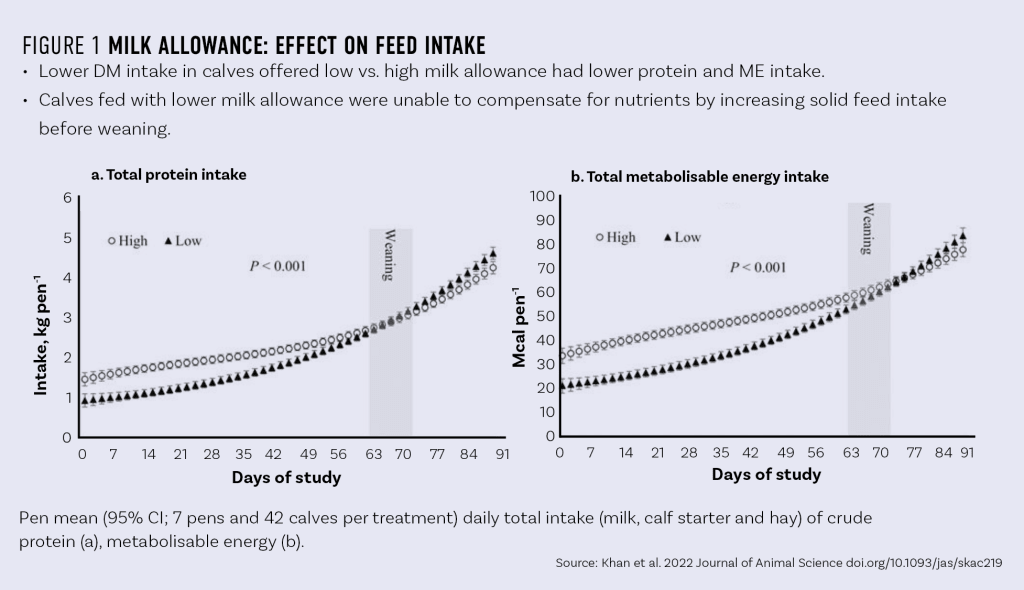
Ajmal says findings from one of his studies, published in the Journal of Animal Science in 2022, showed there are significant gains to be made in growth rates, immune response and mammary gland development by feeding higher volumes of milk to NZ heifer calves. His research debunks theories that calves fed restricted milk diets, of about 4l/calf/day, can compensate for those lower allowances by consuming more hard feed, such as pellets or meal, during the first two months of age.
The study followed heifer calves from the day they were born through to 209 days. The young animals were kept indoors with access to ad lib hay and starter feed pellets for 91 days while they were fed either the low (4litre) or high (8litre) volume milk allowance up until weaning at 63-71 days. From days 91 to 209 of life, they were fed pasture.
Despite having free access to starter feeds, calves fed the lower milk volume allowance consumed less total protein and metabolisable energy (ME) on a daily basis up until weaning.
“They are babies, designed to drink milk through that early period, so restricting their milk allowance is restricting their nutrient and energy intake. They can’t make up the difference by eating pellets or starter feeds, their digestive system just isn’t geared for that,” he says.
“We saw more mammary tissue development in the back quarters of heifers offered the higher milk allowance at those scans and we saw less fat.” – Ajmal Khan, Bioeconomy Science Institute
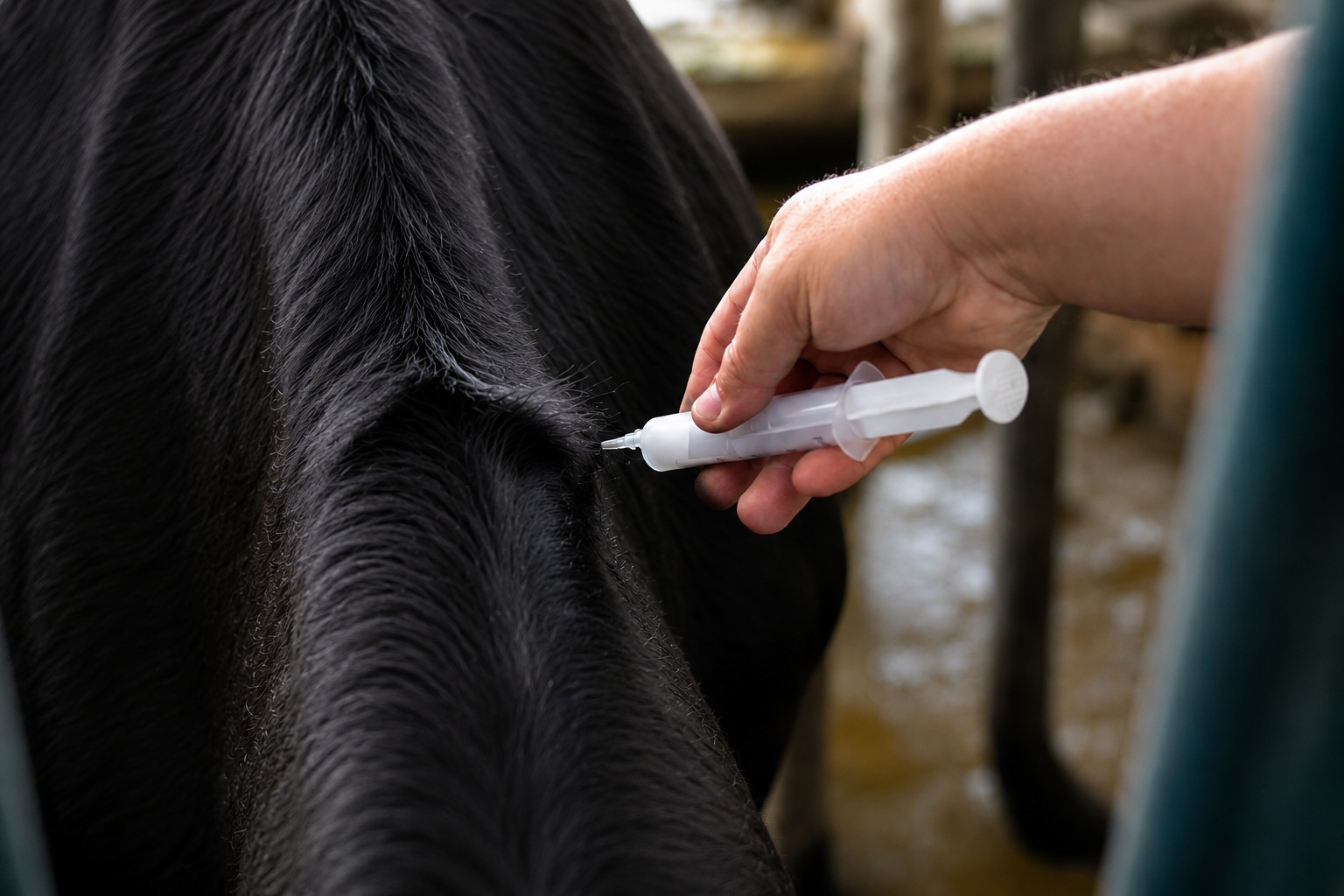
As part of the same study, Ajmal tested the impact of milk allowance on animal health – particularly the antibody response mounted in the blood of calves following vaccination.
“We looked at two common vaccinations – one for leptospirosis and one for clostridium and took blood samples before vaccination as well as 10 days post-vaccination (week 13) and 10 days after the booster was given (week 27).
“We saw a greater increase in the serum antibodies for both diseases in calves fed the higher milk volumes compared with those fed the lower volumes. The difference was most pronounced after the initial vaccination, which indicates those calves on the higher volume milk allowance mounted the antibody response earlier.
“That higher milk allowance supported the primary antibody response earlier which means the vaccination was more effective for the better fed animals.”
More mammary tissue
Ajmal’s team also found differences in mammary gland development. They used ultrasound scans to look at each quarter of every animal at three different points in the study. The first round of scanning was about day 10, the second at weaning and the third round was about day 200.
The most significant differences were found in the rear quarters of heifers at the weaning and 200-day scanning.
“We saw more mammary tissue development in the back quarters of heifers offered the higher milk allowance at those scans and we saw less fat.
“So what are the long term consequences of all of this? We started the long-term study of 300 plus heifers born on four farms in 2018, following them right through to the end of the fourth lactation to find out.
“We measured a lot of parameters right through from day zero. We measured blood serum antibodies so we knew which calves had failed passive immunity transfer. We measured growth rates until breeding, and collected body condition scores, live weights, health records, reproduction parameters, milk yield and milk composition data, until the fourth lactation.
“As we analyse the data, we’re seeing just how big the impacts are of feeding calves well on that first day of their lives and during the pre-weaning period.
“First of all, we’ve found a failure of passive immunity transfer – that’s when the calf doesn’t get enough high-quality, first-milking, gold colostrum – will have a negative impact on heifers going on to achieve target body weights.
“Then we see that failure of passive immunity transfer has a significant negative effect on milk production over every lactation we measured.”
That drop in production amounted to an average 375l/cow/lactation on a fat and protein corrected milk basis.
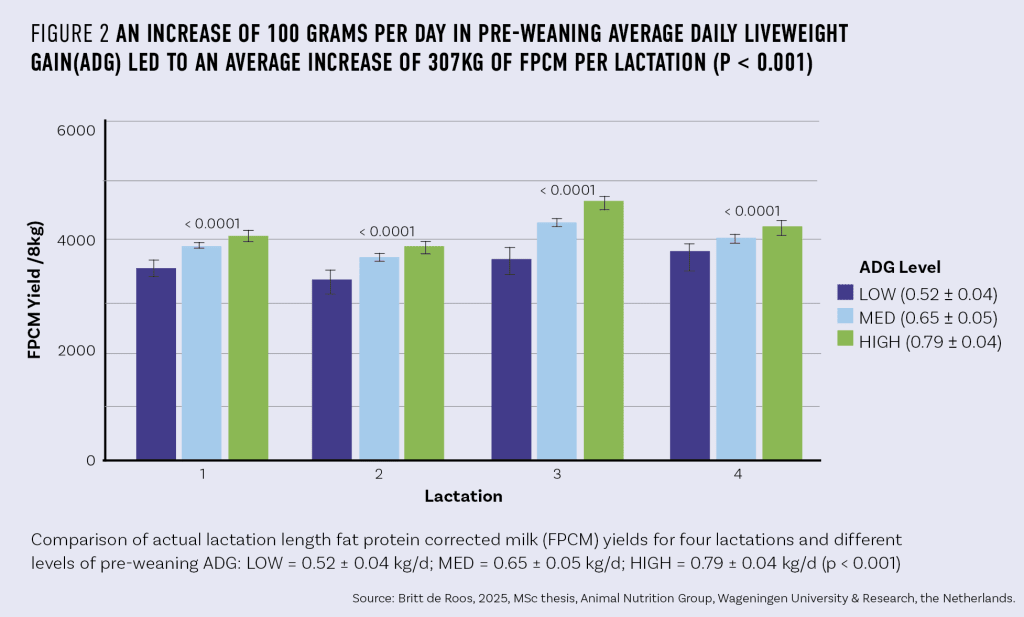
Ajmal’s team has also analysed milk production data based on pre-weaning growth rates and found a strong positive relationship.
“They are babies, designed to drink milk through that early period, so restricting their milk allowance is restricting their nutrient and energy intake.” – Ajmal Khan, Bioeconomy Science Institute
More milk for calves, more production
“We found an increase of 100g/day in the pre-weaning growth rates (between 400 to 900g/day) led to an average increase of 307kg of fat and protein corrected milk per lactation over that four-lactation period.
“What that’s telling us is that there are big rewards for improving on-farm calf management and feeding practices. If you are a calf rearer feeding restricted milk allowances and not paying enough attention to colostrum management on that first day, your returns could be in the multiples of four or five times if you improve your practices to get passive immunity transfer and feed more milk so you get average pre-weaning growth rates up to 800-900g/day.”
Ajmal says his findings confirm research findings from others, both in New Zealand and overseas, but his long-term study is the first to look at the impacts right through to the fourth lactation.
“I think farmers need to know this now because it shows them just how important it is to get colostrum management right and it justifies these feeding levels where young animals are being fed milk volumes that really meet their nutritional needs in a way their bodies can cope with.”
He says there are many other aspects of calf rearing and feeding that need to be well managed too, such as pooling high-quality, first-milking colostrum to ensure calves get a wider range of antibodies and transitioning calves onto pasture and providing them with pellets to limit a weaning check.